Clear Sky Science · en
Incidence and predictors of early mortality among trauma patients visiting emergency departments of referral hospitals in west Amhara region, Ethiopia
Why the First Day After an Injury Matters
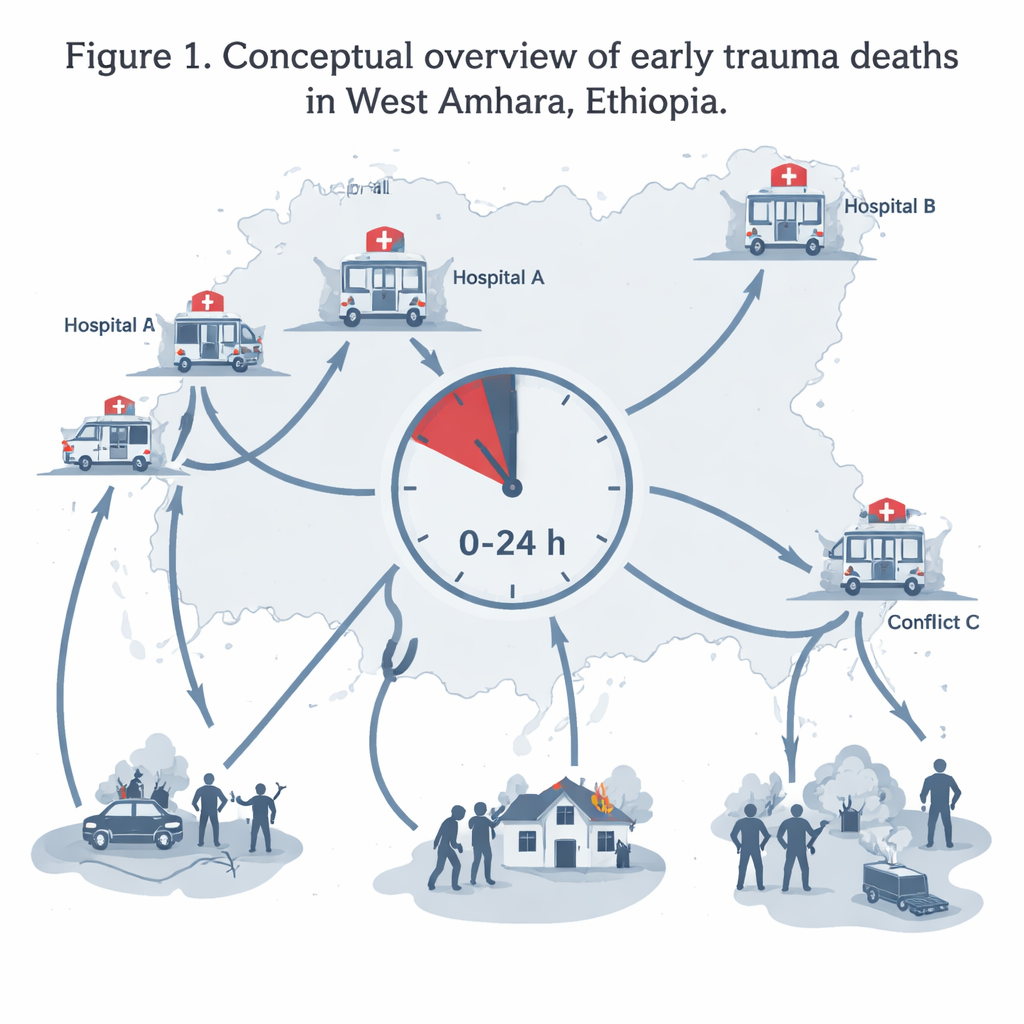
When a serious injury happens — from a car crash, a fall, or violence — the first 24 hours can mean the difference between life and death. This study from west Amhara, a conflict-affected region of Ethiopia, looks closely at what happens to people with traumatic injuries during that critical first day. By tracking more than 500 patients who reached three major hospitals, the researchers set out to learn how often people die early after injury, and which warning signs are most closely linked to those deaths. Their findings reveal both the human cost of trauma and practical ways to save more lives, even in low-resource settings.
Who Gets Hurt and How
The patients in this study were mostly young adults, with an average age in their early thirties. Nearly three out of four were men, and more than half lived in rural areas. That means trauma is striking people in their most productive years, often in places where access to quick medical help is limited. Many of the injuries were caused by blunt force, such as road traffic crashes or falls, but a large share came from penetrating trauma, especially gunshot wounds — a reflection of ongoing armed conflict in the region. Over half of the patients had multiple body regions injured, and more than a third had head injuries, both of which are known to make treatment more complex and outcomes more uncertain.
Reaching the Hospital in Time
All of the patients in the study reached one of three referral hospitals, which provide round-the-clock emergency care. Yet their paths to these hospitals varied. Only about one in six arrived by ambulance; most came by taxi, private car, or even on foot. Just under half received some kind of care before they reached the referral hospital, such as fluid administration or bleeding control, usually at smaller local facilities. The region’s difficult terrain, limited ambulance coverage, and the disruptions of conflict all make it harder to deliver fast, coordinated emergency care. These realities form the backdrop to the study’s central question: once patients arrive, who is most likely to die within the first 24 hours?
What the Numbers Say About Early Death
The researchers followed each of the 518 patients from the time of their injury for up to 24 hours. During that period, 66 people — about 13 percent — died. On average, patients survived about 21 of the 24 hours, but the risk of death was not spread evenly across the day. Mortality was substantial in the first six hours, dipped slightly in the next six, and then rose sharply again after 12 hours. Using standard statistical tools for survival analysis, the team calculated an overall early-death rate of about 15 deaths for every 1,000 hours that patients in the study were at risk. This pattern suggests that initial care and ongoing monitoring through the first day are both crucial, and that gaps later in that window may still cost many lives.
Key Warning Signs Doctors Can Act On
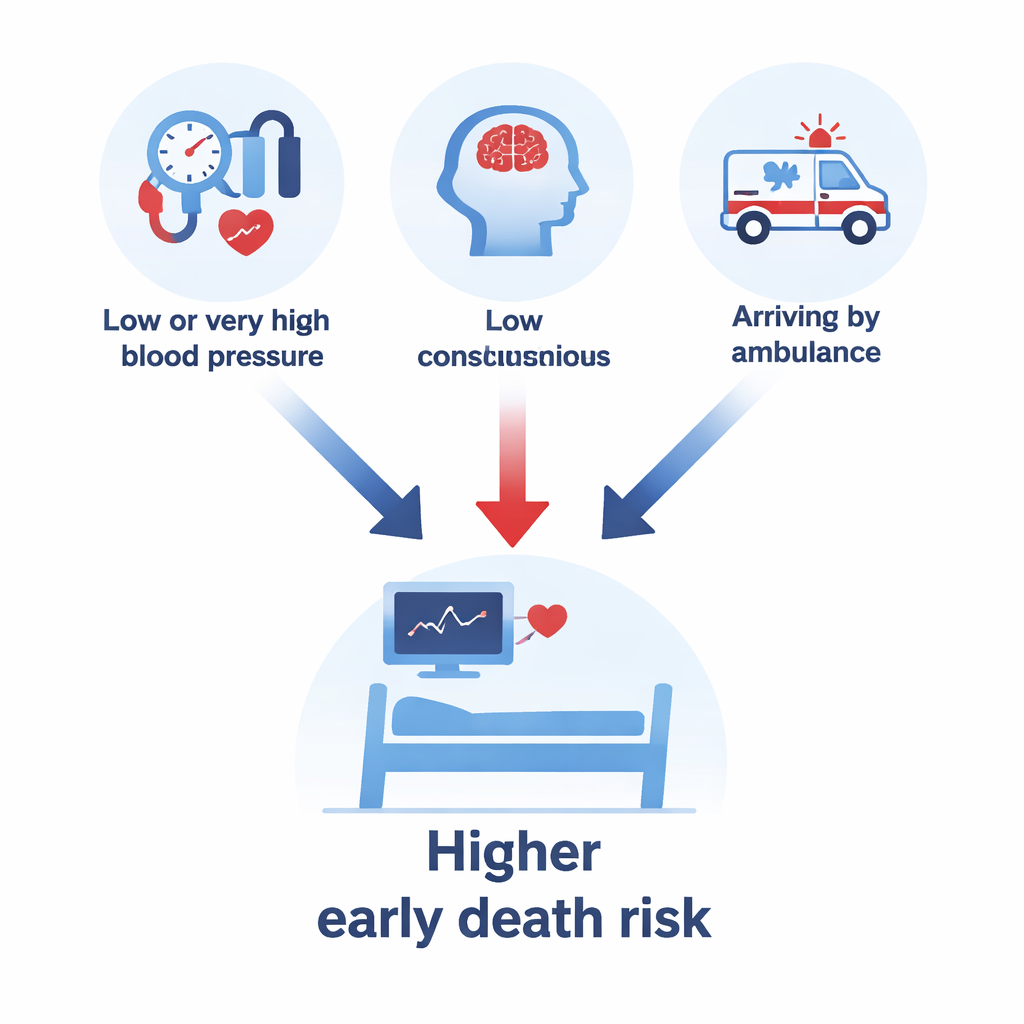
To find out which patients were in greatest danger, the researchers examined many factors recorded when patients arrived: vital signs, level of consciousness, how they got to the hospital, and more. After adjusting for overlapping influences, several stood out. Patients whose blood pressure was either very low or very high faced a sharply increased risk of dying early, signaling that serious shock or other internal problems were underway. People with reduced consciousness — a sign of moderate or severe brain injury — were also many times more likely to die than those who were fully awake. Interestingly, patients who arrived by ambulance had a higher death rate than those who came by other means. Rather than suggesting that ambulances are harmful, this likely reflects that the sickest, most severely injured patients are the ones for whom limited ambulance services are reserved. The study also found that women in this setting had a higher risk of early death than men, raising questions about potential differences in injury severity, care-seeking, or treatment that need further exploration.
What This Means for Saving Lives
For a non-specialist, the takeaway is straightforward: early trauma deaths are common but not random. Clear, measurable warning signs — dangerously abnormal blood pressure, low consciousness, and arriving in obvious critical condition — reliably point to those at greatest risk. In the West Amhara hospitals, one in eight trauma patients died within a day, often despite having made it through the hospital doors. The authors argue that better outcomes are possible if health systems focus on rapid recognition and correction of unstable vital signs, prompt assessment of brain injury, stronger communication between smaller clinics and referral hospitals, and more structured prehospital and ambulance services. In short, building even basic, well-coordinated emergency systems could turn many of these early deaths into survivable injuries.
Citation: Ayenew, T., Tiruneh, B.G., Gedfew, M. et al. Incidence and predictors of early mortality among trauma patients visiting emergency departments of referral hospitals in west Amhara region, Ethiopia. Sci Rep 16, 4984 (2026). https://doi.org/10.1038/s41598-026-35167-4
Keywords: trauma mortality, emergency care, Ethiopia, injury epidemiology, prehospital care