Clear Sky Science · en
Shotgun metagenomic and physicochemical profiling of municipal wastewater treatment plants using activated sludge and trickling filters
Why What Flows Down the Drain Matters
Every time we flush a toilet or rinse chemicals from a factory floor, that water has to go somewhere. In many communities, especially in low- and middle‑income countries, wastewater treatment plants struggle to keep up—allowing harmful nutrients, chemicals and even heavy metals to leak into rivers that people and wildlife depend on. This study takes a close look at two such plants in South Africa, asking not only how well they clean the water, but also which microscopic life forms are doing the hard work of breaking down pollution.
Two Strained Plants on a Busy River
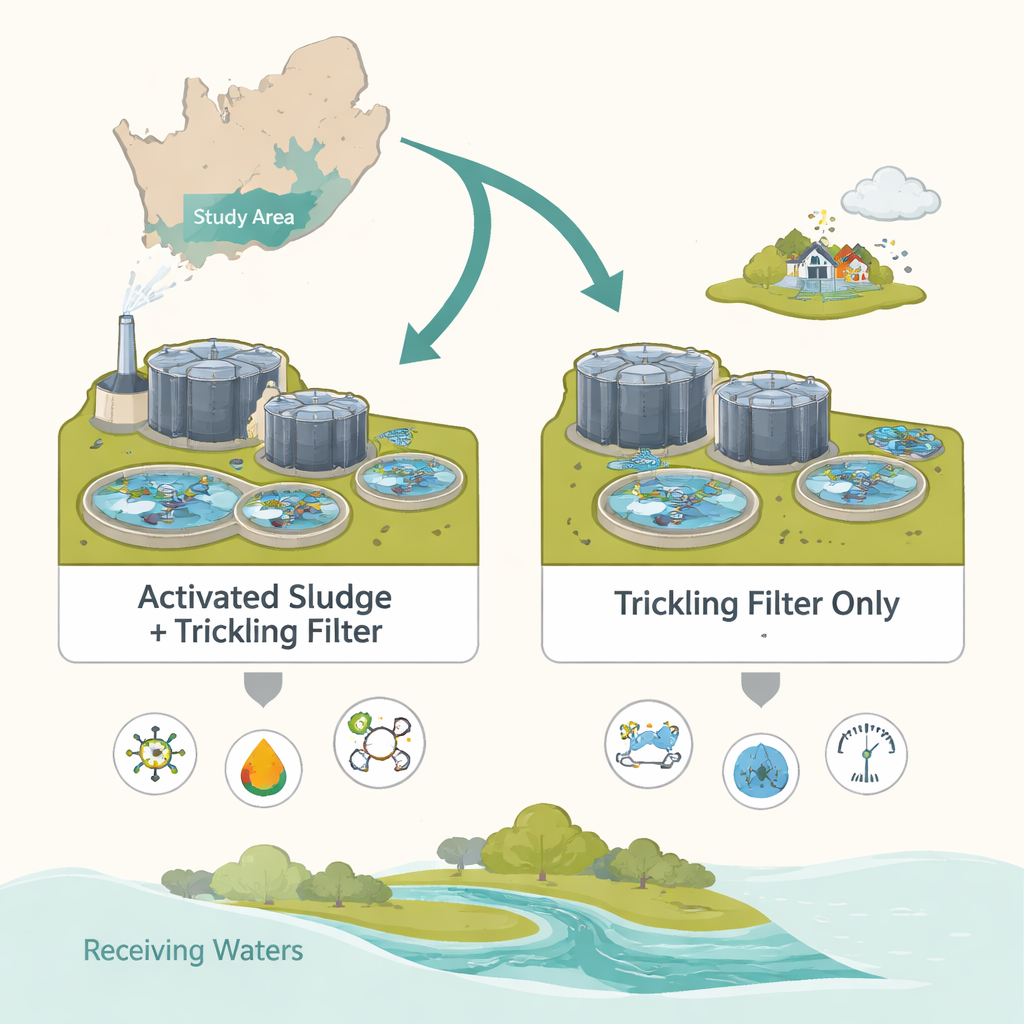
The researchers focused on two municipal wastewater treatment plants in South Africa’s Emfuleni Local Municipality. Both receive a mix of household sewage, stormwater and industrial effluent, and both discharge into important local rivers. On paper, these facilities were designed to use a combination of activated sludge (where microbes are kept suspended in aerated tanks) and trickling filters (where microbes grow on surfaces and form slimy biofilms). In practice, years of poor maintenance, energy shortages and equipment failures meant each plant was running below its intended capacity, with one relying mostly on activated sludge and the other mostly on trickling filters.
Testing the Water and the Hidden Chemistry
Over five months in the dry season—when wastewater is less diluted by rain—the team collected samples from different points in the treatment process, as well as from five nearby industries such as an abattoir and a battery manufacturer. They measured basic water quality indicators: acidity (pH), oxygen, temperature, dissolved and suspended solids, and a key pollution marker called Chemical Oxygen Demand (COD), which reflects how much organic material needs to be broken down. They also tracked nutrients like ammonia, nitrates and phosphates, and screened for metals including iron, copper, zinc, lead and arsenic. Many of these substances, in high amounts, can harm fish, fuel toxic algal blooms or accumulate in crops and animal tissues.
Pollution Levels That Slip Through
The results revealed that both plants struggled to remove pollution to acceptable levels. COD in treated water often exceeded local and international guidelines, especially at the plant where much of the infrastructure was down. Ammonia—a form of nitrogen that can be toxic to aquatic life—remained high in both plants’ final tanks, suggesting that key ammonia‑removing microbes were not doing their job effectively. Some industrial discharges were extreme: the abattoir wastewater showed extraordinarily high COD, placing extra stress on the municipal systems. Several heavy metals, especially manganese, copper, zinc and lead, built up in the sludge and in some treated streams, raising concerns about long‑term accumulation in river sediments, fish and ultimately in people who rely on those waters.
The Microbial Workforce Inside the Tanks
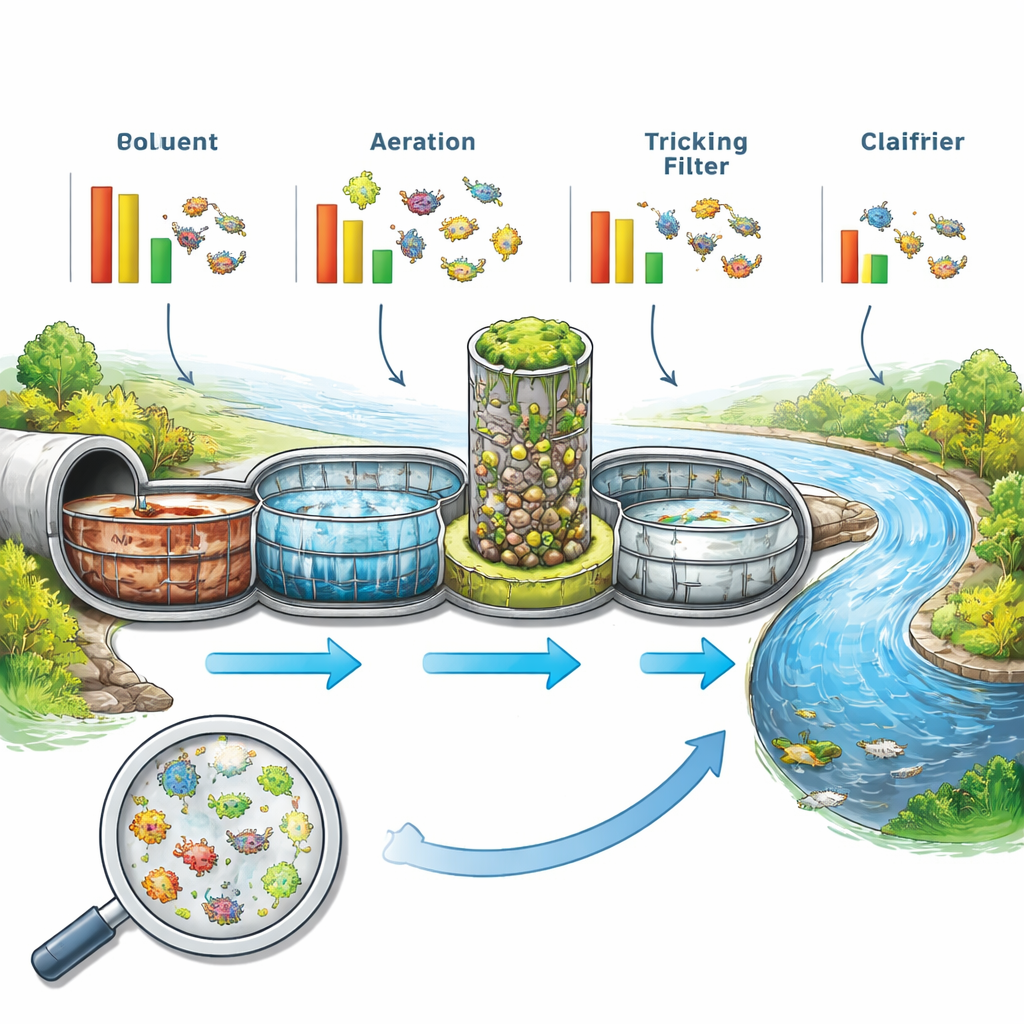
To understand the living “engines” of treatment, the scientists used shotgun metagenomic sequencing—a technique that reads DNA directly from the water—to profile the microbiome at each sampling point. Bacteria dominated, with one major group, Proteobacteria, making up nearly 90 percent of the community in some samples. Genera such as Aeromonas, Acinetobacter, Pseudomonas, Bacillus and Thauera were especially abundant. Many of these microbes are double‑edged: they are powerful degraders of organic pollutants, nutrients and even complex chemicals, yet some can also include disease‑causing strains or carry antibiotic resistance genes. The study showed that shifts in pH, oxygen, solids and salts—and even the presence of metals—strongly influenced which microbes thrived where.
Hidden Potential and Clear Warnings
By linking chemistry with microbiology, the study found that certain bacteria clustered where heavy metals were highest, hinting that they could be used in future clean‑up strategies. Other microbes seemed well suited to breaking down stubborn compounds like petroleum products, pharmaceuticals and industrial solvents, as seen in the functional DNA signatures. Yet overall, the plants’ inability to fully remove COD, ammonia and metals means that these rivers still receive a steady load of harmful substances. The authors argue that continuous monitoring, infrastructure upgrades and smarter designs that blend activated sludge with trickling filters could unlock the full potential of these microbial communities while protecting downstream ecosystems.
What It Means for People and Rivers
In simple terms, this work shows that the treatment plants studied are not cleaning wastewater as thoroughly as needed, even though the right kinds of microbes are present. High levels of organic waste, nutrients and metals are still leaving the plants and entering rivers used for recreation, irrigation and, indirectly, drinking water. Over time, this can damage fish and other wildlife, trigger smelly and sometimes toxic algal blooms, and raise health risks for nearby communities. The study highlights both a warning and an opportunity: without better maintenance, energy reliability and process control, these hidden microbial workers cannot keep up—but with well‑designed systems and routine checks, they could form the backbone of safer, more resilient water recycling.
Citation: Maharaj, S.D., Nkuna, R. & Matambo, T.S. Shotgun metagenomic and physicochemical profiling of municipal wastewater treatment plants using activated sludge and trickling filters. Sci Rep 16, 5486 (2026). https://doi.org/10.1038/s41598-026-35157-6
Keywords: wastewater treatment, microbiome, South Africa, heavy metals, water quality