Clear Sky Science · en
Association between dietary phytochemical index, inflammation and oxidative stress with sleep duration and sleep quality in Iranian adults
Why Your Salad Might Help You Sleep
Many people struggle to fall asleep or stay asleep, and often look to gadgets, supplements, or medications for help. This study suggests a simpler ally you might already have in your kitchen: plant-based foods rich in natural chemical compounds. Researchers in Iran examined whether adults who ate more of these foods tended to sleep longer and better, and whether this pattern was linked to subtle changes in the body’s inflammation and oxidative stress, two internal processes tied to chronic disease and fatigue.
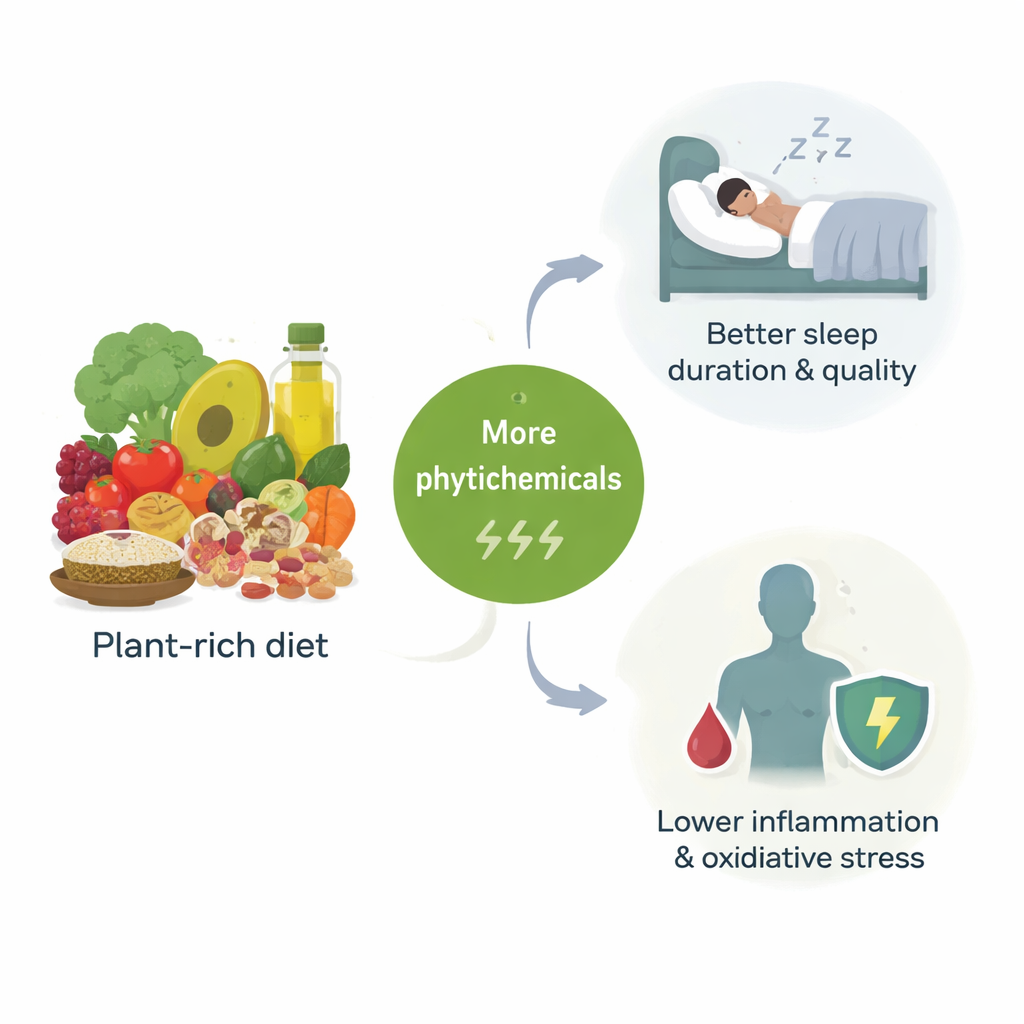
What the Researchers Wanted to Know
The team focused on something called the dietary phytochemical index, or DPI, which captures how much of a person’s daily calories come from plant foods naturally packed with protective compounds. These include fruits, vegetables (excluding potatoes), whole grains, nuts, legumes, olives, olive oil, tomato products, and soy. They asked whether adults with higher DPI scores were less likely to have short sleep (under seven hours per night) or poor sleep quality, and whether blood markers of inflammation and oxidative stress might help to explain any connection they found.
How the Study Was Done
Researchers studied 535 school employees in Isfahan, Iran, with an average age of about 43 years; just over half were men. Participants filled out a detailed 168-item food questionnaire covering their usual diet over the past year, from which the DPI was calculated as the percent of daily calories from phytochemical-rich foods. Sleep habits were measured using the well-established Pittsburgh Sleep Quality Index, which captures both how long people sleep and how well they feel they sleep. Blood samples taken after an overnight fast were analyzed for markers linked to inflammation and oxidative stress, including high-sensitivity C-reactive protein (hs-CRP), malondialdehyde (MDA), and antioxidant enzymes (SOD and GPX).
Plant-Rich Eating and Better Sleep
Participants were grouped into three levels based on their DPI. Those in the highest group, who got more of their calories from plant foods, had noticeably better sleep patterns than those in the lowest group. After accounting for age, sex, body weight, exercise, and other lifestyle factors, people with the highest DPI had about 43% lower odds of sleeping less than seven hours and about 53% lower odds of reporting poor sleep quality. They were also less likely to struggle with taking a long time to fall asleep and with frequent night-time disturbances. These patterns were especially pronounced for women and people of normal weight when it came to sleep quality, and for men and those with overweight or obesity when it came to sleep duration.
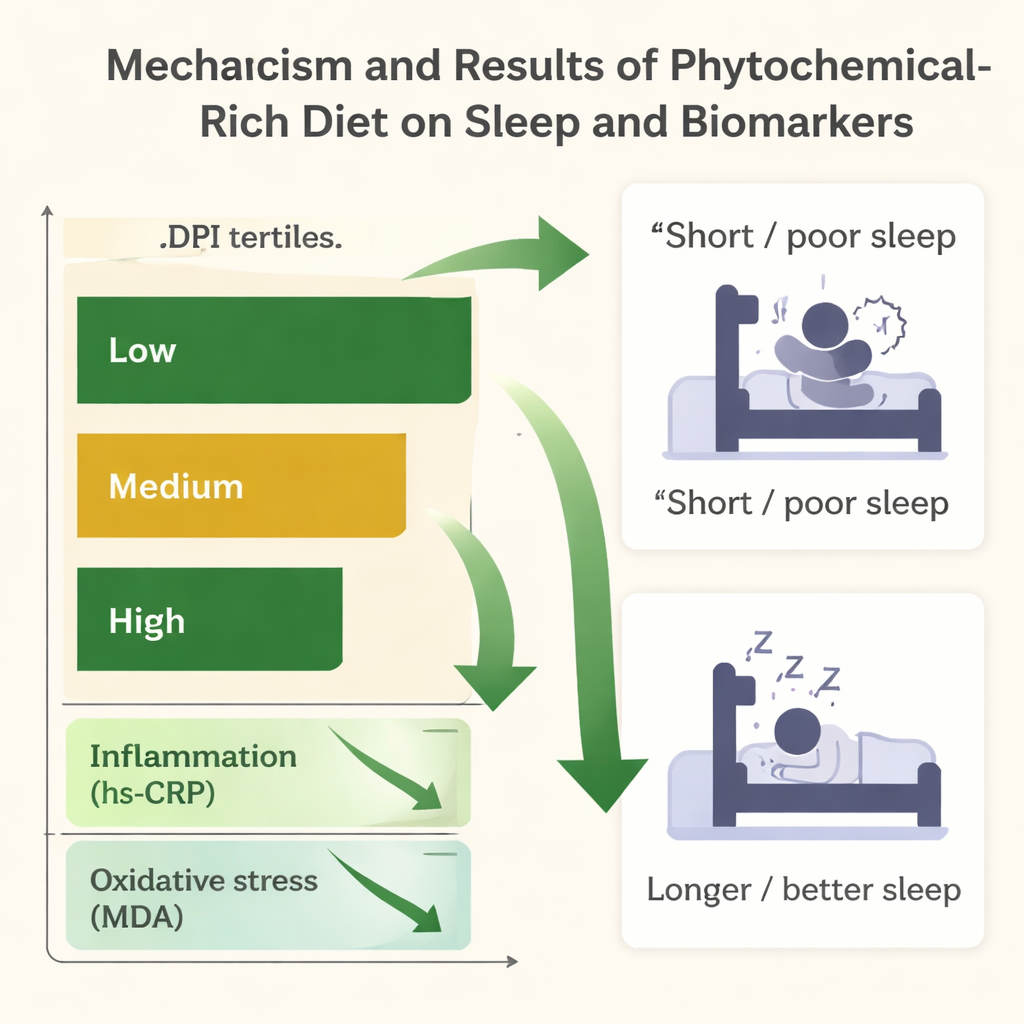
Clues from Inflammation and Oxidative Stress
The blood tests offered hints about what might be happening inside the body. People with better-quality sleep had lower levels of MDA, a compound that reflects oxidative damage to fats in cells. Higher DPI scores were also linked to slightly lower levels of hs-CRP, a marker of chronic, low-grade inflammation, although this trend was just shy of conventional statistical significance. The antioxidant enzymes SOD and GPX did not show clear differences with sleep measures or DPI. Overall, the results suggest that reduced oxidative damage and inflammation might be part of the pathway connecting a plant-rich diet to healthier sleep, but they do not fully explain it.
What This Means for Everyday Life
This study cannot prove that eating more plant foods directly causes better sleep, because it captured only a single snapshot in time, and people with good sleep might also have other healthy habits. Still, the findings point toward a practical, low-risk strategy: shifting more of your plate toward fruits, vegetables, whole grains, legumes, nuts, and healthy plant oils. Doing so may not only support heart and metabolic health, but also help you fall asleep more easily, wake up less often during the night, and feel more rested in the morning—possibly by calming inflammation and oxidative stress in the background.
Citation: Balali, A., Poursalehi, D., Shahdadian, F. et al. Association between dietary phytochemical index, inflammation and oxidative stress with sleep duration and sleep quality in Iranian adults. Sci Rep 16, 5511 (2026). https://doi.org/10.1038/s41598-026-35155-8
Keywords: sleep quality, plant-based diet, phytochemicals, inflammation, oxidative stress