Clear Sky Science · en
Dietary thiaminase alters morphology and decreases swimming performance of lake trout (Salvelinus namaycush)
When Vitamins Shape a Fish’s Life
What lake trout eat can literally change how they look and how fast they swim. This study explores how a vitamin-destroying enzyme in common prey fish might be undermining efforts to restore lake trout in the Great Lakes—by slowing them down, slimming their bodies, and even altering their color. Understanding these hidden dietary effects helps explain why some reintroduction programs struggle, and what managers can do about it.
A Problem Hidden in the Food Chain
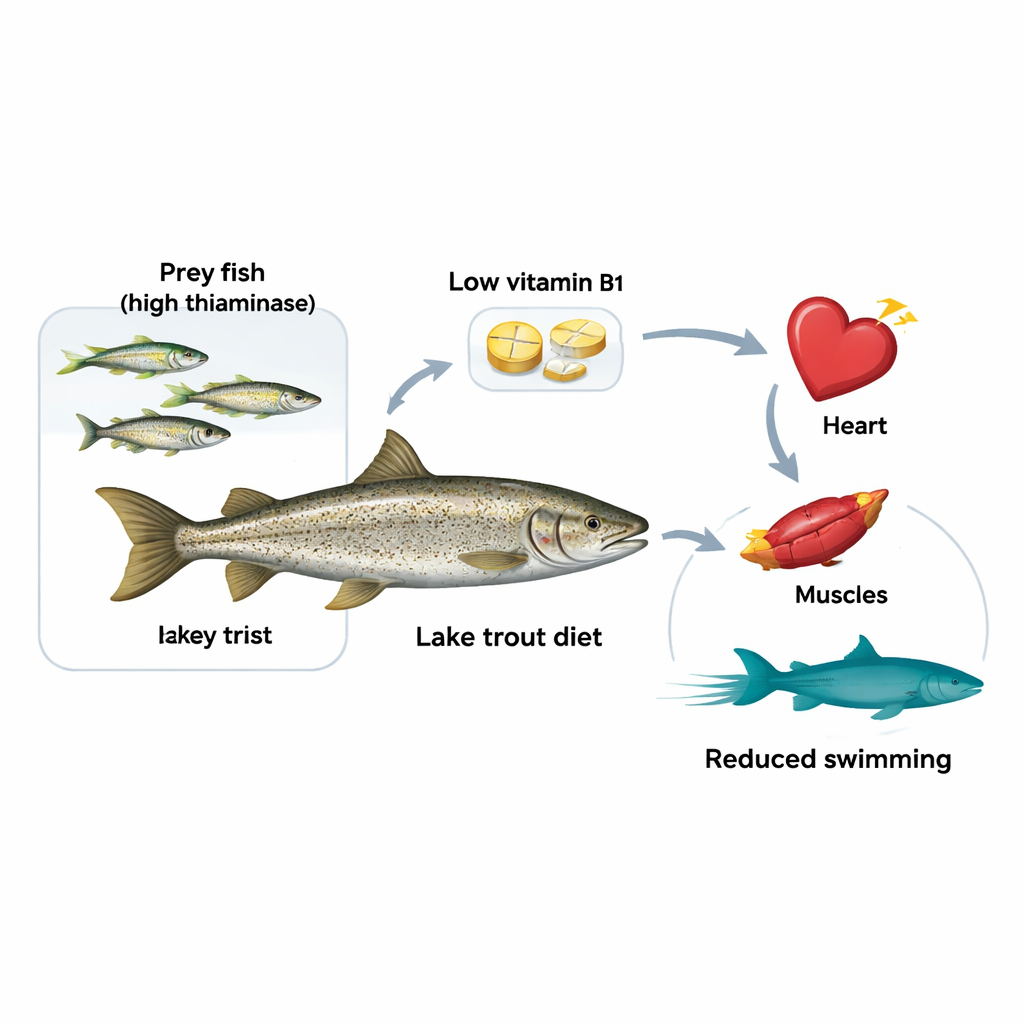
Lake trout once thrived in Lake Ontario but were nearly wiped out by overfishing and habitat change. Today, managers stock hatchery fish from different source populations, hoping to rebuild wild populations. However, the lake is now dominated by small prey fish such as alewife and rainbow smelt that contain thiaminase, an enzyme that breaks down vitamin B1 (thiamine). Thiamine is crucial for energy production, nerve function, and muscle activity in all animals, including fish. When trout eat a lot of thiaminase-rich prey, they can become thiamine-deficient, which has already been linked to reproductive failure and heart problems. The authors wanted to know: does this diet also change how juvenile lake trout grow, swim, and look—and do different trout strains cope differently?
Putting Two Trout Strains to the Test
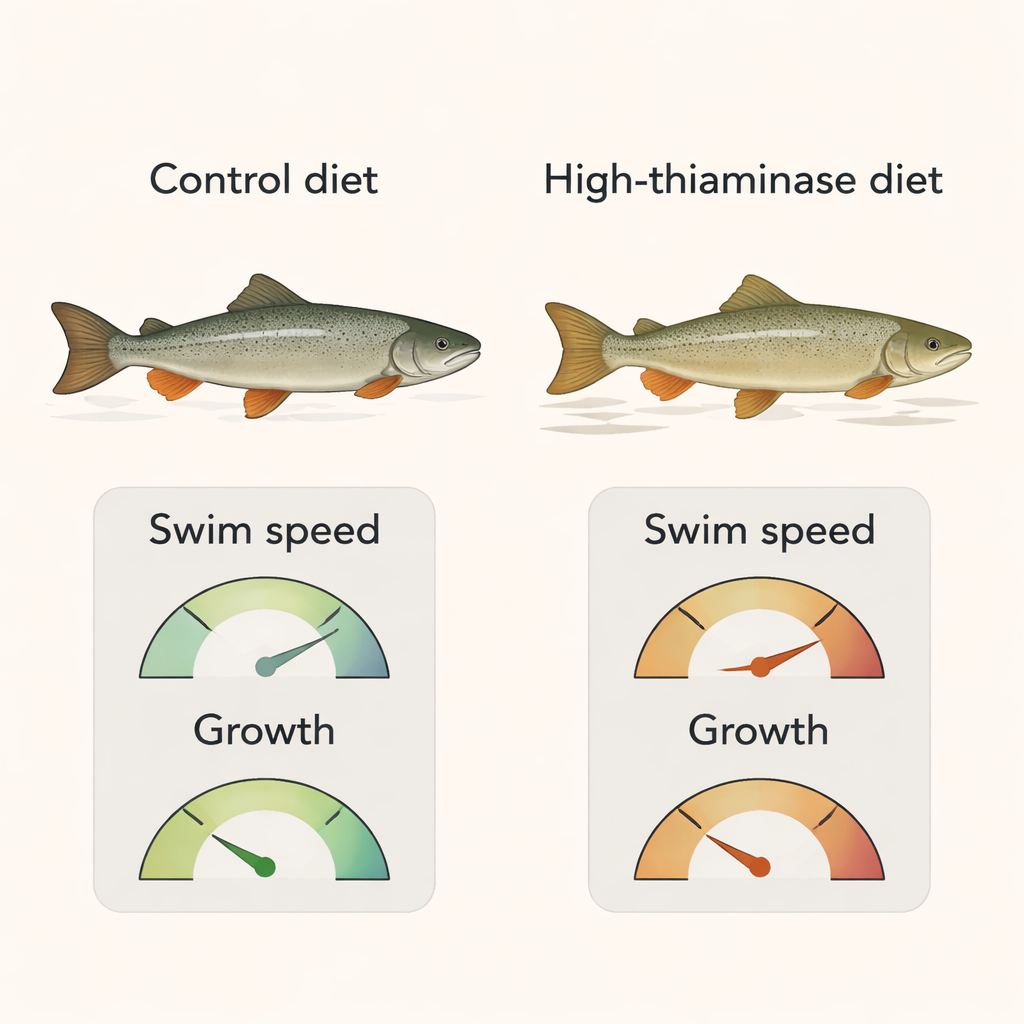
The researchers raised young lake trout from two hatchery strains, Seneca Lake and Slate Islands, in identical tank conditions. These strains come from lakes with different histories of exposure to thiaminase-rich prey, so one might be expected to be more tolerant. For about nine months, half of the fish from each strain were fed a control diet, while the other half received a diet containing bacterial thiaminase, designed to mimic eating high-thiaminase prey fish. The team then measured how fast the trout could swim against a current until exhaustion, whether they could recover afterward, how quickly they grew, how their body shape changed, and how their skin color shifted.
Slower Swimmers with Leaner Bodies
Fish on the thiaminase diet performed worse in several key ways that matter for survival in the wild. Their critical swim speed—the highest steady speed they could maintain before tiring—was significantly lower, and they reached exhaustion sooner than trout on the control diet. They also ended the experiment smaller and grew more slowly. Body shape analyses showed that thiaminase-fed fish had a shallower body depth from back to belly, giving them a leaner profile. In nature, a deeper body can help resist predators with large mouths, and strong steady swimming is essential for catching prey and avoiding danger. Interestingly, while trout on the thiaminase diet swam more poorly, they did not have a worse chance of recovering after exhaustive exercise, perhaps because they never reached the same level of exertion as the healthier fish.
Color Changes as a Clue to Health
The study also found that diet altered the fishes’ coloration. Overall, trout on the thiaminase diet showed more yellow pigmentation in several body regions, a change that may signal liver stress or jaundice related to metabolic problems. The patterns of red and green tones differed between the two strains, particularly in the fins and tail. Seneca Lake fish on the thiaminase diet lost some of their red pigmentation compared to controls, which the authors suggest could point to reduced blood flow or heart function in peripheral tissues. Although coloration might seem cosmetic, for fish it can influence camouflage, predator avoidance, social signals, and even reflect underlying organ health.
What This Means for Restoring Wild Trout
For wildlife managers trying to rebuild lake trout populations in ecosystems dominated by thiaminase-rich prey, these findings carry an important message. A diet that destroys vitamin B1 does more than harm reproduction—it slows the fish, alters their body shape, and changes their color in ways likely to reduce survival. Contrary to expectations, the strain with a longer history of exposure to such prey did not clearly escape these effects. The results suggest that some strains, like the Slate Islands fish, may better withstand thiaminase-related stress, and that careful strain selection, alongside efforts to manage food-web conditions, could improve the odds of successful lake trout restoration.
Citation: Therrien, C.A., Baker, P.M., Garner, S. et al. Dietary thiaminase alters morphology and decreases swimming performance of lake trout (Salvelinus namaycush). Sci Rep 16, 5493 (2026). https://doi.org/10.1038/s41598-026-35139-8
Keywords: lake trout, thiamine deficiency, swimming performance, Great Lakes, fish restoration