Clear Sky Science · en
Designing eco-friendly pH-responsive Azo dyes for sustainable textile fabrics
Why color-changing fabrics matter
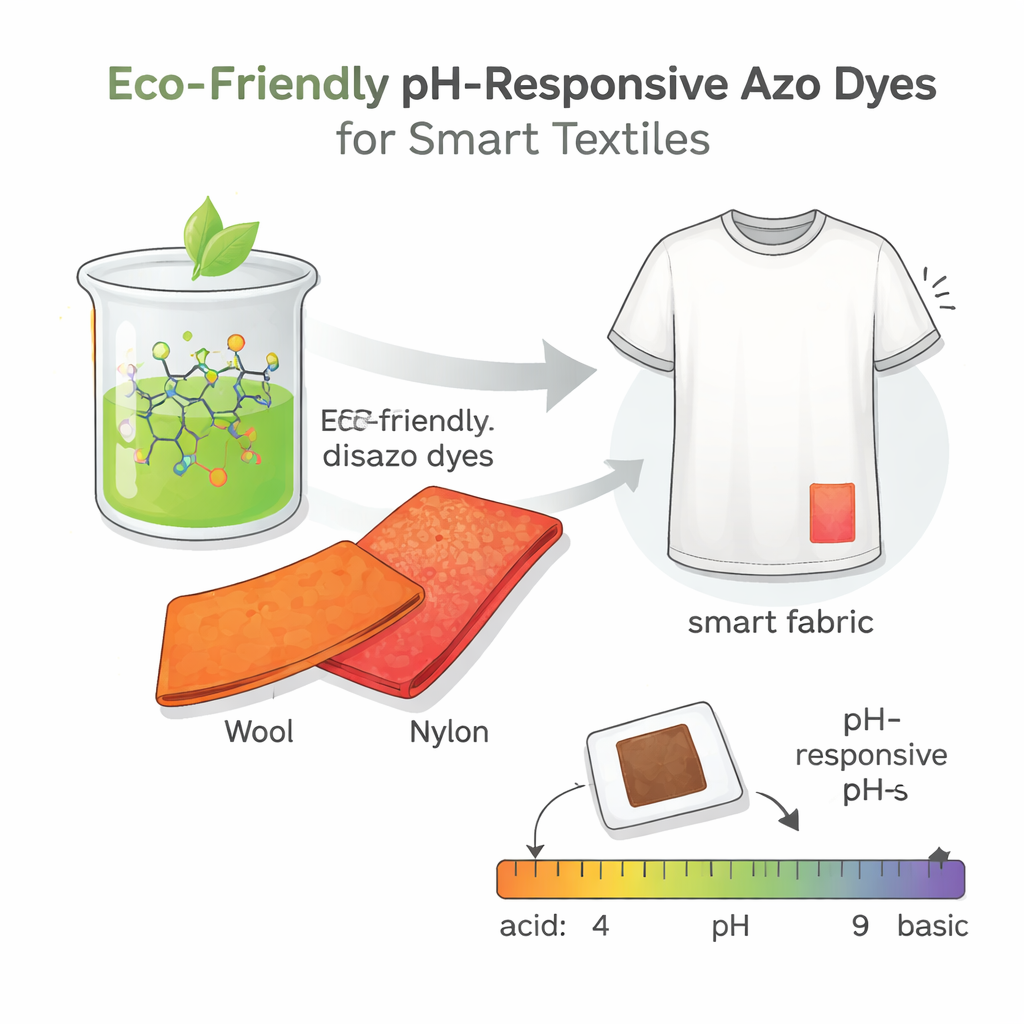
Imagine a shirt that tells you when your sweat is becoming too acidic, or a bandage that changes color if a wound’s chemistry shifts. This study explores new fabric dyes that not only produce vivid, durable colors but can also act like tiny chemical sensors. The researchers set out to design eco-friendlier dyes that cling tightly to common fibers such as wool and nylon, resist washing and sunlight, and in one case change color in response to acidity (pH), opening the door to smart, responsive textiles.
How today’s dyes fall short
Modern textiles rely heavily on synthetic dyes, especially a large family called azo dyes, which can produce bright reds, oranges, and yellows. Many of these dyes work well on protein-based fibers like wool and on nylons, but they have drawbacks. Some do not fix strongly to the fabric and can wash out, contributing to water pollution. Others require extra chemicals called mordants, which can themselves be environmentally harmful. At the same time, there is growing interest in “smart” fabrics that can signal changes in their surroundings, such as shifts in sweat chemistry or environmental pollutants—tasks most traditional dyes were never designed to perform.
Designing new color molecules
The team created four new disazo acid dyes, labeled D1 through D4, using a classic two-step route: first converting an aromatic amine into a highly reactive diazonium salt, then coupling it with other aromatic molecules to build an extended, color-producing structure. All four dyes were based on sulphanilic acid and combined with different partners (aniline or naphthylamines, and two forms of naphthol) to subtly tune the color and behavior. These dyes include sulfonate groups that make them easily soluble in water and polar solvents, allowing them to be applied in simple aqueous baths without heavy metals or harsh auxiliaries.
From lab beaker to fabric
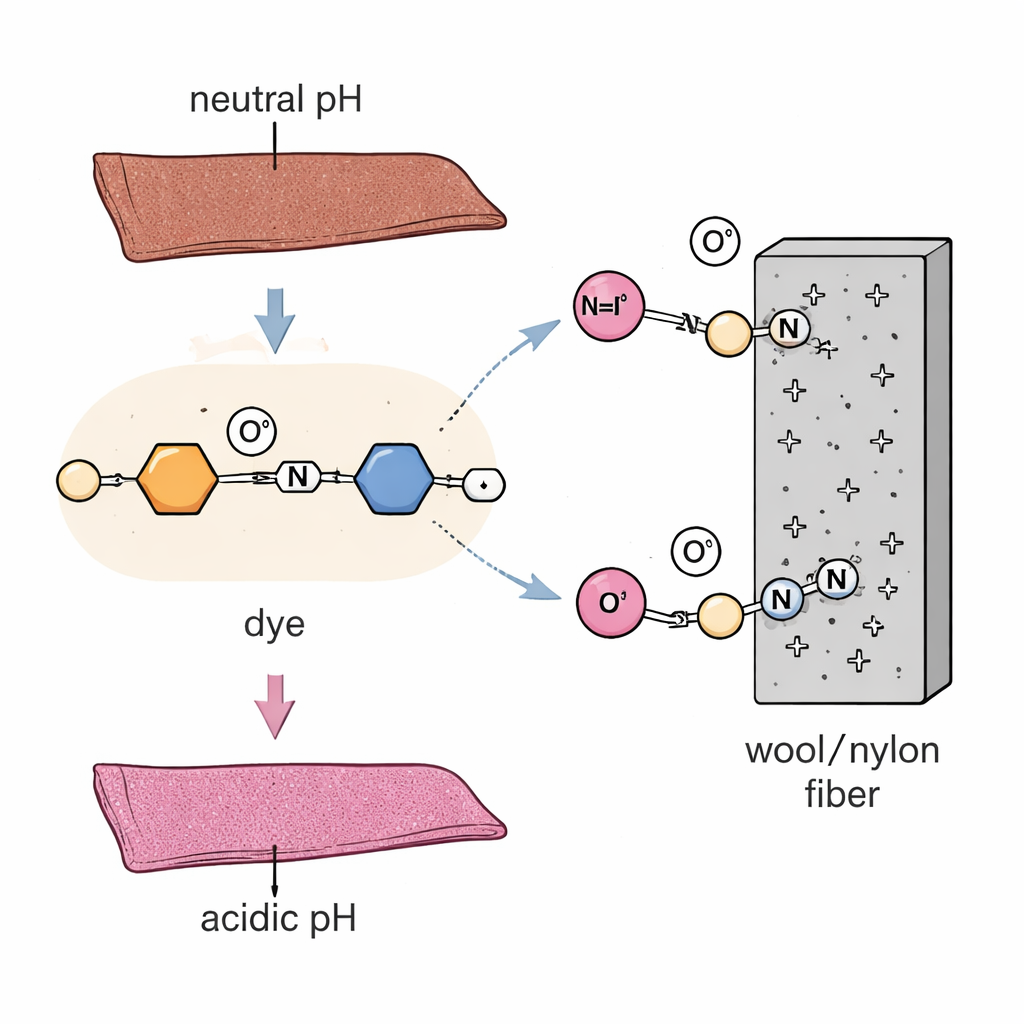
To test practicality, the dyes were applied to scoured wool and nylon fabrics using standard acidic dye baths. At low pH, the fibers’ amino groups become positively charged, attracting the negatively charged dye groups and forming strong ionic bonds. The result was a range of bright shades—mainly oranges and reds on wool, and from orange to purple on nylon, with darker, richer hues on wool. Measurements of color strength (K/S), how evenly the color spread, and how much dye stayed on the fabric (exhaustion and fixation) all indicated that the dyes attached efficiently, especially to wool. Wash and light fastness tests, following international standards, showed ratings of 4–5, meaning the colors barely faded or bled during laundering or daylight exposure.
Built-in pH sensing and low leaching
One of the new dyes, D1, showed a striking, reversible color shift with acidity. In water near neutral pH it appeared brown, but as the solution became more acidic it turned pale pink. This happens because changing pH alters the protonation of parts of the dye molecule, slightly rearranging its electrons and shifting which wavelengths of light it absorbs. The effect was also visible on dyed fabrics, suggesting that clothes or technical textiles colored with D1 could respond visually to changes in local pH. Just as important, leaching tests showed that once fixed to wool or nylon, all four dyes barely left the fabric in neutral or mildly acidic water, with only modest release in strongly basic conditions. That means less dye entering wastewater during typical washing and use.
What this means for everyday textiles
In plain terms, the study demonstrates that it is possible to design dyes that are both high-performing and more environmentally considerate. The new disazo dyes give vivid, long-lasting colors on wool and nylon and show very little tendency to wash out, reducing the load on wastewater treatment. Dye D1 adds an extra twist by acting as a simple chemical indicator, changing from brown to pink when conditions turn acidic. Together, these features point toward future fabrics that are not only colorful and durable, but can also “talk back” about their environment—signaling sweat chemistry, pollution, or process conditions—while helping to lower the ecological footprint of textile dyeing.
Citation: Shahzadi, K., Sarfraz, M., Alomar, M. et al. Designing eco-friendly pH-responsive Azo dyes for sustainable textile fabrics. Sci Rep 16, 5020 (2026). https://doi.org/10.1038/s41598-026-35135-y
Keywords: smart textiles, pH-responsive dyes, eco-friendly dyeing, azo colorants, wool and nylon fabrics