Clear Sky Science · en
Effectiveness of voluntary isocapnic hyperpnoea for mitigating hypoxemia and acute mountain sickness in normobaric hypoxia: a randomized crossover pilot trial
Breathing Your Way to Safer High-Altitude Trips
Anyone who has hiked or skied in the mountains knows that thin air can quickly turn an exciting trip into a miserable experience filled with headaches, nausea, and overwhelming fatigue. These symptoms, known as acute mountain sickness, are driven by a simple problem: your body is not getting enough oxygen. This study explores whether a specific kind of controlled, deep breathing—called voluntary isocapnic hyperpnoea—can temporarily boost oxygen levels in the blood and ease these symptoms, offering a simple, equipment-based tool that climbers, trekkers, and high-altitude workers might one day use alongside traditional strategies.
A New Spin on Deep Breathing
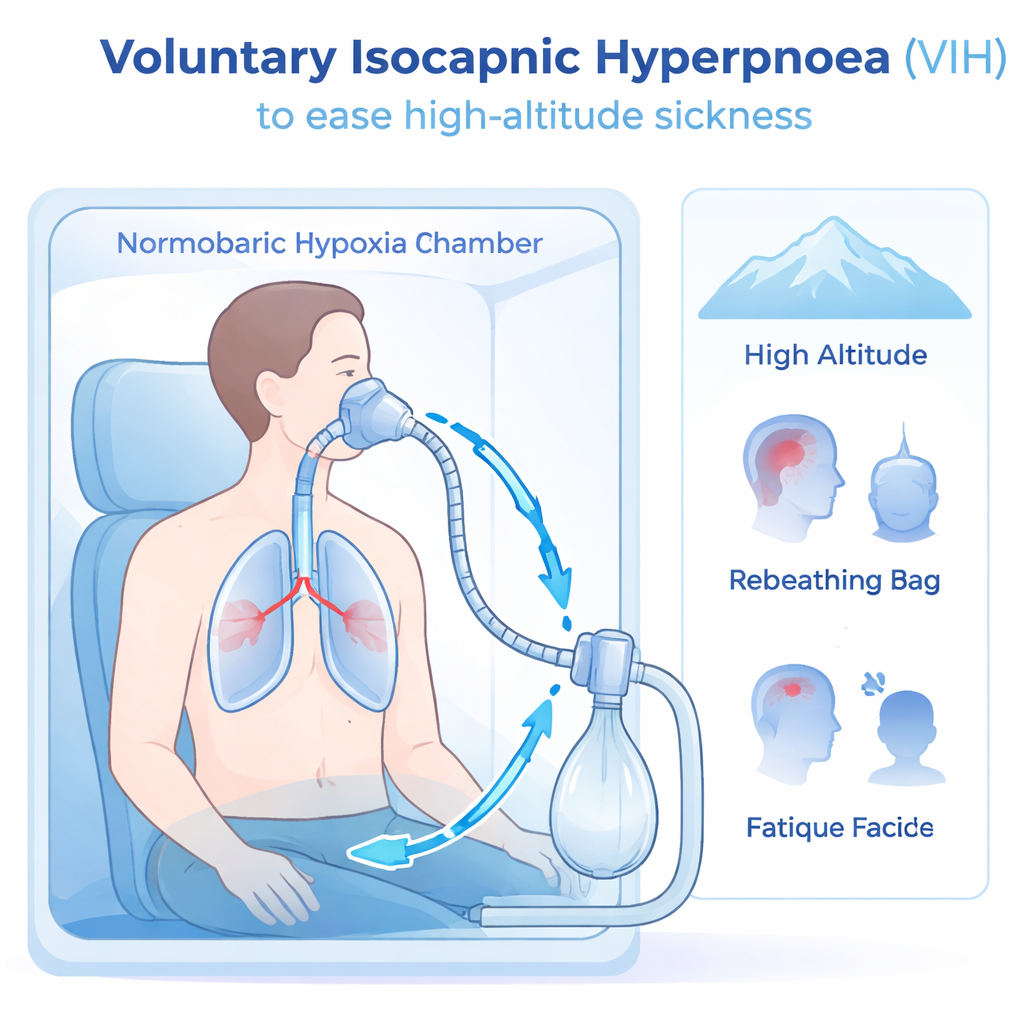
The researchers focused on a breathing method known as voluntary isocapnic hyperpnoea (VIH). Unlike ordinary deep breathing or frantic panting at altitude, VIH uses a special handheld device with a rebreathing bag. This setup lets people breathe very quickly and deeply while keeping carbon dioxide in the blood at safer, more normal levels. That matters because uncontrolled hyperventilation washes out too much carbon dioxide, which can cause dizziness and other side effects. VIH has already been used as a form of respiratory muscle training for athletes; here, the authors asked whether a brief, five-minute session could help people cope better with low-oxygen conditions similar to a high mountain environment.
Simulating a High Mountain in a Chamber
Eighteen healthy, physically active adults who normally live at sea level took part in the trial. On two separate evenings, each person sat for two hours in a special room where the oxygen level was lowered to mimic conditions at about 4,200 meters above sea level. In one session, the volunteers simply rested in the chamber. In the other, after one hour, they performed a five-minute VIH session using an isocapnic breathing device guided by a mobile app. Throughout both sessions, the researchers measured blood oxygen saturation using a fingertip sensor, sampled blood from the finger to check gases such as oxygen and carbon dioxide, recorded blood pressure and heart rate, and asked participants about symptoms of altitude sickness using a standard questionnaire.
Short Breathing Burst, Noticeable Oxygen Boost
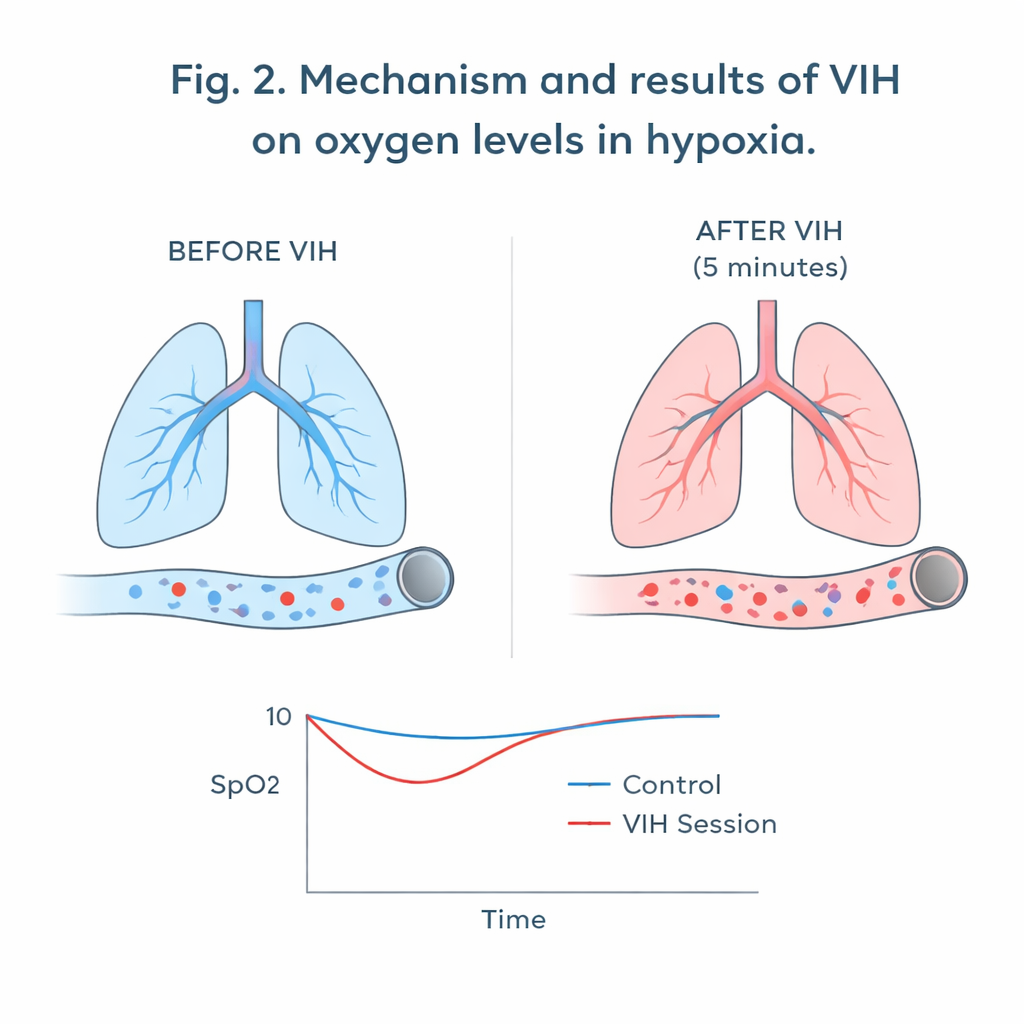
The five-minute VIH session produced a clear, if temporary, lift in oxygen levels. Just before the breathing exercise, most participants showed clinical hypoxemia—blood oxygen saturation below 90 percent. Immediately after VIH, the number of people in this low-oxygen range dropped from 15 to 4, and average saturation rose from about 86 to 91 percent. The partial pressure of oxygen in the blood also increased. When the researchers compared the experimental and control days, they found that oxygen levels were higher in the VIH session at the mid-point measurement, right after the breathing exercise, but by the end of the full two hours the advantage had faded. Symptoms of acute mountain sickness were generally mild in this short exposure, but the proportion of people meeting the clinical threshold for the condition was roughly halved after VIH.
How This Breathing Trick Might Help
The study suggests that VIH improves oxygenation mainly by greatly increasing air flow in and out of the lungs, while the device’s rebreathing system prevents carbon dioxide from dropping too low. Higher oxygen saturation has been linked in other research to milder altitude sickness. The authors also point out that controlled breathing can influence blood flow in the brain and may calm stress responses, which could help with headaches, sleep problems, and general discomfort at altitude. At the same time, they found no strong changes in blood pressure, and the improvements in oxygen levels did not last long after the five-minute session, highlighting that VIH acts more like a quick boost than a lasting fix.
What It Means for Mountain Travelers
For climbers, trekkers, and others heading to high places, this pilot trial signals that a short bout of guided, device-based deep breathing can safely and briefly raise blood oxygen levels in low-oxygen environments and may slightly reduce early signs of mountain sickness. However, the study was small, and the simulated altitude exposure was too short to trigger strong symptoms in most participants. As a result, the authors caution that VIH is not yet ready to replace proven measures such as gradual ascent or medications when indicated. Instead, it appears to be a promising, non-drug tool that might one day complement existing approaches, especially for people who need a temporary boost in oxygenation while their bodies are still adjusting to life higher up.
Citation: Kowalski, T., Rębiś, K., Wilk, A. et al. Effectiveness of voluntary isocapnic hyperpnoea for mitigating hypoxemia and acute mountain sickness in normobaric hypoxia: a randomized crossover pilot trial. Sci Rep 16, 4784 (2026). https://doi.org/10.1038/s41598-026-35131-2
Keywords: acute mountain sickness, high altitude, hypoxia, breathing training, oxygen saturation