Clear Sky Science · en
Hybrid deep learning and RSM modeling of diesel engine performance using TiO2 doped butanol and waste plastic oil blends
Turning Trash and Alcohol into Cleaner Diesel Fuel
Plastic waste and diesel exhaust are two big environmental headaches. This study explores an inventive way to tackle both at once: turning waste plastic into engine fuel, mixing it with a common industrial alcohol (1‑butanol), and sprinkling in microscopic titanium dioxide (TiO2) particles to help engines run more efficiently and pollute less. The work also uses modern data tools to pinpoint the best way to run such an engine, offering a glimpse of how smarter fuels and smarter algorithms could reshape everyday transportation.
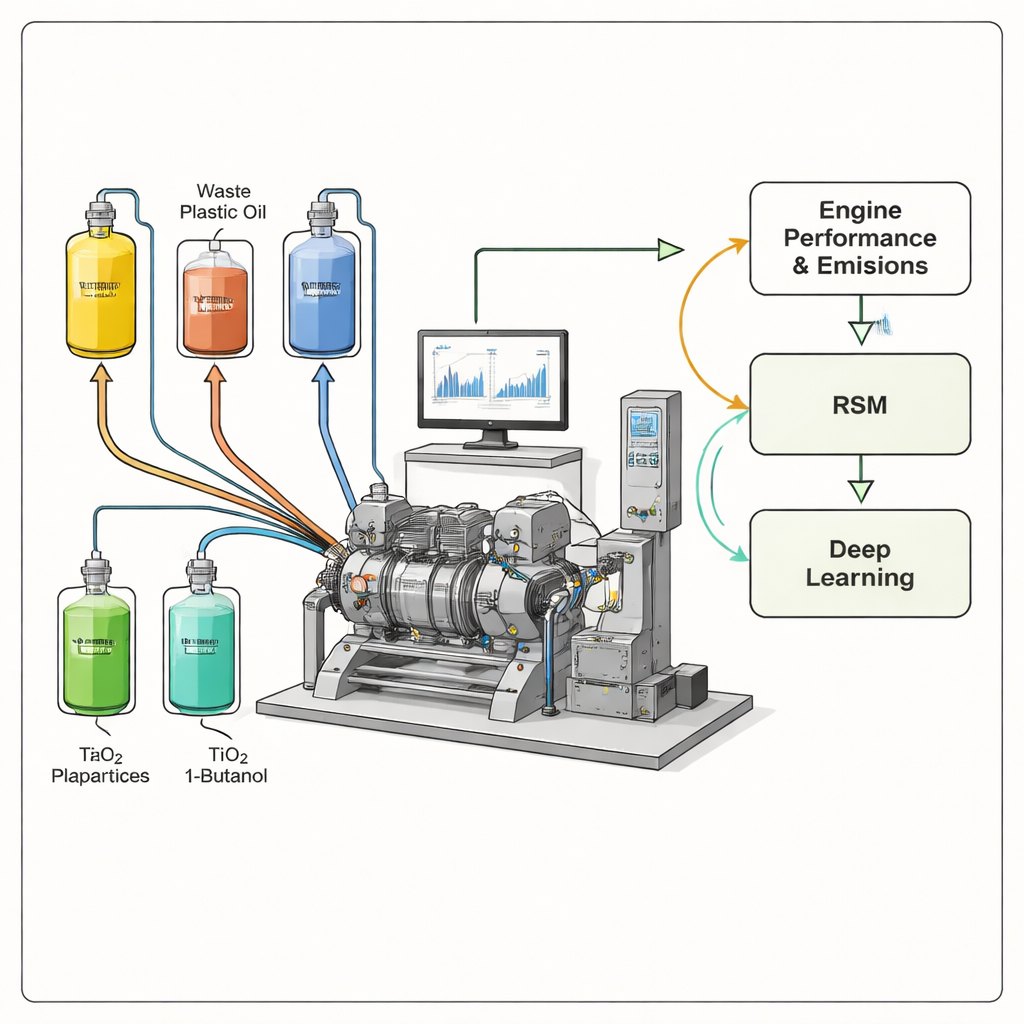
Why Rethink Diesel Fuel?
Diesel engines power trucks, generators, farm equipment and ships around the world, but they rely on fossil fuel and emit soot and harmful gases. At the same time, discarded plastic is piling up in landfills and oceans. The researchers combine these problems into a potential solution by using pyrolysis—a process that heats waste plastic without oxygen—to make an oily liquid that can be burned like fuel. They then blend this plastic-derived oil with regular diesel and a small amount of 1‑butanol, an alcohol that naturally contains oxygen and can help fuel burn more completely. To further tune the combustion, they add TiO2 nanoparticles, which act like tiny catalysts, encouraging cleaner and faster burning inside the cylinder.
Building and Testing the New Fuel
In the lab, the team created several fuel mixtures by varying the proportions of diesel, plastic oil, 1‑butanol and the dose of TiO2. They ran these blends in a single‑cylinder diesel engine, measuring how efficiently it converted fuel into useful work (brake thermal efficiency and fuel consumption) and how much pollution came out the exhaust (including carbon monoxide, unburned hydrocarbons, carbon dioxide and nitrogen oxides). One mixture in particular—80% diesel, 13% plastic oil, 7% butanol and 75 parts per million of TiO2—stood out. It delivered the highest efficiency, using less fuel per unit of power than plain diesel, while also cutting several key emissions. Another blend containing only plastic oil plus more TiO2 was especially effective at trimming carbon monoxide and hydrocarbon emissions, thanks to more complete burning.
What Happens Inside the Engine
These performance gains come from how the new fuels behave in the harsh environment of the engine cylinder. The added 1‑butanol brings extra oxygen into the fuel, helping it mix better with air and burn more completely. The plastic‑oil component supplies energy while reducing the overall carbon‑to‑hydrogen ratio, which can lower carbon dioxide formation per unit of power. TiO2 nanoparticles influence the combustion in several ways: they help break up fuel droplets into finer sprays, provide reactive surfaces that speed up oxidation, and smooth out temperature spikes that normally create hot spots and extra nitrogen oxides. The researchers observed higher peak pressures and faster heat release for certain blends, signs that more of the fuel’s energy is being harnessed in a controlled way rather than wasted as heat and soot.
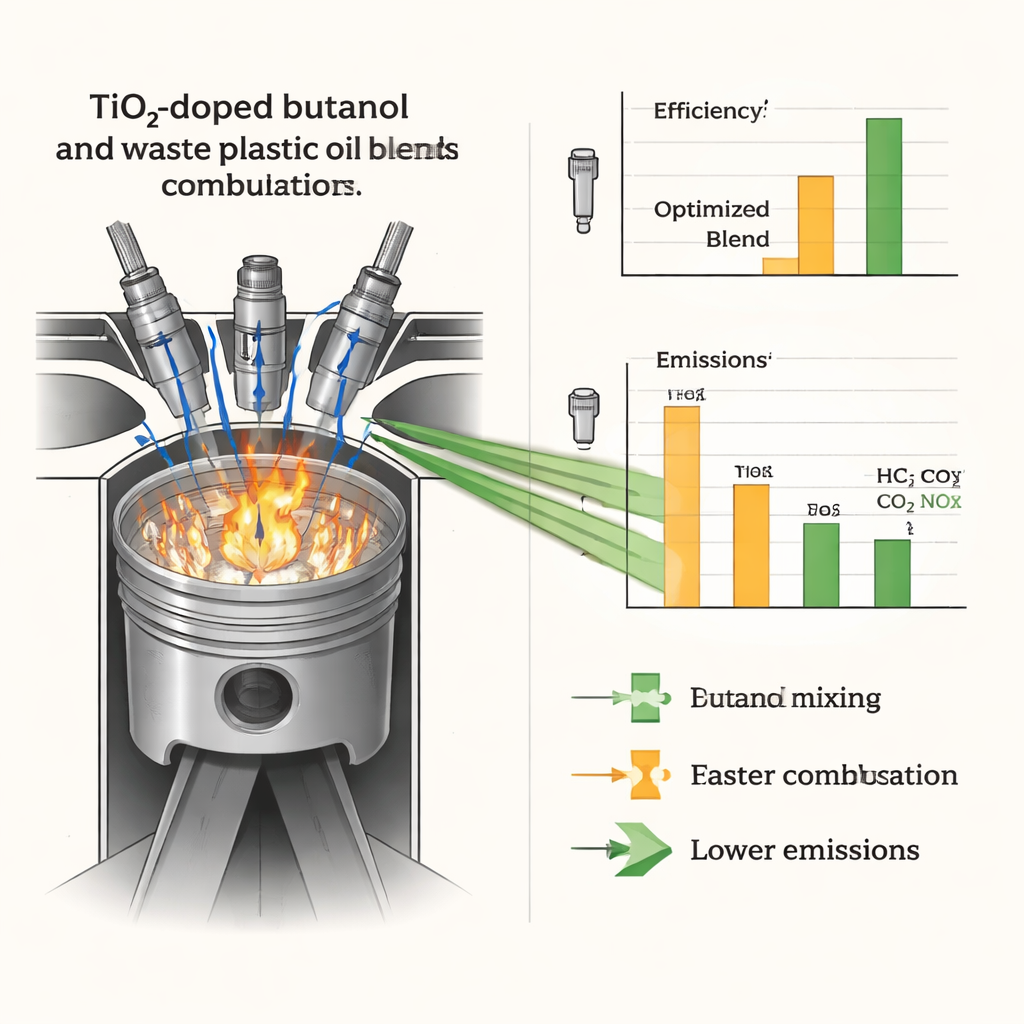
Letting Algorithms Tune the Engine
Because many factors—engine load, fuel composition and energy content—change at once, the team turned to statistics and machine learning to find the “sweet spot.” Using a method called response surface methodology, they built mathematical maps showing how efficiency and each pollutant respond as conditions change, then searched those maps for the best combination. They also trained Bayesian neural networks, a modern form of deep learning that not only predicts outcomes but also estimates its own uncertainty. These models consistently outperformed simple linear fits, giving more accurate forecasts of efficiency and emissions. By combining the two approaches, the researchers identified an operating point that balances high efficiency with lower emissions, while clearly revealing the classic trade‑off: squeezing more work from each drop of fuel tends to raise nitrogen oxide levels unless other changes are made.
What It Means for Everyday Engines
For non‑specialists, the message is straightforward: it is possible to run a conventional diesel engine on carefully designed blends that include waste plastic oil, a modest dose of alcohol and nano‑sized additives, and still meet or even improve on the performance of standard diesel. The most promising blend in this study used less fuel, emitted less carbon monoxide and unburned fuel, and lowered carbon dioxide and nitrogen oxides compared with typical diesel operation under optimized conditions. While this is an early, single‑cylinder experiment rather than a ready‑to‑use commercial fuel, it shows that pairing innovative fuel chemistry with advanced data‑driven optimization could turn everyday engines into cleaner, more sustainable machines while helping to recycle persistent plastic waste.
Citation: Sunil Kumar, K., Ali, A.B.M., Razak, A. et al. Hybrid deep learning and RSM modeling of diesel engine performance using TiO2 doped butanol and waste plastic oil blends. Sci Rep 16, 4953 (2026). https://doi.org/10.1038/s41598-026-35126-z
Keywords: waste plastic fuel, diesel engine emissions, nanoparticle additives, biofuel blends, machine learning optimization