Clear Sky Science · en
The interplay of grit, resilience, and burnout among medical students during exams: a cross-sectional study in Mansoura university, Egypt
Why exam stress in medical school matters to everyone
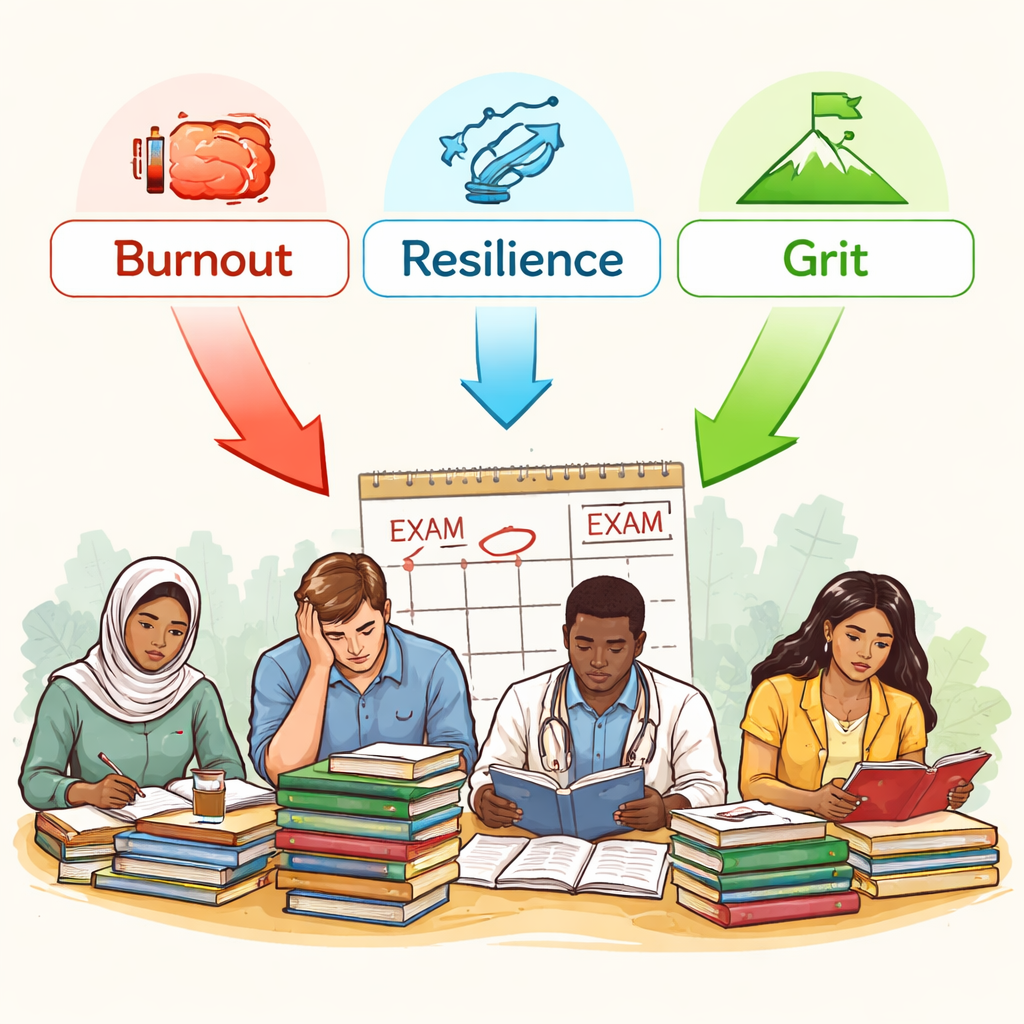
When future doctors are pushed to their limits, it can affect not only their own health but the care they will one day provide. This study from Mansoura University in Egypt looks at what helps medical students cope with the extreme pressure of exam season. By focusing on two inner strengths—grit (sticking with long-term goals) and resilience (bouncing back after setbacks)—the researchers ask a simple but vital question: which students burn out, and which manage to keep going without breaking down?
The hidden cost of becoming a doctor
Medical education is notoriously intense, and exams are the peak of that pressure. During these periods, students often face long hours of study, little sleep, and a constant fear of failure. Around the world, more than half of medical students show signs of burnout, and some studies report even higher rates. Burnout in students shows up as deep exhaustion, trouble thinking clearly, feeling detached from their studies, and doubting their own abilities. In Egypt, where there is already a shortage of physicians and many young doctors plan to emigrate, burnout among students is especially worrying because it may shrink the future healthcare workforce even further.
Measuring stamina of mind and spirit
The researchers surveyed 653 medical students across all five years of study at Mansoura University during their final exams in January 2025. Students filled out three established questionnaires: one measured burnout, another measured grit, and a third measured resilience. All used simple rating scales, asking how often students felt worn out, how easily they gave up on tasks, or how quickly they recovered from hard times. The survey, shared anonymously through official student channels, also collected basic information like age, sex, and whether students lived in rural or urban areas. This allowed the team to see which groups were most at risk and which personal traits best protected against exam stress.
What the numbers revealed about burnout
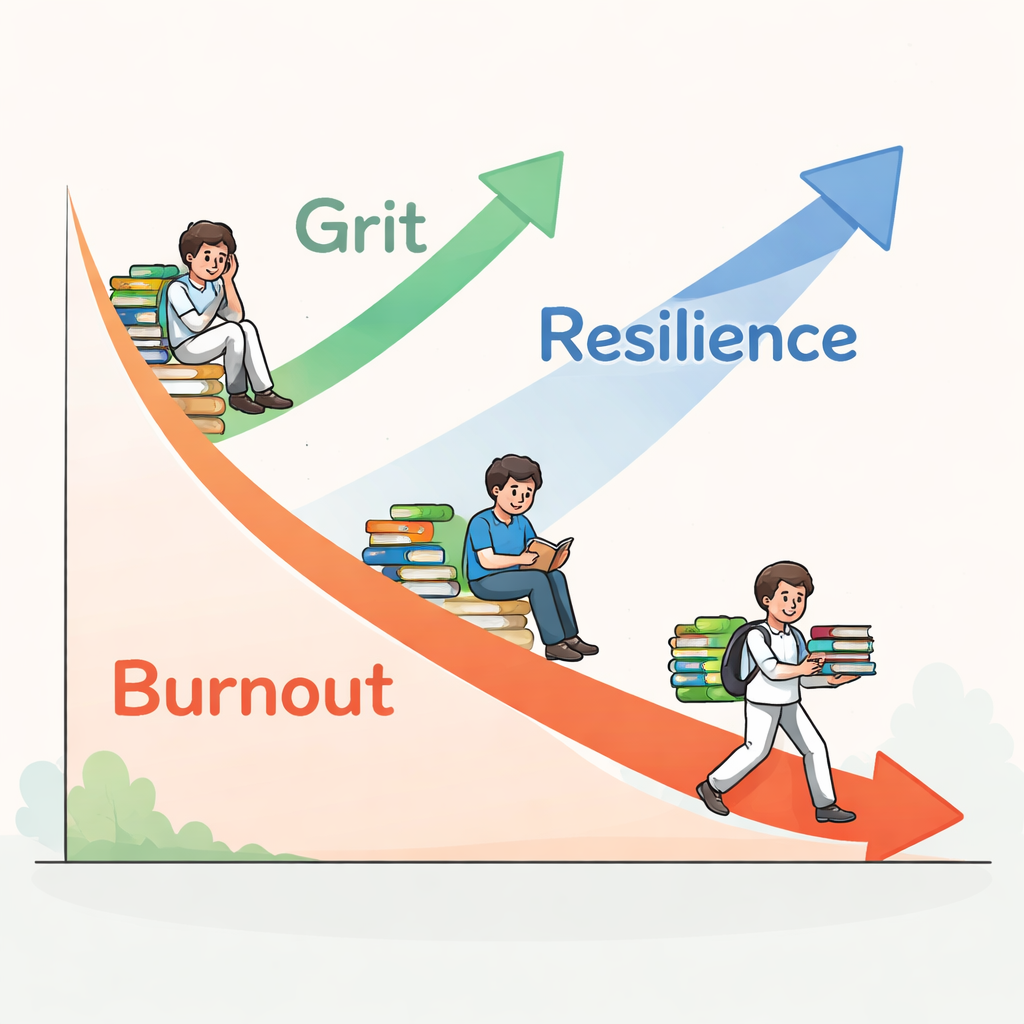
Overall, burnout scores were high, especially for exhaustion and problems with concentration and memory—both crucial for success in medical school. Female students reported more burnout and lower resilience than male students, and older students showed less grit and slightly higher burnout than younger ones. When the researchers examined the links between traits, they found that students with higher grit or higher resilience consistently had lower burnout. These relationships were strong: students who stuck with their goals and bounced back from difficulties were much less likely to feel drained, unfocused, or emotionally overwhelmed by exams.
Grit and resilience as a protective shield
Using statistical models, the team tested whether grit and resilience could predict burnout even after accounting for age, sex, year in school, and place of residence. Together, these two traits explained nearly half of the differences in burnout scores between students. Higher grit was linked to markedly lower burnout, and resilience added further protection. Grit seemed especially tied to clearer thinking under stress, while resilience was closely related to fewer emotional troubles. The two traits also went hand in hand: students with more grit tended to be more resilient, suggesting that strengthening one might help build the other. The authors argue that these inner resources act like a buffer, softening the blow of exam stress.
Building stronger students, safer healthcare
For non-specialists, the key message is straightforward: students who can persevere through long-term challenges and bounce back from setbacks are less likely to be crushed by exam pressure. The study suggests that medical schools should not only teach science and clinical skills but also actively train grit and resilience—through workshops on goal-setting, time management, reframing negative thoughts, and simple stress-management practices such as deep breathing and mindfulness. While this one study cannot prove cause and effect, it offers strong evidence that nurturing these psychological strengths could protect future doctors from burning out, help them learn more effectively, and ultimately support a more stable and compassionate healthcare system.
Citation: Omar, Y.M., Abdelmageed, A., Shaker, O. et al. The interplay of grit, resilience, and burnout among medical students during exams: a cross-sectional study in Mansoura university, Egypt. Sci Rep 16, 4089 (2026). https://doi.org/10.1038/s41598-026-35125-0
Keywords: medical student burnout, grit, resilience, exam stress, Egypt healthcare