Clear Sky Science · en
Association between hydrogen gas inhalation and cardiac output in an asphyxiated piglet model
Why protecting newborn hearts matters
When babies are deprived of oxygen around the time of birth, doctors focus on saving the brain from lasting damage. But the heart and lungs are also under severe stress, and weakened heart function can worsen brain injury by limiting blood flow. This study used newborn piglets, whose hearts are similar in size and function to human newborns, to ask a simple question with big clinical implications: could breathing a small amount of hydrogen gas after asphyxia help the struggling heart pump blood more effectively—especially from the right side, which sends blood to the lungs?
Birth oxygen loss and the fragile newborn heart
When oxygen and blood flow drop sharply—a condition called hypoxic-ischaemic (HI) insult—many organs are injured at once. In babies with hypoxic-ischaemic encephalopathy (HIE), about 80% also show cardiovascular problems such as weak heart contractions, low blood pressure, and high pressure in the lung’s blood vessels. In recent years, right-sided heart failure has emerged as a key factor linked to worse brain outcomes in these infants. Yet there are few treatments that can support the right side of the heart starting immediately after resuscitation. The authors had previously shown that hydrogen gas could protect the brain in a similar piglet model. Here, they shifted attention to the heart to see whether hydrogen inhalation could also preserve cardiac output—the volume of blood pumped per minute.
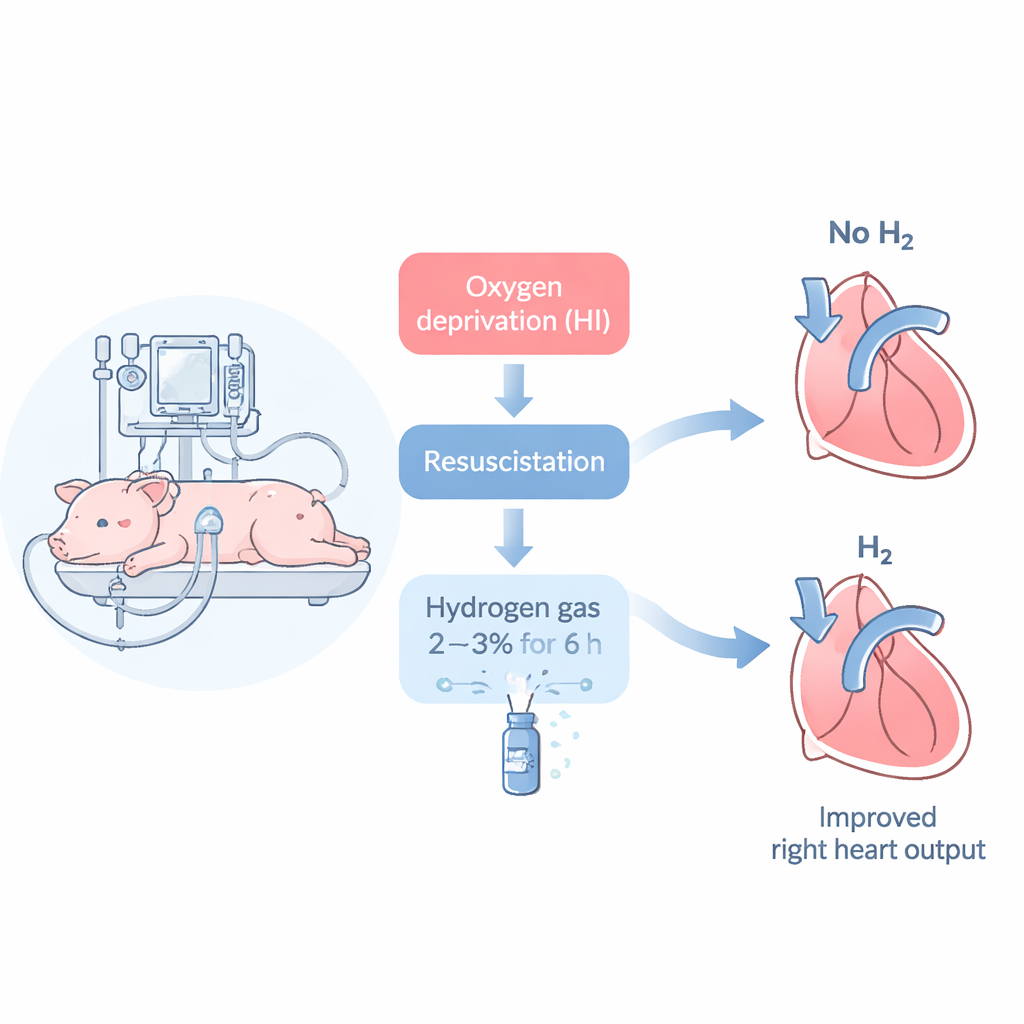
How the piglet experiment was done
Seventeen newborn piglets less than a day old were anesthetized, ventilated, and carefully monitored. The researchers then lowered the oxygen level the animals breathed until their brain activity and blood pressure showed a controlled but severe HI insult lasting about 40 minutes. After standardized resuscitation with 100% oxygen, the piglets were randomly split into two groups. One group received no additional treatment, while the other breathed a low concentration of hydrogen gas (about 2.1%–2.7%, safely below flammable levels) mixed with oxygen and nitrogen for six hours. Throughout this period, the team used heart ultrasound to measure how much blood the left and right sides of the heart pumped each minute, and they took blood samples to check gases, lactate, and a marker of heart-cell injury called cardiac troponin T.
What hydrogen gas did to heart pumping
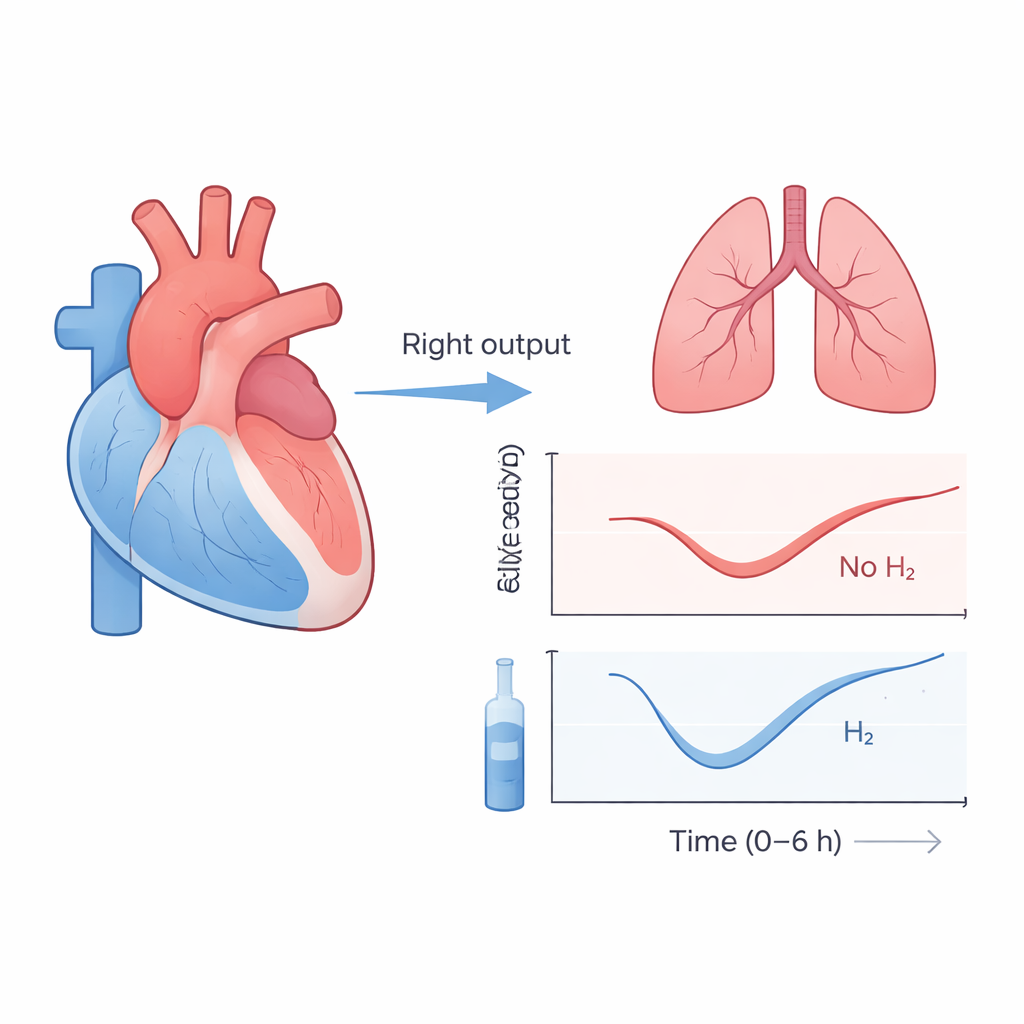
In piglets that did not receive hydrogen, blood flow from both sides of the heart fell sharply right after the insult. The left side, which sends blood to the body, partly recovered but then gradually declined again over the next few hours. The right side, which sends blood to the lungs, remained noticeably depressed and only showed partial recovery by six hours. In contrast, piglets that inhaled hydrogen showed a different pattern. Their left-sided output stayed relatively stable after resuscitation, avoiding the later drop seen in the untreated group. Even more striking, their right-sided output rose above baseline from about two hours onward and peaked at five hours, when right ventricular cardiac output was significantly higher than in untreated animals. When the researchers summed right-heart output over the entire six-hour window, the hydrogen group had a clearly larger total, indicating a sustained benefit rather than a brief spike.
Clues to how hydrogen may protect the heart
To explore why this happened, the team examined several clues. Basic blood gas values, blood pressure, and heart rate were similar between groups, suggesting hydrogen did not simply change ventilation or overall circulation. However, a Doppler measure related to blood flow out of the right ventricle (RVOT VTI) tended to be higher with hydrogen, hinting at lower resistance in the lung’s blood vessels. Hydrogen is known to act as a selective antioxidant, neutralizing particularly damaging oxygen radicals. Supporting a direct protective effect on heart muscle, piglets that inhaled hydrogen had significantly lower troponin T levels six hours after the insult, indicating less heart-cell injury. Prior animal studies in rats and pigs have also shown that hydrogen can reduce heart damage after temporary loss of blood flow, likely through anti-inflammatory and cell-survival pathways.
What this could mean for sick newborns
This study is an early step, performed in a small number of piglets over only six hours, and the authors note important limits, including technical challenges in imaging and the possibility of subtle shunts inside the heart. Still, the findings suggest that low-dose hydrogen inhalation after birth asphyxia can help preserve or even boost the right side of the heart while stabilizing overall output and reducing biochemical signs of injury. Because hydrogen can be safely mixed into ventilator circuits at low concentrations, it could one day become an add-on therapy alongside current treatments such as cooling. For families and clinicians facing the crisis of a baby starved of oxygen at birth, a simple gas that helps the heart pump more effectively—and potentially supports better brain recovery—would be a valuable new tool, provided future human studies confirm these promising results.
Citation: Sakamoto, K., Nakamura, S., Tsuchiya, T. et al. Association between hydrogen gas inhalation and cardiac output in an asphyxiated piglet model. Sci Rep 16, 5262 (2026). https://doi.org/10.1038/s41598-026-35115-2
Keywords: hydrogen gas, newborn heart, birth asphyxia, cardiac output, neonatal piglet model