Clear Sky Science · en
The role of beliefs and behavioral intentions in the analysis of community health responses to climate change
Why Our Climate Affects Our Health Choices
As heat waves, dirty air, and sudden storms become more common, people are not only asking how the climate is changing, but how they themselves should respond. This study looks at what pushes ordinary adults to take health-protective steps—like staying cool during heat waves, reducing pollution, or joining community efforts—and what holds them back. By understanding how beliefs, worries, and social pressures shape our intentions, public health experts can design messages and programs that actually change lives, not just raise alarms.
Climate Change Reaches Both Body and Mind
Climate change is more than a distant environmental issue; it is already reshaping health. Rising temperatures, poor air quality, and shifting rainfall patterns contribute to heat-related illnesses, breathing problems, and threats to food supplies. Long, stressful weather events and disasters can also fuel anxiety, depression, post-traumatic stress, and the growing sense of "eco‑anxiety"—a chronic worry about the planet’s future. These pressures are especially serious in semi‑arid countries like Iran, where rapid warming and fragile farming systems increase health risks and strain local communities.
How Beliefs Steer Everyday Health Decisions
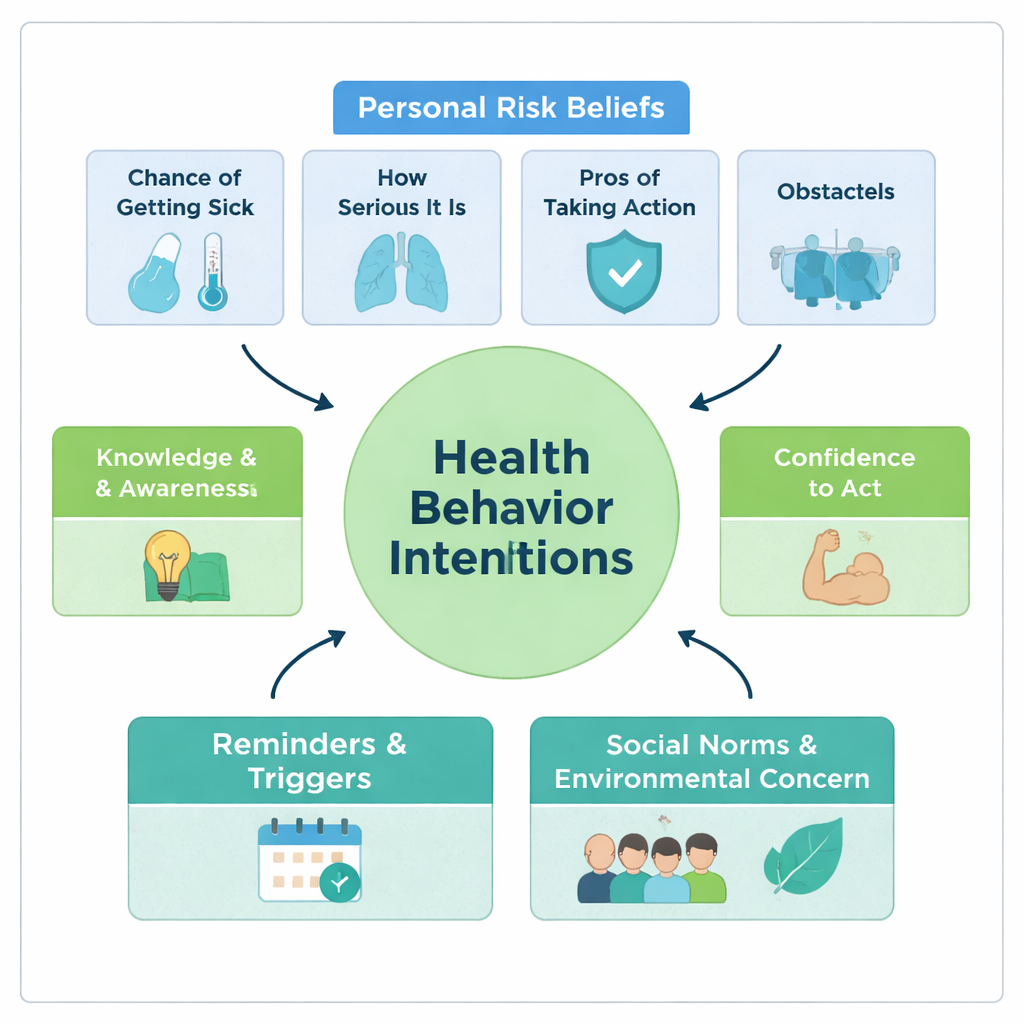
The researchers used an extended version of a well-known framework called the Health Belief Model to unpack why people intend—or do not intend—to protect their health in a changing climate. The model focuses on simple questions people ask themselves: How likely am I to be harmed? How bad would it be? Will taking action help? What might get in the way? The team added three extra elements that are especially relevant to climate change: how much people care about the environment, how strong social expectations are in their community, and how much they know about climate‑related health risks. Together, these pieces form a picture of how people think, feel, and decide when facing new climate threats.
A Nationwide Online Survey Across Diverse Regions
To explore these questions, the authors surveyed about 500 adults across many provinces in Iran, from coastal and mountain regions to deserts and major cities. Participants, mostly middle‑aged and well‑educated, answered an online questionnaire shared through popular messaging apps. The questions covered their background, their views on climate‑related health risks, their sense of personal control, what kinds of reminders they notice (such as news, social media, or local events), their environmental concern, and their plans to adopt health‑promoting or eco‑friendly behaviors. The survey was carefully tested to ensure the questions were clear, reliable, and well matched to Iran’s cultural context.
What Most Strongly Shapes Intentions to Act
When the researchers analyzed the data using a statistical technique that traces how different factors connect, several clear patterns emerged. People who believed that climate change could cause serious health problems were more likely to say they intended to take protective steps. Frequent “cues to action”—for example, media reports, community programs, or personal experience with extreme weather—also boosted intentions. Knowledge and awareness played a major role: better‑informed participants were more inclined to plan protective behaviors, both directly and by shaping how at risk they felt. Social norms were powerful as well. When people thought those around them cared about the environment and took sustainable actions, they were more likely to intend similar steps themselves, partly because these norms increased environmental concern. Interestingly, perceived barriers and personal confidence (self‑efficacy) did not block action as strongly as many earlier studies might suggest, although self‑efficacy helped people respond to cues and may influence behavior indirectly.
Lessons for Building Healthier, Climate‑Resilient Communities
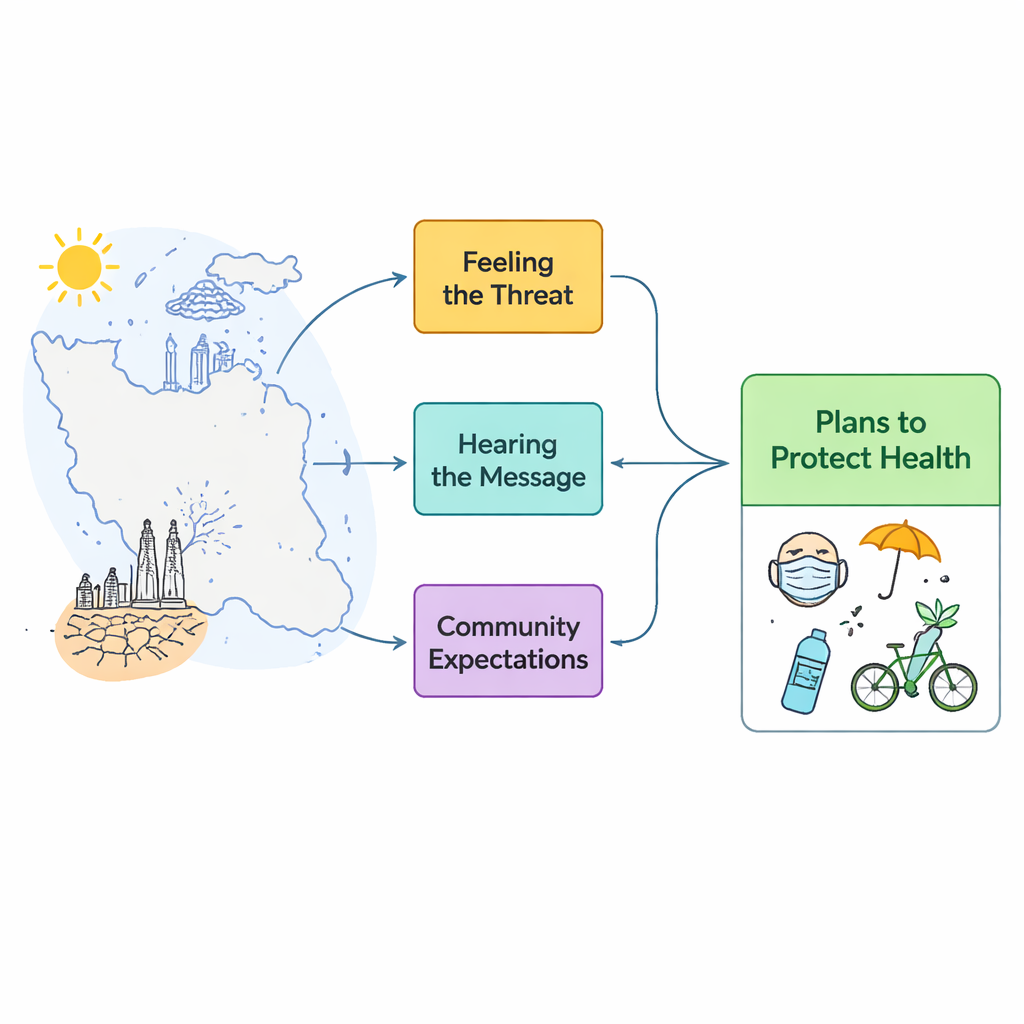
For everyday readers, the takeaway is straightforward: the way we see climate risks, talk about them, and act together as communities strongly shapes whether we prepare and protect our health. This study shows that clear information, vivid reminders, and supportive social norms matter more than fear alone. When people understand the health stakes of climate change, regularly encounter reminders to act, and feel that friends, neighbors, and leaders expect and support protective behaviors, they are more likely to plan—and eventually adopt—those behaviors. By tapping into shared values and concern for both health and the environment, public health efforts can help communities in Iran and beyond stay safer and more resilient as the climate continues to change.
Citation: Pakravan-Charvadeh, M.R., Maleknia, R. The role of beliefs and behavioral intentions in the analysis of community health responses to climate change. Sci Rep 16, 4858 (2026). https://doi.org/10.1038/s41598-026-35106-3
Keywords: climate change and health, health behavior intentions, health belief model, environmental concern, social norms