Clear Sky Science · en
Superheated steam extraction and RSM-based optimization of antioxidant activity in Citrus paradisi essential oil and evaluation of antimicrobial activity
Turning Grapefruit Peels into Valuable Protectors
Every glass of grapefruit juice leaves behind a mound of peel that is usually thrown away. This study explores how that "waste" can be turned into a useful natural product: an essential oil that can slow down spoilage and fight germs. By carefully tuning a modern steam-based extraction process, the researchers created a grapefruit peel oil that shows strong antioxidant power—helping to prevent damage caused by reactive molecules—and notable antimicrobial effects against bacteria and fungi.
Why the Way We Boil Matters
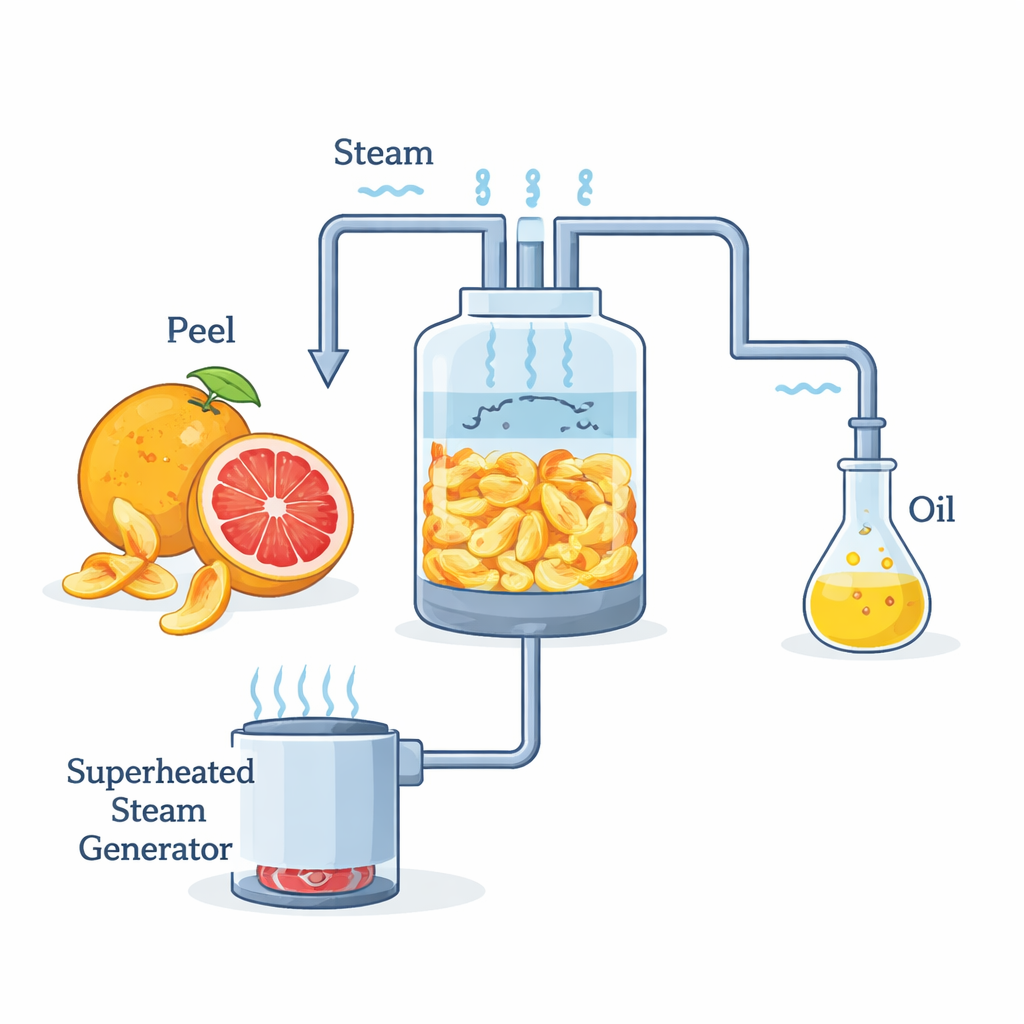
Grapefruit peel is rich in fragrant molecules called essential oils, long used in air fresheners, cleaning products, and traditional remedies. However, the way these oils are extracted can make a big difference. Traditional methods, such as boiling the peels directly in water or passing regular steam through them, often take hours and expose delicate components to extended heat and oxygen. This can break down some of the most active ingredients. The team instead used superheated steam—steam heated above its normal boiling point—to pull the oil out more quickly and in a low-oxygen environment, aiming to preserve and even concentrate the beneficial compounds.
Finding the Sweet Spot for Maximum Protection
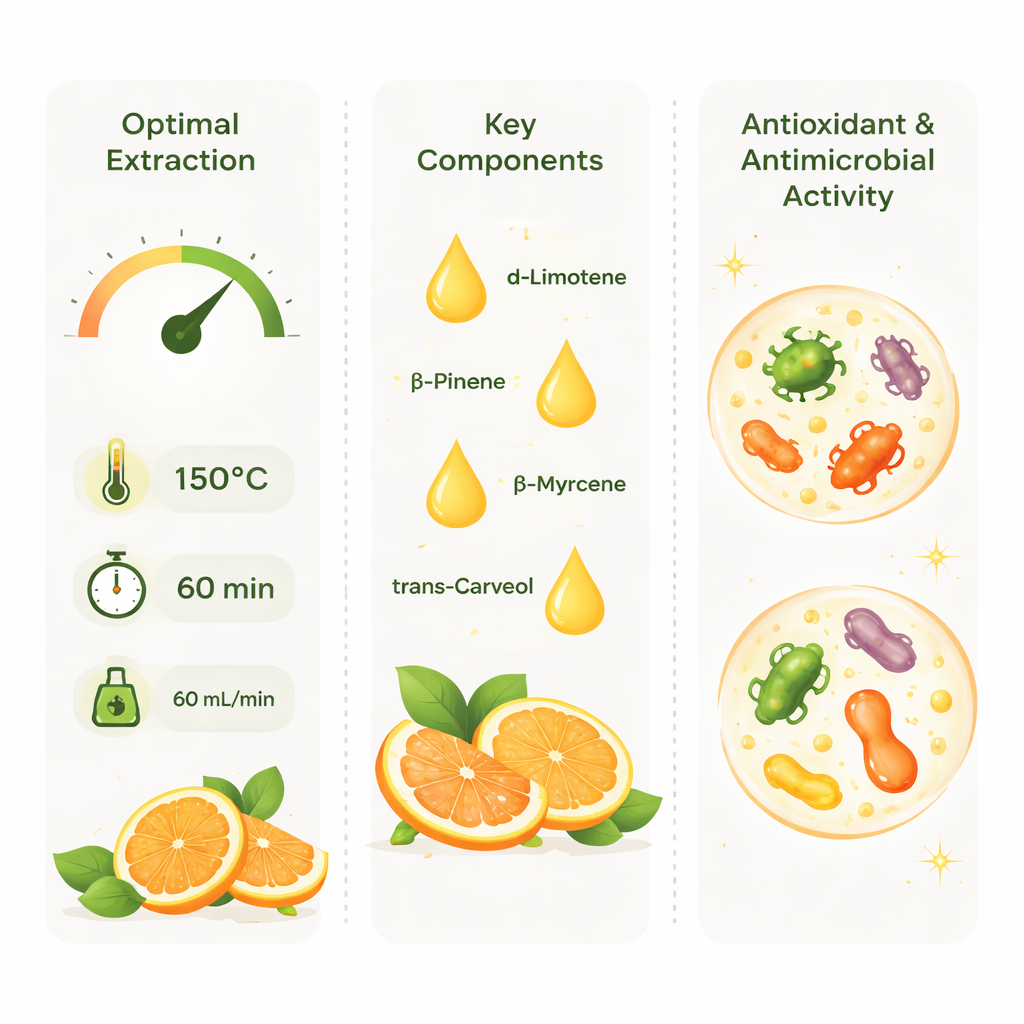
Rather than guessing at settings, the scientists used a statistical planning approach to explore how temperature, steam flow, and extraction time affected the oil’s protective power. They varied the temperature between 140 and 160 °C, the steam flow between 40 and 80 mL per minute, and the time between 40 and 80 minutes. For each combination, they measured how well the resulting oil neutralized common test chemicals that mimic harmful "free radicals" and oxidants. The data showed a clear pattern: raising temperature, time, and flow up to a point boosted antioxidant activity, but pushing them higher started to damage the very compounds they wanted to protect. The best balance for antioxidant strength was around 150 °C, 60 minutes, and a flow of 60 mL per minute.
What’s Inside the Oil—and Why It Works
To see what made this optimized oil so effective, the researchers separated and identified its ingredients. They found that a handful of compounds dominated: d-limonene, β-pinene, β-myrcene, and trans-carveol. These substances are common in citrus aromas and are known to donate electrons or hydrogen atoms, which helps neutralize reactive molecules before they can damage fats, proteins, or DNA. Under the superheated steam conditions, these key components were present in higher amounts than in oils obtained by conventional boiling methods. The team also saw shifts in oxygen-containing relatives of these compounds, which can further influence how the oil behaves as an antioxidant.
Taking on Bacteria and Fungi
The study did not stop at test-tube chemistry. The grapefruit peel oils were also tested against two types of bacteria and two fungi that can spoil food or cause infections. Across multiple bioassays, oils produced with superheated steam generally created larger clear zones where microbes could not grow and needed lower doses to stop them completely, compared with oils from traditional distillation. This suggests that preserving and concentrating certain citrus compounds during extraction enhances not only antioxidant capacity but also real-world germ-fighting ability. In particular, the superheated process at somewhat higher temperature and shorter time gave the strongest antimicrobial results.
From Kitchen Waste to Future Products
For a non-specialist, the main message is that grapefruit peels are far more than a by-product: handled wisely, they can yield a potent, naturally derived oil that slows oxidation and curbs microbes. By fine-tuning a greener, steam-based extraction method, the researchers showed that it is possible to get more value from the same raw material while reducing processing time and potential waste. In the long run, such optimized grapefruit peel oil could help replace some synthetic preservatives and be blended into coatings, packaging, or simple formulations that keep foods, surfaces, and possibly even medical products safer for longer.
Citation: Waseem, R., Ayub, M.A., Anjam, M.T. et al. Superheated steam extraction and RSM-based optimization of antioxidant activity in Citrus paradisi essential oil and evaluation of antimicrobial activity. Sci Rep 16, 5487 (2026). https://doi.org/10.1038/s41598-026-35099-z
Keywords: grapefruit peel, essential oil, antioxidant, antimicrobial, green extraction