Clear Sky Science · en
Interactive dynamic modulation of antidepressant treatment response by serum interleukin-1β and Neuroticism at 12 weeks
Why this study matters for people with depression
Many people who start antidepressants don’t feel fully better, even after months of treatment. This study asks a simple but important question: can a blood test combined with a brief personality check help predict who is less likely to improve, so that care can be better tailored from the start?
A closer look at mood, stress, and the immune system
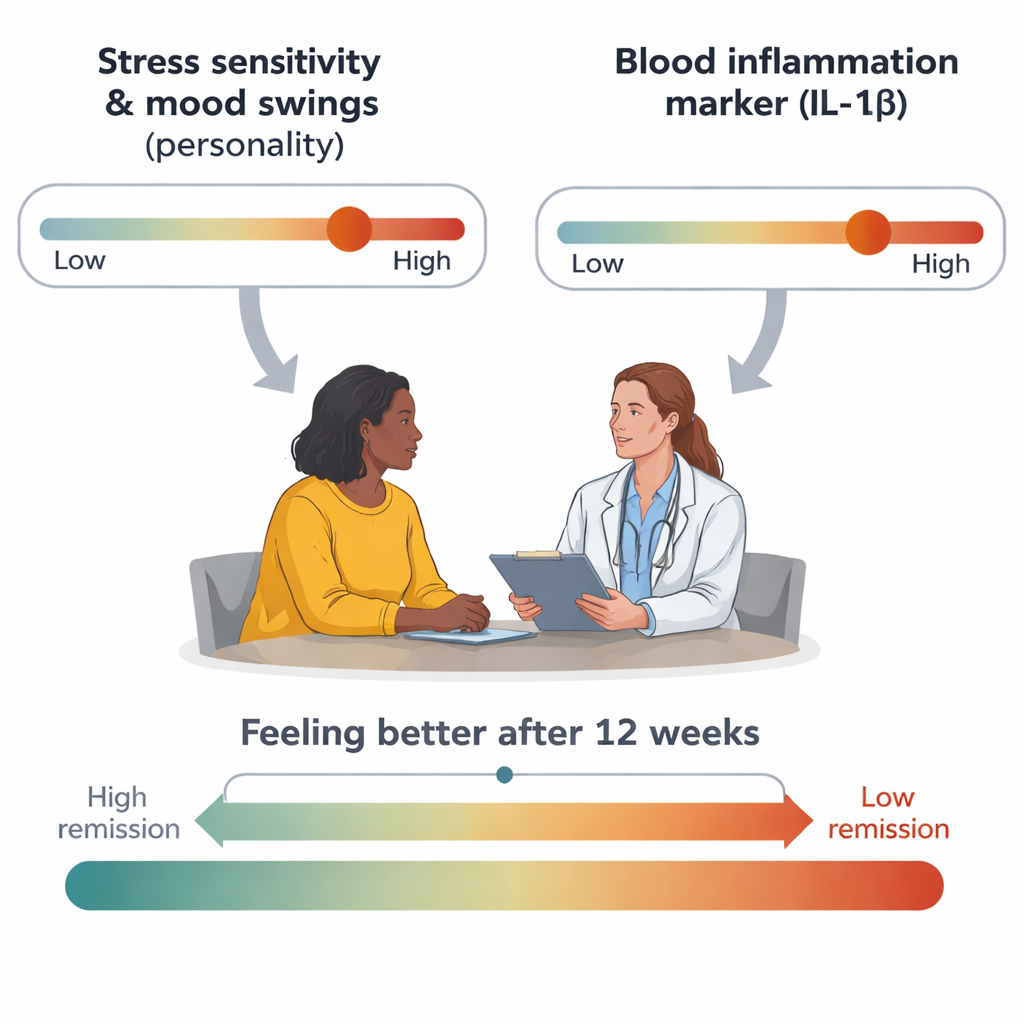
Depression is now understood not only as a problem of brain chemistry but also as a condition linked to the body’s stress and immune responses. One immune signal of interest is interleukin‑1 beta (IL‑1β), a small protein involved in inflammation. Higher levels of inflammatory markers in the blood have been tied to more severe symptoms and poorer response to treatment in some, but not all, previous studies. At the same time, personality traits such as Neuroticism—tendency toward worry, mood swings, and sensitivity to stress—are known to influence how people cope with illness and respond to antidepressants. This research asked whether these two factors, biology and personality, might work together to shape treatment success.
How the researchers followed patients over time
The study drew on a large real‑world treatment program in Korea, including 1,086 adults diagnosed with depressive disorders. Everyone began a stepwise antidepressant plan, similar to what might happen in regular outpatient care, with doctors able to adjust or add medications over 12 weeks. At the start, participants gave a fasting blood sample so that IL‑1β levels could be measured, and they completed a very brief questionnaire capturing the Big Five personality traits, including Neuroticism. Depression severity was rated regularly using a standard interview scale, and “remission” was defined as having very few remaining symptoms after 12 weeks.
What IL‑1β and personality each told us on their own
When the researchers first looked at each factor separately, they found that people with higher IL‑1β levels at baseline were less likely to reach remission at 12 weeks than those with lower levels, even after accounting for age, income, medical conditions, and details of treatment. Likewise, people who scored higher on Neuroticism tended to have worse outcomes. These patterns fit with the idea that both a “hotter” immune system and a more stress‑sensitive temperament can make it harder to fully recover from depression using standard medication alone.
When biology and temperament interact
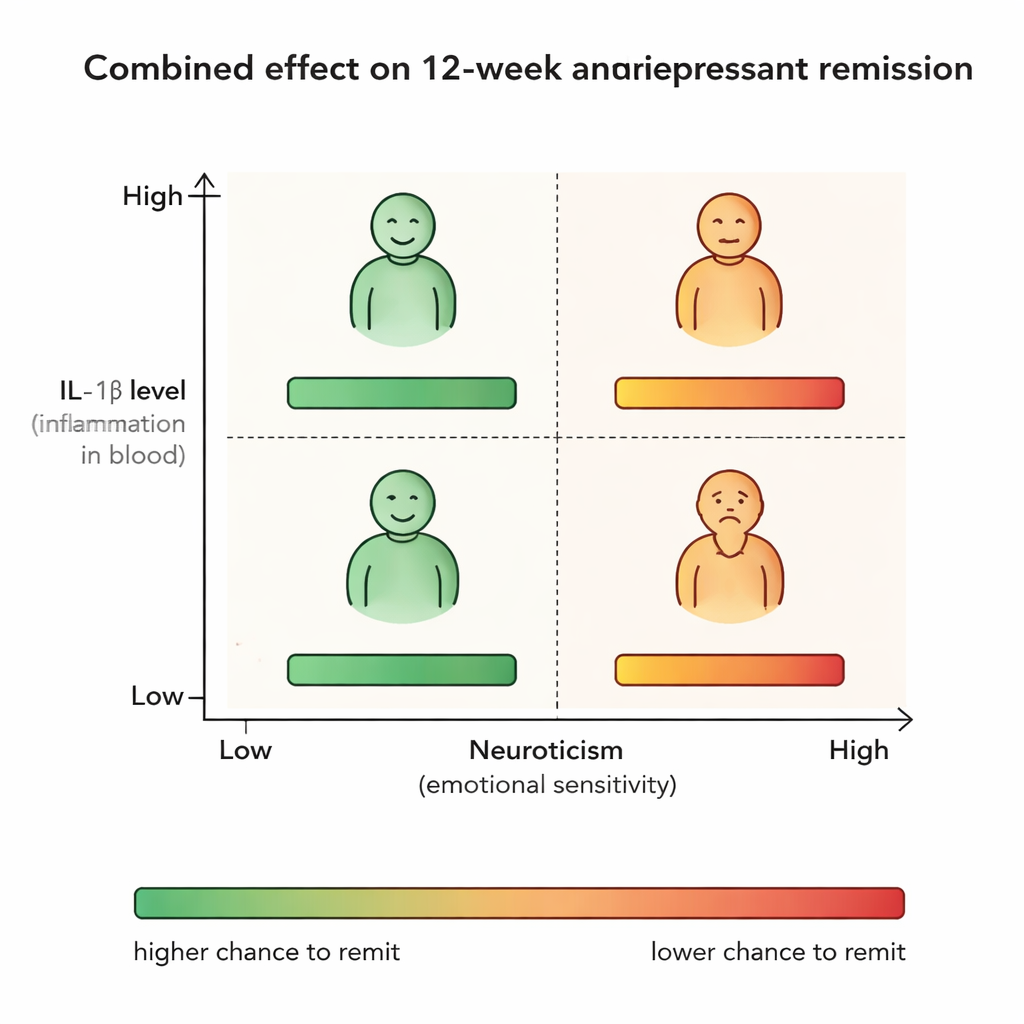
The most striking finding emerged when IL‑1β and Neuroticism were considered together. Among people with lower Neuroticism—those who are generally more emotionally stable—high IL‑1β did not clearly reduce the chance of remission. In other words, some patients seemed resilient to the negative impact of inflammation. However, in those with high Neuroticism, elevated IL‑1β was strongly linked to not getting better, and this combined effect remained robust under several careful re‑checks. Patients who were both more inflamed and more emotionally reactive had the lowest remission rates, even when treatment type and other health factors were taken into account.
What this could mean for care today and tomorrow
To a layperson, the message is that both our bodies and our personalities matter in how we respond to antidepressants. A single blood marker or a single questionnaire score tells only part of the story. But when doctors consider them together, they may be able to spot patients who are at higher risk of not improving with standard treatment alone—those who might need closer follow‑up, earlier adjustment of medications, or added psychological support. While this work does not prove cause and effect, it supports a future in which simple lab tests and brief personality checks could help guide more personalized, effective treatment plans for depression.
Citation: Kim, YC., Kang, SG., Kim, JW. et al. Interactive dynamic modulation of antidepressant treatment response by serum interleukin-1β and Neuroticism at 12 weeks. Sci Rep 16, 4972 (2026). https://doi.org/10.1038/s41598-026-35097-1
Keywords: depression treatment, inflammation, personality, neuroticism, antidepressant response