Clear Sky Science · en
Facile and efficient synthesis of silver nanoparticles using Stachys viscosa with phenolic profiling, antioxidant potential and cytotoxic activity
Nature’s Tiny Tools Against Disease
Modern medicine is increasingly turning to the natural world for new ways to fight disease. This study explores how a common wild plant, Stachys viscosa, can be used to make ultra-small particles of silver in a clean, low-cost way. These tiny particles, called silver nanoparticles, show promise as powerful fighters against cancer cells and harmful oxygen-based molecules that damage our bodies over time.
Turning Leaves into Tiny Silver Particles
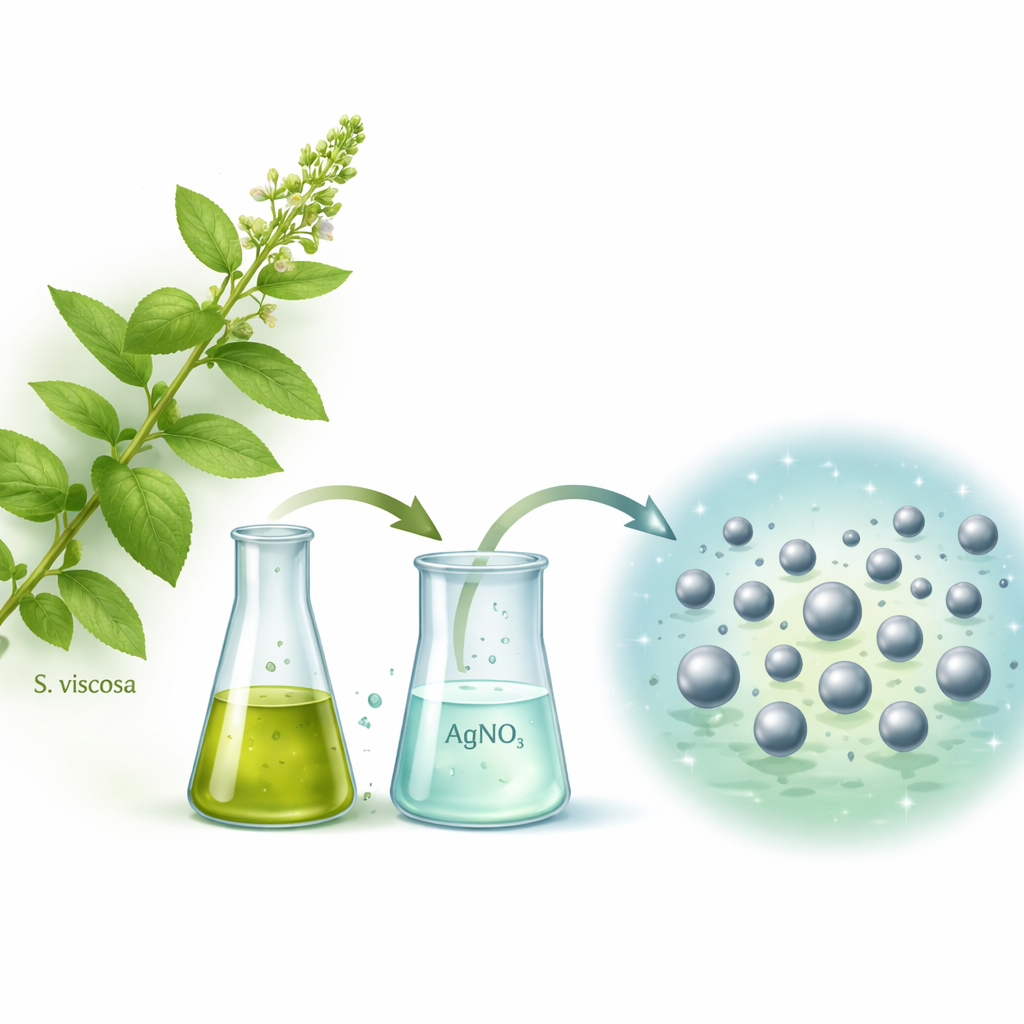
Instead of relying on harsh chemicals, the researchers used a water extract made from the leaves of Stachys viscosa to turn dissolved silver salt into solid silver nanoparticles. A simple color change in the mixture signaled that the particles were forming. Careful measurements of light passing through the solution showed a distinct peak, confirming the presence of these tiny metal particles. This “green” approach avoids poisonous reagents, is inexpensive, and fits into a broader effort to make nanotechnology safer for people and the environment.
What the Plant Brings to the Mix
Stachys plants have long been used in folk remedies, and their leaves are rich in naturally occurring chemicals. In this work, the team mapped out the major compounds in Stachys viscosa using a highly sensitive analytical technique. They found that acids such as shikimic, chlorogenic, vanillic, and salicylic acid were especially abundant. These substances help convert silver ions into solid silver and then coat and stabilize the resulting particles. The coating keeps the nanoparticles from clumping together, giving them a uniform spherical shape about one ten-thousandth the width of a human hair, and helps them stay dispersed and active in water.
How the Nanoparticles Behave in Cells
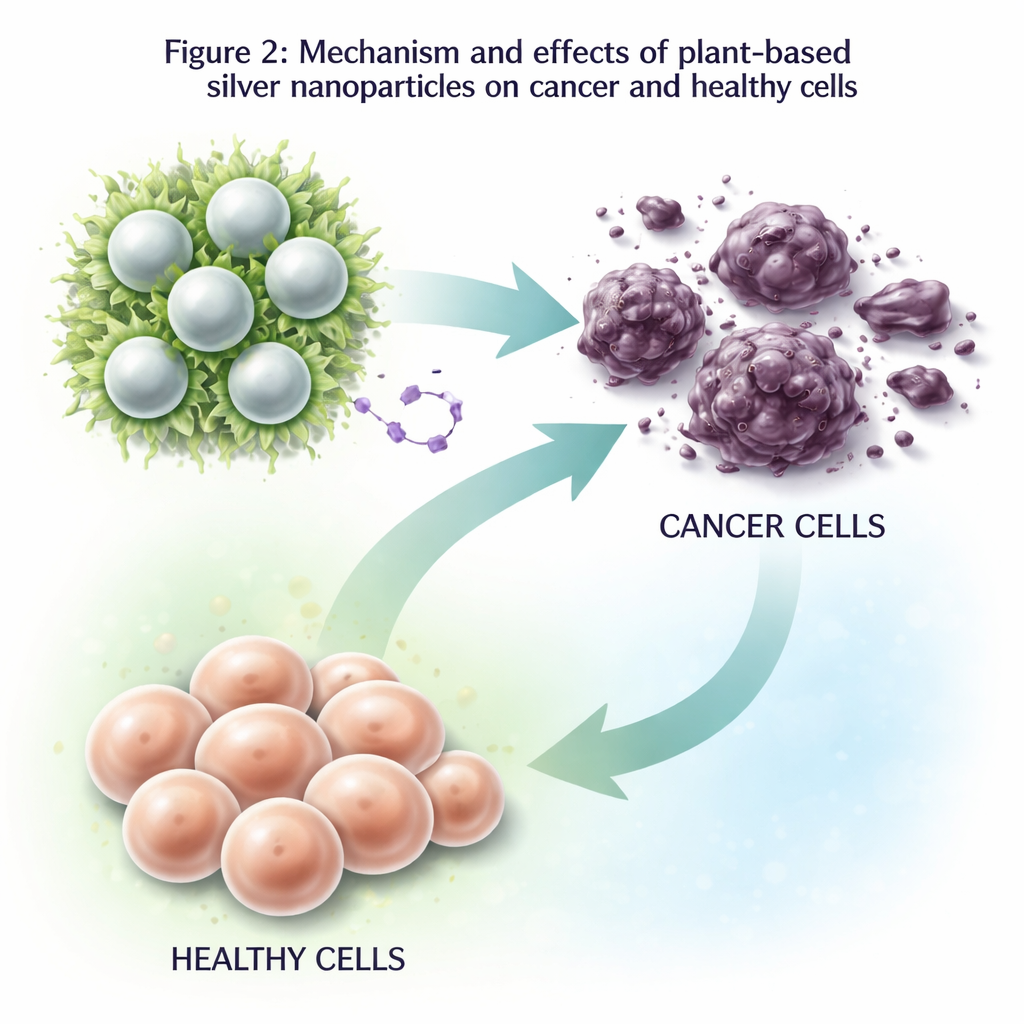
The researchers then tested how both the plant extract and the plant-made silver nanoparticles affected cells grown in the lab. They focused on two cancer cell types—one from the colon and one from the pancreas—and a line of healthy connective-tissue cells. At the same doses, the nanoparticles killed a much larger fraction of cancer cells than the plain extract, while leaving most healthy cells alive. Under special fluorescent microscopes, many of the cancer cells exposed to the nanoparticles showed clear signs of programmed cell death, a controlled form of self-destruction. This suggests that the treatment does not simply poison cells but instead nudges damaged ones to shut down in an orderly way.
Fighting Harmful Oxygen Reactions
Beyond their action on cancer cells, the plant extract and the silver nanoparticles were tested for their ability to neutralize highly reactive oxygen-based molecules, often called free radicals. These molecules are a natural by-product of life, but in excess they can damage DNA, proteins, and fats, contributing to aging and diseases such as cancer and diabetes. In three different laboratory tests, the nanoparticles consistently showed strong radical-scavenging power, in some cases matching or even surpassing widely used synthetic antioxidants. The plant extract alone was helpful, but the nanoparticle form was generally more effective, hinting that combining silver with plant compounds boosts their protective effects.
Why These Findings Matter
Put simply, this study shows that a wild plant can help build tiny silver particles that seem well suited to future medical use. The nanoparticles are made by a quick, low-waste process, they remain stable in water, and they carry a natural coating of bioactive plant chemicals. In cell tests, they hit cancer cells hard, mostly by triggering a clean self-destruct route, while being gentler on healthy cells. At the same time, they mop up harmful oxygen-based molecules that are linked to many chronic illnesses. While much more work is needed before any treatment reaches patients, these green-made silver nanoparticles stand out as promising candidates for new tools against both cancer and oxidative stress–related disorders.
Citation: Gecer, E.N., Erenler, R. & Tuzen, M. Facile and efficient synthesis of silver nanoparticles using Stachys viscosa with phenolic profiling, antioxidant potential and cytotoxic activity. Sci Rep 16, 4758 (2026). https://doi.org/10.1038/s41598-026-35093-5
Keywords: green nanotechnology, silver nanoparticles, medicinal plants, anticancer agents, antioxidants