Clear Sky Science · en
Unveiling advanced green assessment of simple and cost effective spectrophotometric determination of domperidone and pantoprazole for gastrointestinal disorders
Everyday Stomach Relief, Tested the Eco-Friendly Way
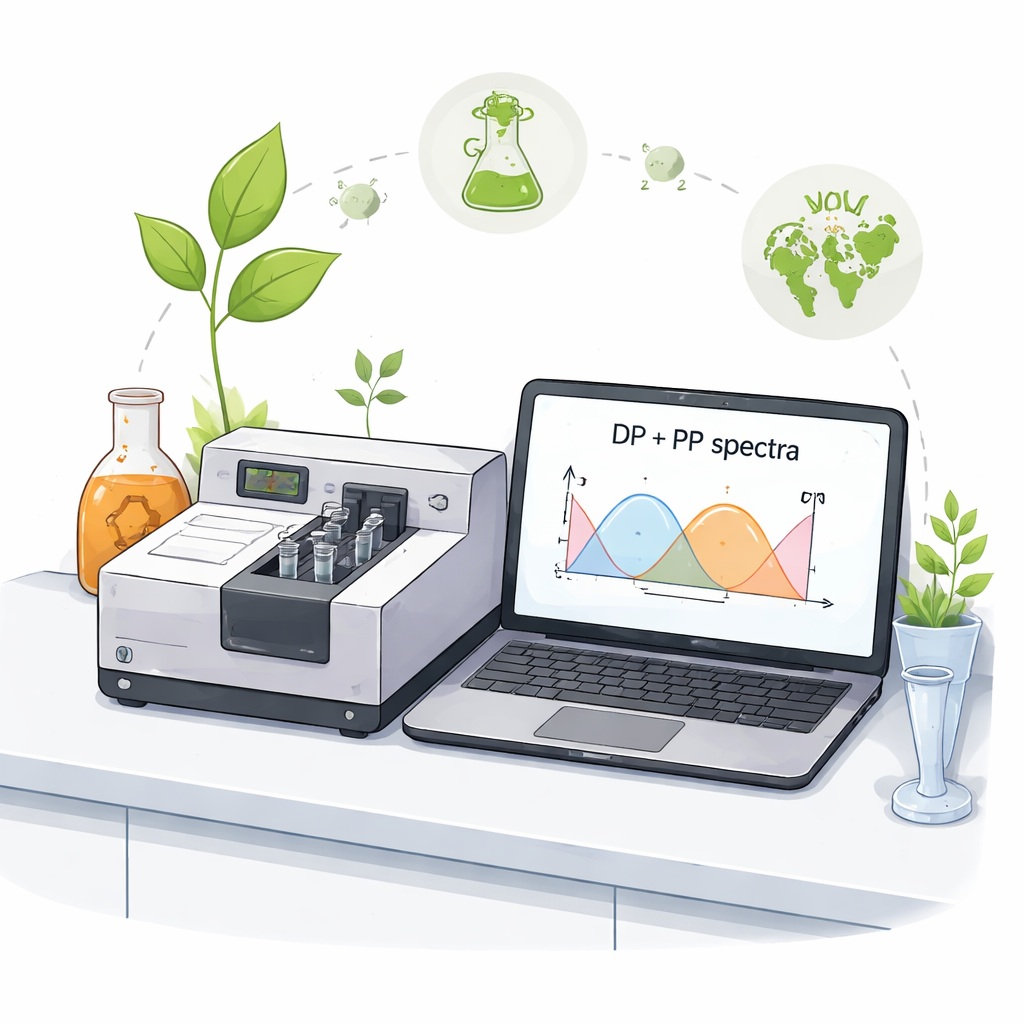
Millions of people rely on medicines to calm heartburn, reflux, and nausea. Two such drugs, domperidone and pantoprazole, are often prescribed together to keep food moving smoothly through the stomach while cutting down excess acid. This study asks a timely question: can we test these medicines in factories and labs using methods that are not only accurate and inexpensive, but also kinder to the environment?
Why These Two Medicines Matter
Stomach motility problems and acid-related disorders can cause nausea, vomiting, bloating, and burning pain in the chest. Left untreated, they may lead to ulcers, bleeding, precancerous changes in the esophagus, and a serious drop in quality of life. Domperidone helps by improving the movement of food through the stomach and reducing nausea, while pantoprazole lowers stomach acid by blocking the final step of acid production. Together, they form a powerful combination used worldwide to treat conditions like gastroesophageal reflux disease and peptic ulcers. Because these drugs are so widely used, there is a constant need to check that tablets contain the correct amounts, which in turn demands reliable and widely accessible testing methods.
Simple Light-Based Testing Instead of Complex Machines
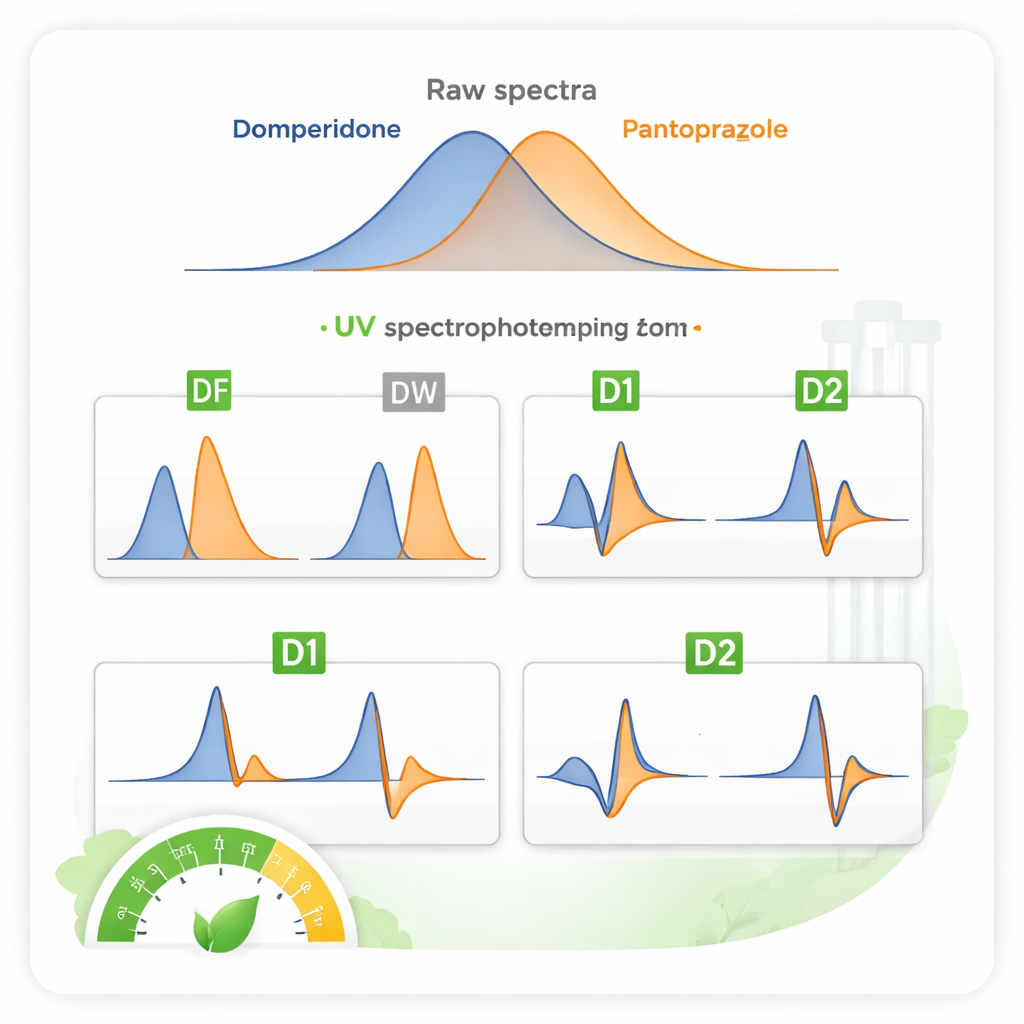
Many modern quality-control labs rely on sophisticated instruments such as high-performance liquid chromatography (HPLC). While precise, these machines are expensive, require trained operators, use larger amounts of organic solvents, and produce more chemical waste. In contrast, spectrophotometry — measuring how much ultraviolet light a solution absorbs — is far more common, cheaper, and easier to run, especially in resource-limited settings. The challenge is that domperidone and pantoprazole absorb light in very similar ways, so their signals overlap, making it hard to tell how much of each drug is present if they are measured together in a single solution.
Smart Math to Untangle Overlapping Signals
The authors developed a set of clever data-processing tricks that allow a basic UV spectrophotometer to separate the contributions of each drug without physically splitting the mixture. They used four related approaches: Fourier deconvolution, which sharpens and narrows broad peaks; a dual-wavelength method, which compares absorbance at two carefully chosen wavelengths; and first- and second-derivative methods, which look at how the signal changes with wavelength rather than just its height. By selecting points where one drug’s signal cancels out, the team could read the other drug’s amount directly. Over a practical working range, the measurements remained linear, precise, and accurate, with very low detection limits — meaning tiny quantities of each medicine could still be reliably measured.
Putting the Methods to Real-World Use
To show that the techniques were more than just theory, the researchers tested laboratory-made mixtures of domperidone and pantoprazole in many different ratios, as well as real commercial tablets containing both drugs. They checked the results using a standard “add-known-amounts” approach to ensure that inactive tablet ingredients did not interfere. The new methods performed as well as, and statistically no different from, established HPLC and earlier spectrophotometric procedures in terms of accuracy and precision. At the same time, they were quicker, required no complicated sample preparation, and could be run on simple UV–visible instruments that many small labs already own.
Measuring How Green a Test Really Is
Going beyond traditional performance checks, the team carried out a thorough environmental and practicality assessment of their methods. They applied multiple modern “green and white analytical chemistry” scoring tools that consider solvent hazards, energy use, waste volume, carbon footprint, practicality, flexibility, and innovation. Across tools such as the Analytical Eco-Scale, MoGAPI, the Analytical Green Star Area, carbon-footprint scores, and newer frameworks like BAGI, CACI, and the Multi-Color Assessment platform, the UV-based methods consistently earned high marks. When compared directly with an HPLC alternative, the spectrophotometric approaches generated less hazardous waste, consumed less energy, and were easier to implement, especially in routine quality-control settings.
Cleaner Quality Checks for Common Stomach Medicines
In practical terms, this work shows that manufacturers and control laboratories can confidently use simple, low-cost light-based tests to monitor domperidone and pantoprazole in combined tablets, without sacrificing accuracy or safety. Because the methods need only small amounts of mild solvent and modest electricity, they reduce chemical exposure for workers and lessen environmental impact. For patients, this helps ensure that the stomach medications they depend on are produced under stricter, yet more sustainable, quality control — illustrating how greener analytical science can quietly support everyday health care.
Citation: Darweish, E., El-Henawee, M.M., Labib, M.A.E. et al. Unveiling advanced green assessment of simple and cost effective spectrophotometric determination of domperidone and pantoprazole for gastrointestinal disorders. Sci Rep 16, 3475 (2026). https://doi.org/10.1038/s41598-026-35089-1
Keywords: green analytical chemistry, spectrophotometry, domperidone, pantoprazole, quality control