Clear Sky Science · en
The mediating role of cognitive function in the association between physical activity and frailty risk
Why staying active matters as we age
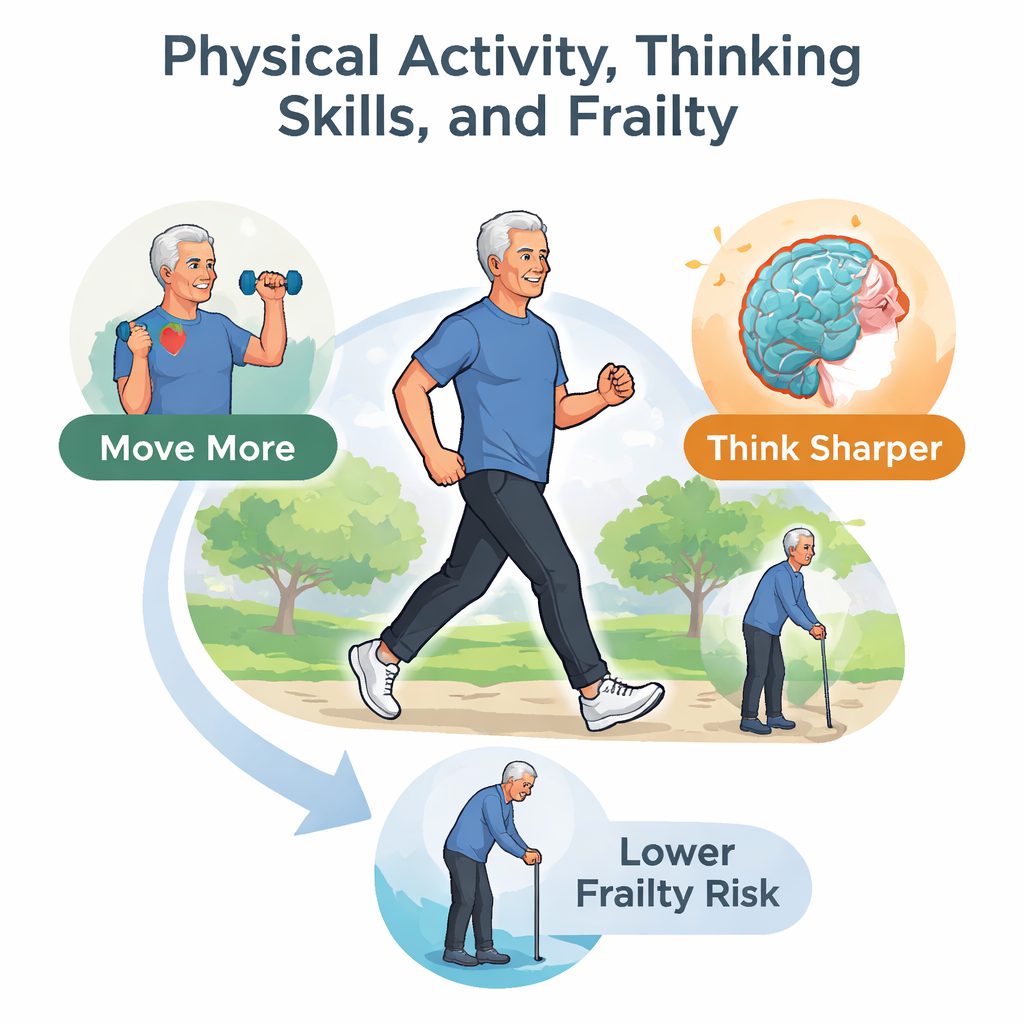
Many people hope to stay independent and avoid disability as they grow older. This study looks at how two everyday factors—moving your body and keeping your mind sharp—work together to protect against frailty, a condition where the body becomes weaker and more vulnerable to falls, illness, and hospital stays. Using data from thousands of middle‑aged and older adults in China, the researchers asked a simple but important question: does physical activity help people avoid frailty partly by supporting better thinking and memory?
Frailty: more than just getting old
Frailty is not an inevitable part of aging. It describes a state in which the body’s reserves are so reduced that even minor stresses—a mild infection or a short hospital stay—can lead to serious problems. In this study, frailty was measured with a broad checklist that included chronic diseases, daily functioning, mood, and overall health, combined into a single score. People whose score crossed a certain line were classified as frail. Out of 11,751 Chinese adults aged 45 and older, about 8 percent were frail. Those who were frail tended to be older, slept less, had less schooling, were less physically active, and scored lower on tests of thinking and memory.
How the study was done
The researchers used information from the 2018 wave of the China Health and Retirement Longitudinal Study, a large national survey. Thinking skills were tested with a shortened version of a standard exam that covers memory, attention, orientation, and drawing. Physical activity was estimated from questions about how often and how long people did different types of movement, from walking to more vigorous exercise, and converted into a single weekly score. People who met at least the World Health Organization’s minimum activity recommendation were labeled as having “sufficient” physical activity. The team then used statistical models to see how activity levels and thinking scores were linked to the odds of being frail, while accounting for age, sex, education, smoking, drinking, sleep, and where people lived.
Moving the body, sharpening the mind
Both physical activity and better cognitive scores were strongly tied to lower frailty risk. People who were physically active had roughly one‑third the odds of being frail compared with inactive people, even after other factors were taken into account. Each one‑point increase in the thinking score was also linked to a smaller chance of frailty. The relationship between thinking skills and frailty was not perfectly straight: below a certain score—around 13 points on the cognitive test—the risk of frailty rose much more sharply. When the researchers combined the two factors, the lowest risk was seen in people who were both physically active and had higher thinking scores, suggesting that body and brain health reinforce one another.
The brain as a middleman
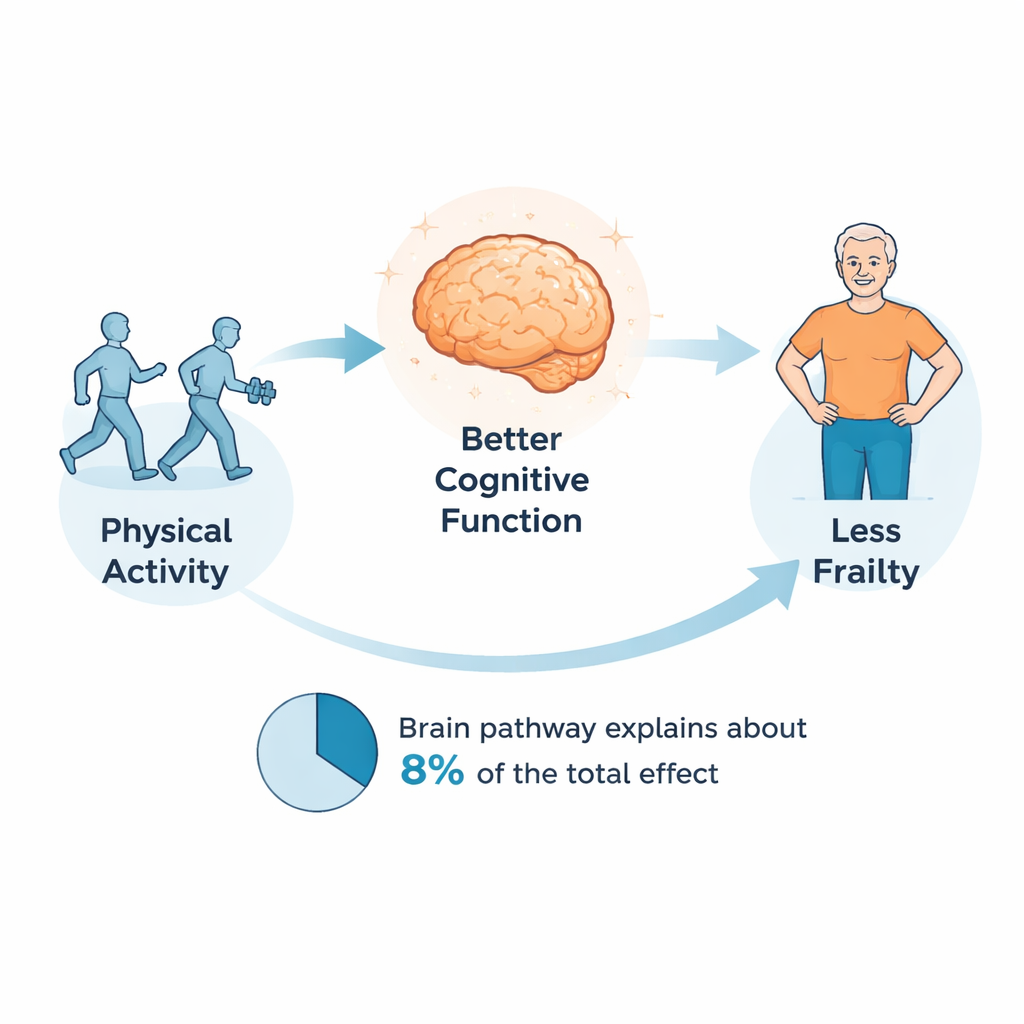
To understand how these factors connect, the researchers performed a mediation analysis—a way of asking whether one factor partly explains how another exerts its effects. They found that physical activity seemed to protect against frailty in two ways. Most of the benefit was direct: being active helps muscles, balance, and endurance. But about 8 percent of the total protective effect appeared to operate indirectly, through better cognitive function. In other words, people who were more active tended to have sharper minds, and those sharper minds were, in turn, linked to lower frailty. This indirect pathway was somewhat stronger among women, people with more education, and urban residents, hinting that social and environmental conditions may shape how much the brain benefits from physical activity.
What it means for everyday life
For non‑scientists, the key message is that regular movement may help you stay independent not only by keeping your body strong but also by supporting your brain. The study cannot prove cause and effect, but its large, nationwide sample and careful analysis suggest that a “move more, think better, stay stronger” pathway is likely. Activities that challenge both body and mind—such as brisk walking, Tai Chi, or exercises that combine movement with simple mental tasks—may be especially helpful. As societies age, strategies that promote both physical and cognitive health in midlife and later life could delay frailty, reduce disability, and improve quality of life for millions of older adults.
Citation: Tang, J., Wang, H. The mediating role of cognitive function in the association between physical activity and frailty risk. Sci Rep 16, 4764 (2026). https://doi.org/10.1038/s41598-026-35088-2
Keywords: frailty, physical activity, cognitive function, healthy aging, older adults