Clear Sky Science · en
Associations between perceived stress, psychosocial stressors, and HbA1c levels in healthy young adults from a prospective cohort study
Why Stress and Blood Sugar Matter for Young Adults
Type 2 diabetes is often seen as a disease of middle and older age, but more and more people are being diagnosed in their 20s, 30s, and 40s. When diabetes starts early, it tends to be more aggressive and harder to treat. At the same time, many young adults report high levels of stress, strained family life, busy social lives, and difficult life events. This study asked a simple but important question: do these everyday pressures in young adulthood show up in the body as higher long-term blood sugar, a key early warning sign for diabetes?
A Closer Look at Stress in Everyday Life
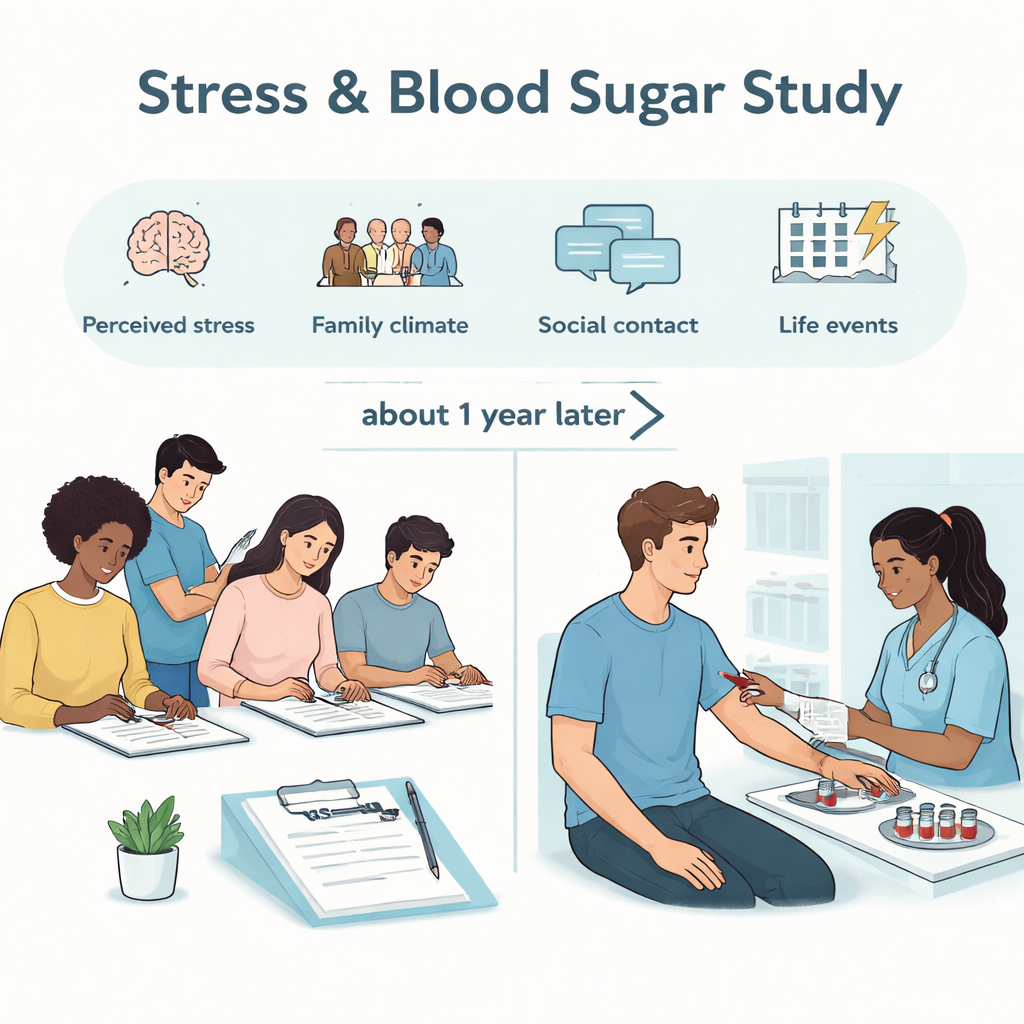
The researchers followed a group of 355 young adults in western Denmark who were part of a long-running health study. Participants were in their early 30s (either 32 or 38 years old) when they filled in detailed questionnaires about their lives. These surveys covered how stressed they felt overall, how well their families functioned, how often they had contact with partners, relatives and friends, and whether they had recently faced serious setbacks like divorce, illness, money problems, or violence. These different kinds of pressures were chosen because earlier work has suggested that they might play a role in the development of diabetes.
From Questionnaires to Blood Tests
About a year after answering the questionnaires, the same participants went to a hospital to have their blood drawn. The key measure was HbA1c, which reflects average blood sugar levels over the previous two to three months and is widely used to diagnose prediabetes and type 2 diabetes. None of the participants had diabetes when they entered the study. The researchers also collected information about education, income, physical activity, sex, age, and whether a parent had type 2 diabetes, because these factors can all influence blood sugar. To correct for the fact that better-off and more health-conscious people were more likely to take part in the blood tests, the team used statistical weighting so that the final group more closely resembled the larger cohort it came from.
What the Numbers Revealed
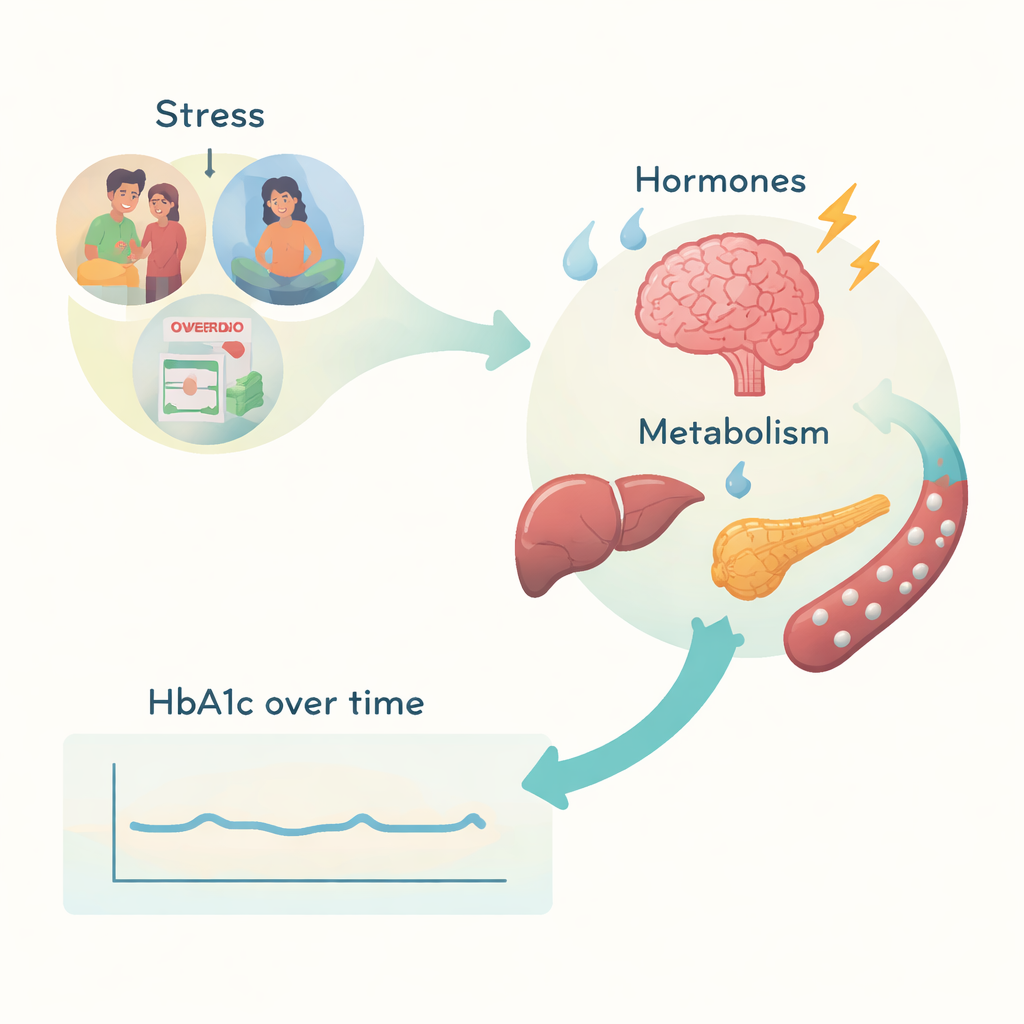
When the researchers compared stress and life circumstances with later HbA1c levels, the patterns were surprisingly modest. Overall, there was no clear sign that young adults who felt more stressed, reported more negative life events, or had fewer social contacts had meaningfully higher long-term blood sugar. The strongest, though still small, tendency was seen for social contact: people with relatively little contact with others had HbA1c values only about a third of a unit higher than those with frequent contact, and this difference was not statistically convincing. In some analyses, those with "medium" scores on family functioning or stress even had slightly lower HbA1c than those in the best-off groups, suggesting that the small differences could easily be due to chance.
Why the Results May Look Subtle
There are several reasons why only weak links were found. The participants were still relatively young and mostly healthy, so few had blood sugar levels near the prediabetes range. It may take many years of repeated or severe stress for measurable damage to show up in blood tests, a process sometimes described as the body’s "wear and tear." The follow-up period in this study was less than a year, much shorter than earlier studies that followed people for five to ten years. The sample size was also modest, which makes it harder to detect small effects reliably. In addition, the stress questionnaires may not fully capture the most harmful aspects of stress, such as loneliness or ongoing financial insecurity.
What This Means for Young People and Health Policy
This study suggests that, in generally healthy young adults, everyday stress, family climate, social contact, and recent life crises do not yet show a strong, measurable impact on long-term blood sugar. That does not mean stress is harmless. Rather, any harmful effects on metabolism at this age may be too small, too slow, or too rare to detect in a study of this size and duration. The findings underline the need for larger, longer-term studies that can follow people across decades to see when and how stress begins to leave its mark on the body. For now, the results offer a cautious message: managing stress and building supportive relationships remain important for overall well-being, but early adulthood may still be a window of opportunity before stress-related damage to blood sugar control becomes firmly established.
Citation: Just-Nørregaard, V., Dalgaard, V.L., Bruun, J.M. et al. Associations between perceived stress, psychosocial stressors, and HbA1c levels in healthy young adults from a prospective cohort study. Sci Rep 16, 4897 (2026). https://doi.org/10.1038/s41598-026-35066-8
Keywords: type 2 diabetes, perceived stress, young adults, HbA1c, social support