Clear Sky Science · en
Community survey of the infection, intensity and risk factors associated with schistosomiasis and soil-transmitted helminthiasis in south-eastern Gabon
Hidden Worm Infections in Everyday Life
In many parts of the world, including rural and small-town Gabon, everyday activities like swimming in rivers, walking barefoot, or eating unwashed fruit can expose people to parasitic worms. These infections often cause tiredness, poor growth in children, blood in urine, and stomach problems, yet they rarely make headlines. This study shines a light on how common these worm infections are in south-eastern Gabon, who is most affected, and which daily habits put people most at risk — information that can help communities and health services protect families more effectively.
Where the Study Took Place
Researchers visited five communities in two provinces of south-eastern Gabon, ranging from semi-urban towns to small rural villages. They invited more than 680 residents aged one year and older to take part. Participants answered questions about their water sources, toilets, hygiene habits, and previous deworming treatments. They then provided urine and stool samples, which were examined under the microscope to look for eggs from two groups of worms: schistosomes, which are caught in freshwater, and soil-transmitted helminths, which are caught from contaminated soil or food. 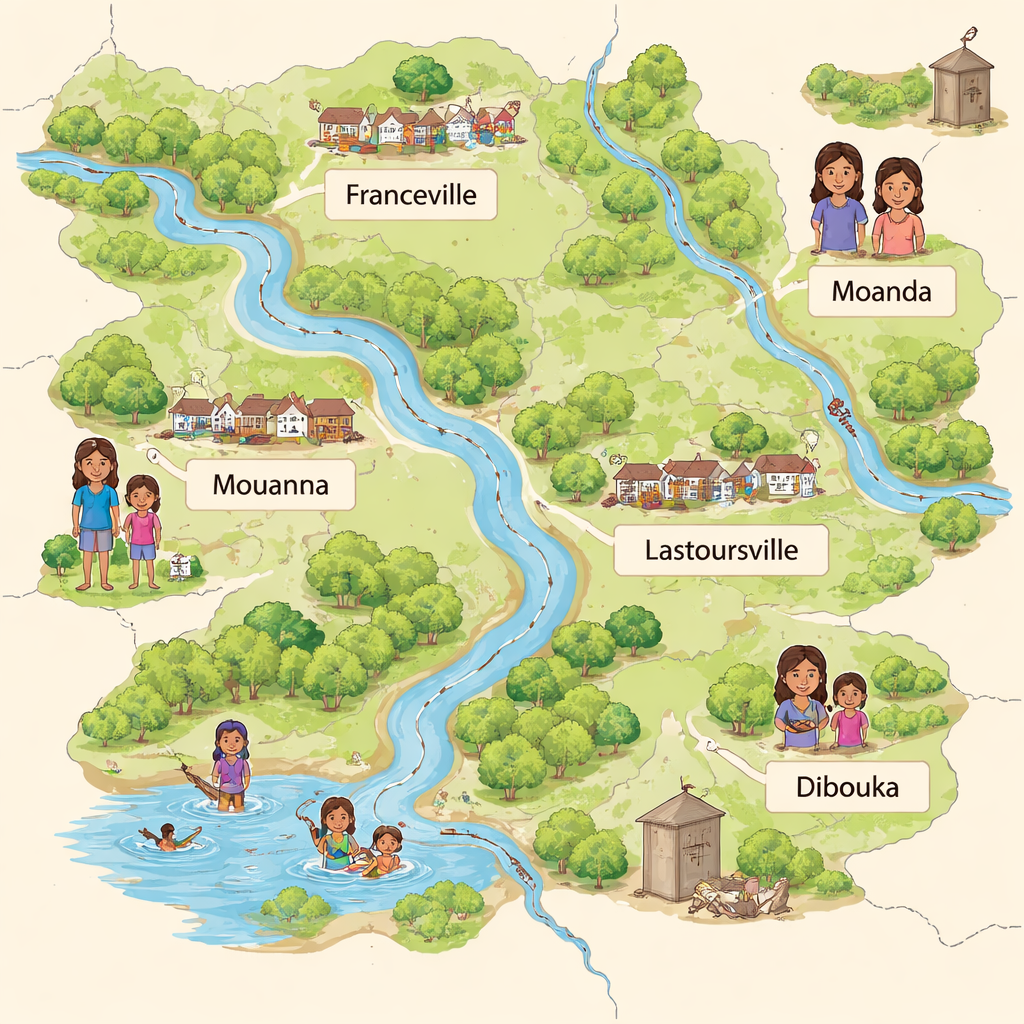
How Common the Infections Were
The team found that schistosomiasis, a disease caused by worms that live in blood vessels and are picked up in fresh water, affected about one in six people in these communities. Most infections were the urinary form caused by Schistosoma haematobium, with only a few cases of intestinal schistosomiasis. Soil-transmitted worms, mainly roundworm (Ascaris lumbricoides) and whipworm (Trichuris trichiura), were also present in about one in six people who provided stool samples. While overall levels were considered “low to moderate” by World Health Organization standards, some places and age groups were clearly worse off than others.
Who Was Most at Risk
Infections were not spread evenly. One town, Lastoursville, had a much higher rate of urinary schistosomiasis than the others, suggesting that local rivers and water-use habits strongly shape risk. Young children and teenagers carried the heaviest load of both schistosome and intestinal worm eggs, but surprisingly, some adults also showed high levels, meaning they can continue to spread infection. Boys and girls were affected at similar rates. In many infected people, the number of worm eggs was high enough to raise concern for long-term health problems such as anemia, poor growth, and damage to the urinary tract or intestines.
Daily Habits that Fuel Infection
By combining lab results with questionnaire answers, the researchers could link certain behaviors to higher risk. For schistosomiasis, people who urinated or defecated in rivers were much more likely to be infected, because this practice releases eggs into the water, where they can infect snails and then other people who bathe or play there. For soil-transmitted worms, two habits stood out: walking barefoot and eating fruits and vegetables without washing them. These actions bring people into direct contact with worm eggs in contaminated soil and on food. Simple urine tests showing blood or protein were strongly associated with urinary schistosomiasis, confirming that these cheap tests can help identify likely cases. 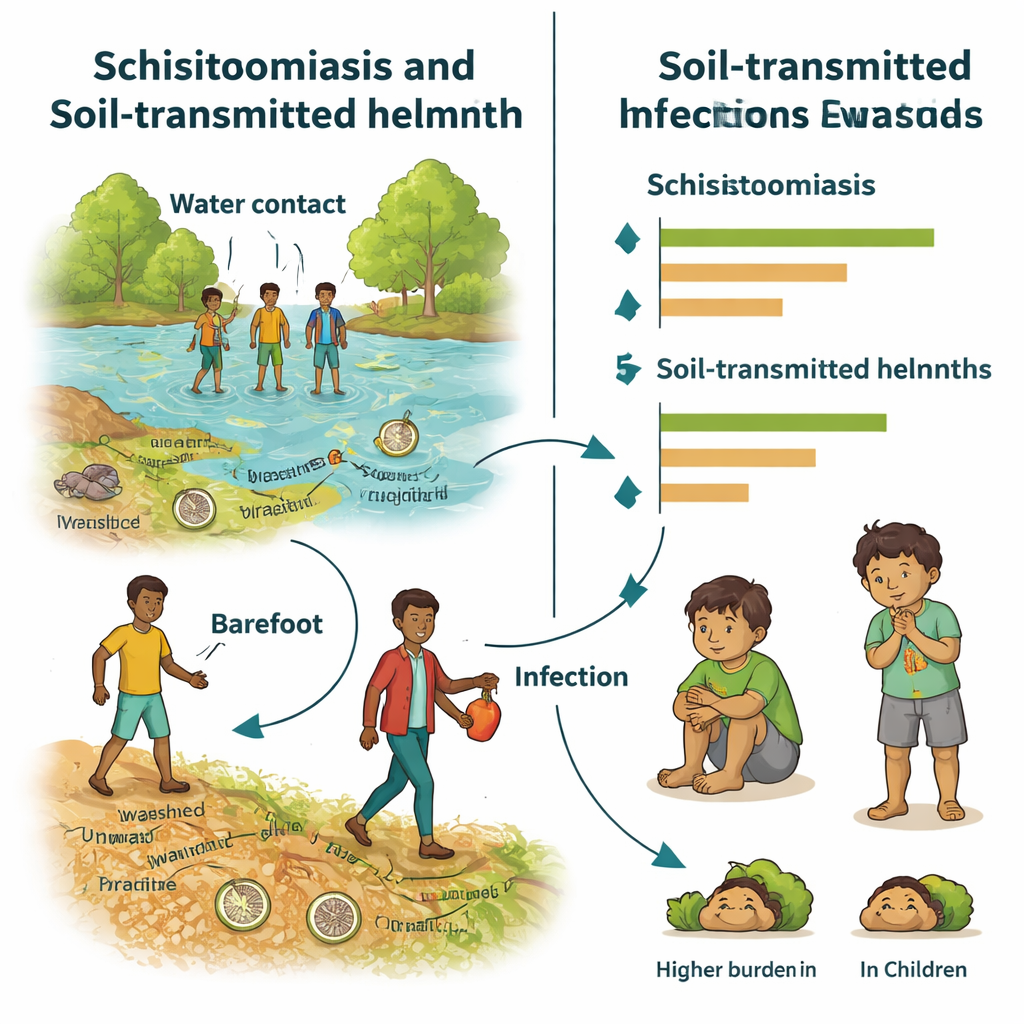
What This Means for Treatment and Prevention
Despite living in an area where these infections are well known, only about 14% of participants reported having taken deworming medicine before, and current national programs mainly focus on schoolchildren. This study shows that leaving out preschoolers, out-of-school children, and adults allows the worms to keep circulating in the community. The authors argue that south-eastern Gabon needs regular, community-wide deworming campaigns, not just school-based ones, combined with better access to safe water, improved toilets, and strong hygiene education. In plain terms, the conclusion is that worm infections are still quietly harming many people, but with targeted medicines and cleaner water and sanitation, communities can dramatically reduce this burden.
Citation: Kouna, L.C., Oyegue-Liabagui, S.L., Atiga, C.N. et al. Community survey of the infection, intensity and risk factors associated with schistosomiasis and soil-transmitted helminthiasis in south-eastern Gabon. Sci Rep 16, 4893 (2026). https://doi.org/10.1038/s41598-026-35064-w
Keywords: schistosomiasis, soil-transmitted helminths, Gabon, water and sanitation, community deworming