Why Brain and Nerve Tumors in One Nigerian State Matter
Nervous system tumors—growths that affect the brain, spinal cord, and major nerves—can change a person’s life in an instant. In Anambra State in southeast Nigeria, doctors have seen a worrying rise in these tumors, yet hard data have been scarce. This study pulls together ten years of medical records to show how common these tumors are, who they affect, and how often they are correctly diagnosed. The findings reveal not just a medical problem, but a wider story about health systems, access to modern tools, and how countries decide where to invest scarce resources.
Tumors That Strike the Body’s Control Center
The nervous system acts as the body’s command and communication network, so tumors here—even when not cancerous—can cause seizures, paralysis, vision loss, or personality changes. Globally, brain and other nervous system tumors number in the hundreds of thousands each year and are becoming more common. Nigeria is thought to have some of the highest rates of central nervous system tumors in Africa, but many regions have little or no solid data. This study focused on Anambra State, with nearly six million residents, to clarify how often these tumors appear and what kinds doctors are seeing in real clinics and hospitals.
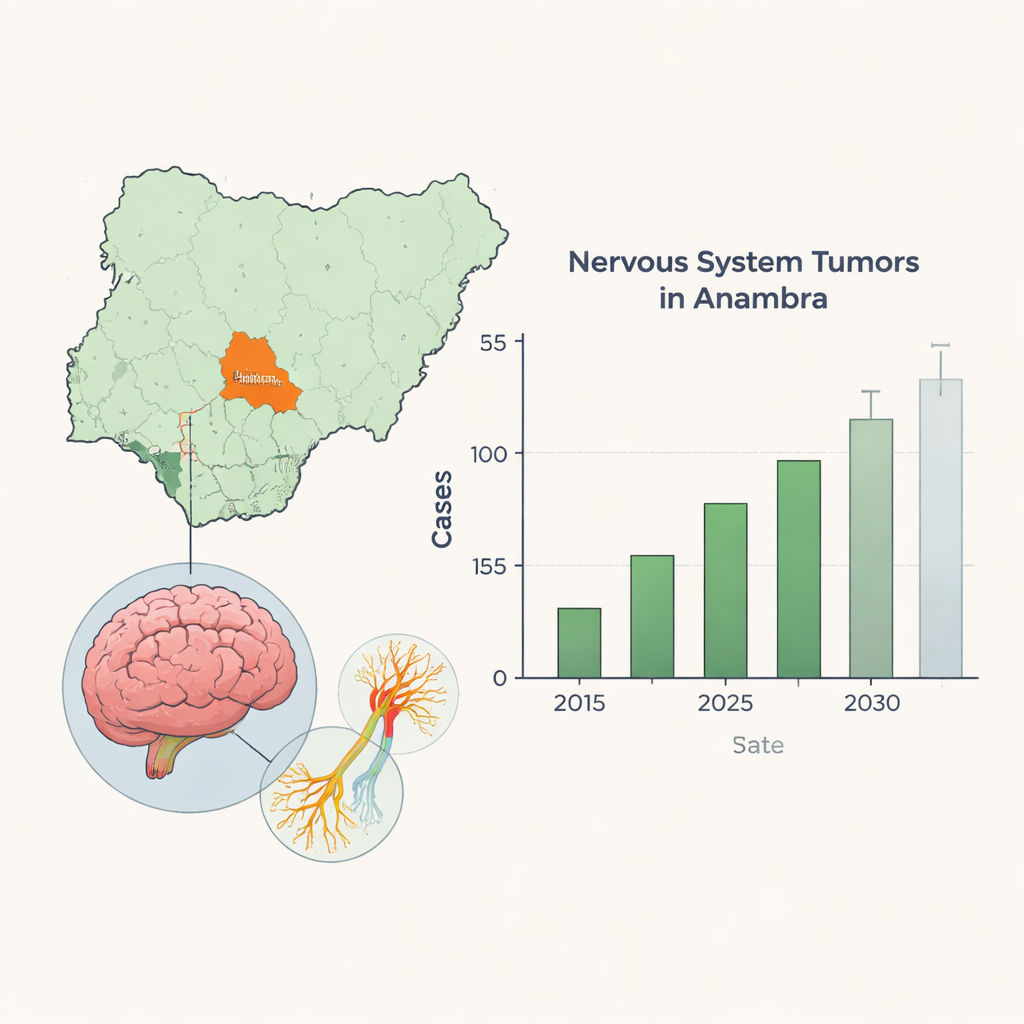
What the Doctors Found Over Ten Years Figure 1.
Researchers reviewed records from every major public and private pathology center in Anambra between 2015 and 2024. They identified 221 people with confirmed tumors of the nervous system, roughly half men and half women, ranging from infants to 81-year-olds. About one-third of the cases involved the central nervous system (mostly brain tumors), while the remaining two-thirds affected the peripheral nerves, such as those running through the arms, legs, and trunk. Although this number seems small for such a large population, the yearly counts told a different story: after a quiet period with only a handful of cases per year, diagnoses climbed sharply, reaching 43 cases in 2024. Simple forecasting suggests the number could rise to around 71 per year by 2030 if current trends continue, hinting at a growing public health problem.
Which Tumors Are Most Common?
In the brain and spinal cord, the most frequent tumor type was meningioma, which grows from the coverings of the brain and spinal cord and is usually benign but can still be dangerous because of its location. These made up about 4 in 10 central nervous system tumors, and were especially common in middle-aged adults. Tumors arising from supporting brain cells (astrocytomas and related growths) were the second most common group, and a small number of cases came from cancers that had spread from other parts of the body. In the peripheral nerves, neurofibromas—often associated with nerve disorders like neurofibromatosis—dominated, followed by malignant peripheral nerve sheath tumors, which are aggressive cancers with poor survival. Children and teenagers accounted for more than one-third of all cases, and some tumor types, such as medulloblastoma and neuroblastoma, appeared almost entirely in younger patients.
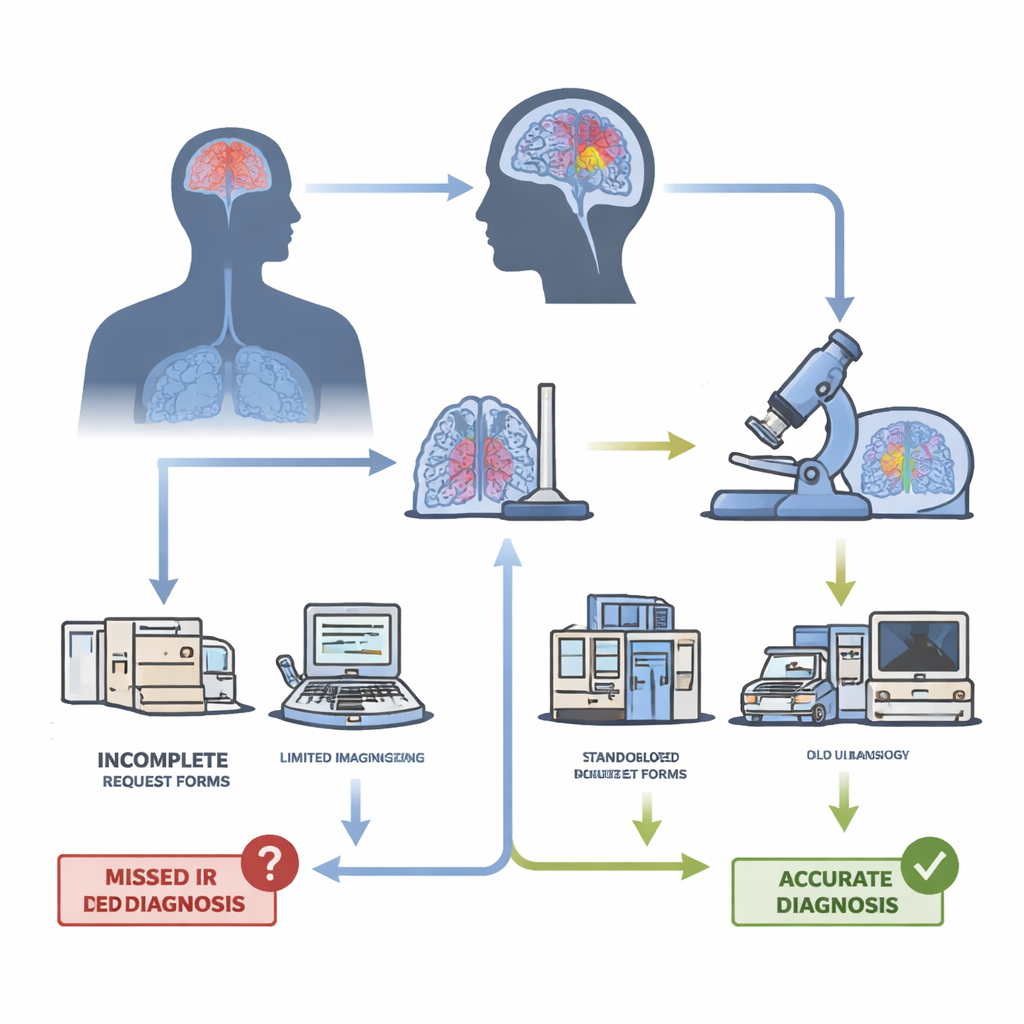
When First Impressions Are Wrong Figure 2.
For brain and nerve tumors, getting the diagnosis right the first time is crucial. Yet in this study, fewer than half of the patients had a pre-operative diagnosis that matched what the pathologists later saw under the microscope. Nearly a quarter of the lab request forms were missing key information—such as clinical details or scan results—making accurate interpretation even harder. In almost 3 out of 10 cases, scans and clinical impressions pointed to one type of tumor, only for the final tissue analysis to reveal another, sometimes more dangerous type. This mismatch rate is much higher than in wealthy countries and reflects the limited availability of high-quality imaging, specialized radiologists, advanced lab techniques, and standardized forms in many Nigerian hospitals.
Why Better Tools and Policies Are Urgently Needed
The authors argue that these tumors, though relatively uncommon, place a heavy burden on patients, families, and the health system. Many people arrive late for care because of cost, distance, or reliance on traditional and faith-based healers, and once they reach the hospital, doctors may lack the tools to make swift, precise diagnoses. The study calls for Nigeria’s cancer policies and regional health plans to explicitly include brain and nerve tumors, standardize pathology request forms, expand access to modern imaging and laboratory technologies, and explore innovations like telepathology and artificial intelligence. In plain terms, the message is that nervous system tumors in Anambra are rising and often misdiagnosed—not because doctors do not care, but because the system around them is under-resourced. Fixing these gaps could mean earlier treatment, fewer disabilities, and better chances of survival for thousands of people in the years ahead.
Citation: Odita, A.O., Menkiti, F.E., Ofiaeli, O.C. et al. The public health burden of nervous system tumors in Anambra State, Nigeria necessitates strategic resource allocation.
Sci Rep16, 5474 (2026). https://doi.org/10.1038/s41598-026-35055-x