Clear Sky Science · en
Probiotics regulate the intestinal microbiome to promote growth in juvenile Salmo trutta fario
Why Fish Farmers and Food Lovers Should Care
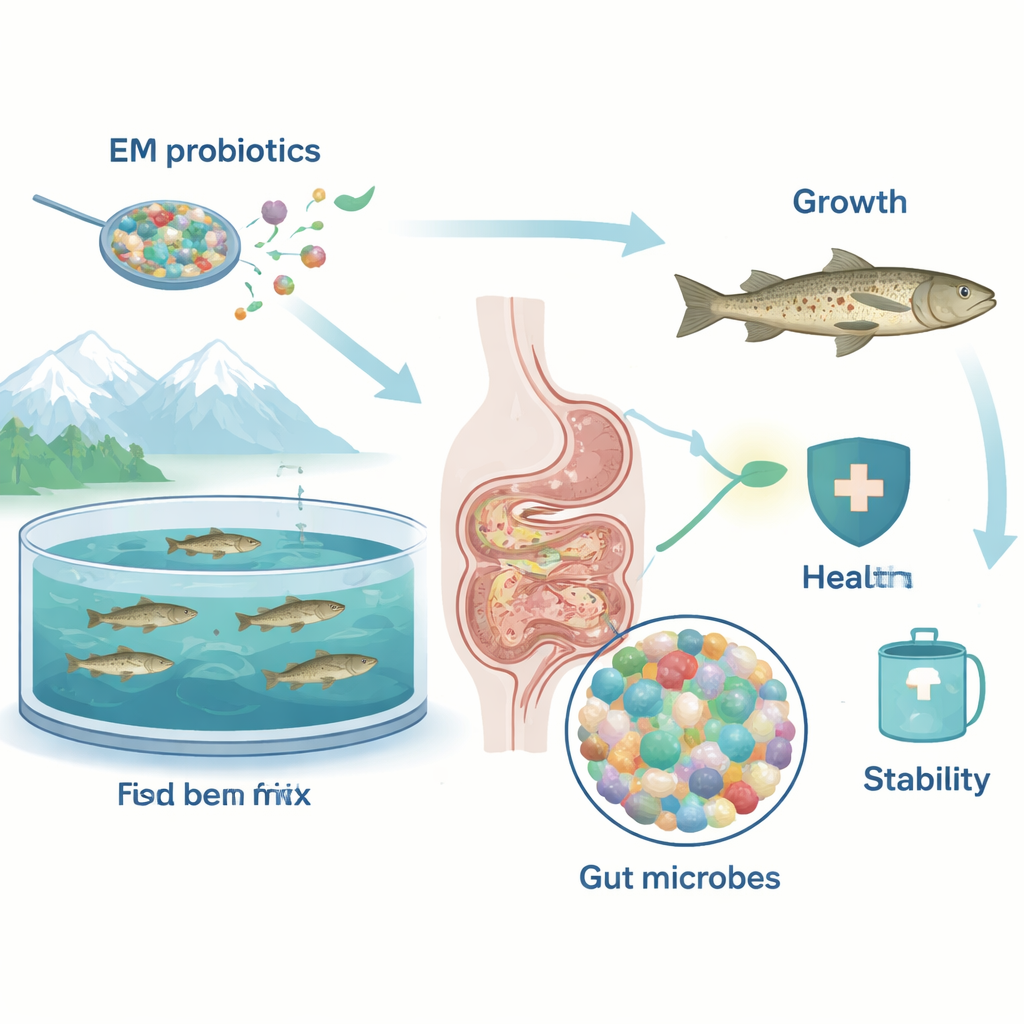
As demand for healthy seafood rises, fish farms are under pressure to grow more fish without overusing antibiotics or harming the environment. This study looks at a “friendly bacteria” mix called EM probiotics and tests how different doses affect the growth, health, and gut microbes of juvenile brown trout (Salmo trutta fario), a valuable cold‑water fish raised in the Tibetan Plateau. By finding the sweet spot for probiotic use, the work points toward cleaner, more efficient aquaculture that can benefit both farmers and consumers.
Good Bacteria as Farm Helpers
Probiotics are live microbes added to fish diets or water to support digestion, immunity, and disease resistance. They are seen as a greener alternative to antibiotics, which can leave residues and encourage drug‑resistant bacteria. In earlier work, the research team found that a mixed culture called Effective Microorganisms (EM) outperformed several single probiotic strains in brown trout. However, it was unclear how much EM should be added to the feed to get the best results without wasting product or stressing the animals. This study directly compared four diets containing 0%, low, medium, or high amounts of EM to see how fish bodies and gut ecosystems responded.
Testing Probiotic Doses in High-Altitude Trout
Juvenile trout were reared for 70 days in well‑aerated tanks supplied with cold, flowing river water, mimicking commercial conditions in Tibet. All fish received the same high‑protein commercial feed, but with different EM levels mixed in: none (control), low, medium, or high. The researchers tracked growth, liver health, blood chemistry, and a wide range of gut bacteria using DNA sequencing. This allowed them to link how the fish grew and how healthy they appeared with detailed changes in the invisible community of microbes living in their intestines.
Striking a Balance for Growth and Health
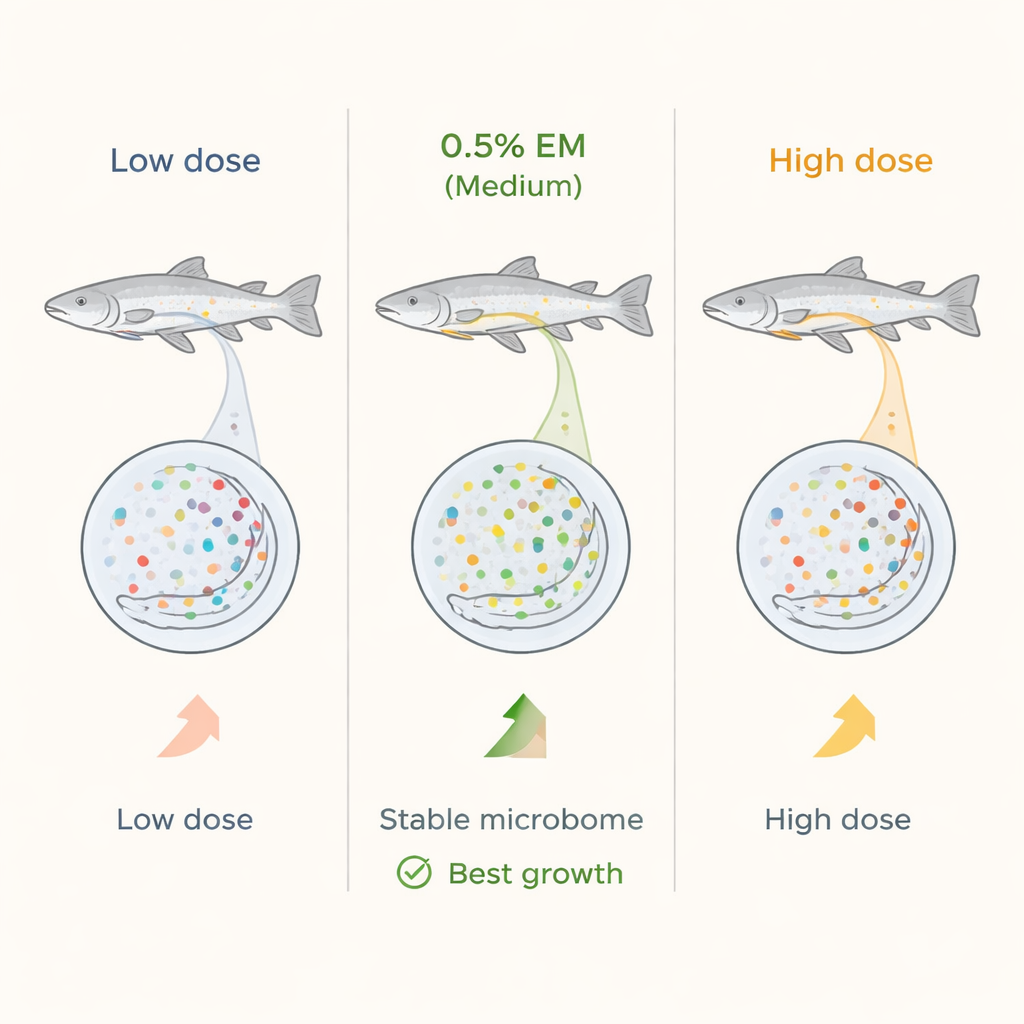
All probiotic‑fed trout grew better than the control group, but the medium‑dose EM feed produced the clearest gains. These fish showed the highest weight gain, fastest daily growth, and strongest length increases, meaning they converted feed into body mass more efficiently. Measures of liver chemistry and antioxidant defenses suggested that EM helped the fish cope with normal metabolic stress; enzymes that neutralize harmful oxygen‑based molecules were boosted, while markers of cell damage were generally lower. Importantly, most blood cell counts stayed within normal ranges, indicating that EM did not disrupt overall blood health or cause obvious toxicity, even at higher doses.
Reshaping the Hidden World in the Gut
The DNA analysis revealed that EM changed which bacteria dominated the trout intestines and how stable these communities were. Across all probiotic treatments, the total number of detectable bacterial types generally increased, but the medium‑dose group stood out for having the most consistent gut microbiome from fish to fish. In other words, their internal ecosystems were less chaotic. Beneficial groups such as Lactobacillus, Bifidobacterium, and Faecalibacterium became more common in a dose‑dependent way, especially at the medium level. A network analysis showed that several friendly genera acted as “keystone” microbes that help hold the gut community together, supporting both stability and function.
What This Means for Future Aquaculture
The study shows that more probiotics are not always better. For juvenile brown trout in high‑altitude farms, a moderate EM dose offered the best combination of faster growth, strong antioxidant protection, and a steady, health‑supporting gut microbiome. Too little EM missed some of these benefits, while too much did not improve them further and slightly disturbed some blood and liver markers. For fish farmers, this work provides a science‑based starting point for dosing mixed probiotics to improve yield while reducing reliance on antibiotics. For consumers, it suggests that carefully designed microbial supplements can make farmed fish production both healthier and more sustainable.
Citation: Zhoua, J., Leia, K., Zhang, P. et al. Probiotics regulate the intestinal microbiome to promote growth in juvenile Salmo trutta fario. Sci Rep 16, 5026 (2026). https://doi.org/10.1038/s41598-026-35054-y
Keywords: fish probiotics, gut microbiome, aquaculture, brown trout, sustainable farming