Clear Sky Science · en
ICP-MS based seasonal and spatiotemporal evaluation of potentially toxic and major elements in surface waters of Akdağ National Park, Türkiye
Why this mountain lake matters to you
High in the mountains of western Türkiye, Akdağ National Park shelters forests, wildlife, and the streams and lake that sustain them. As more people visit and the climate shifts, a key question arises: are these waters still clean and safe, or are invisible pollutants quietly building up? This study offers the first year-long, detailed look at the park’s water chemistry, focusing on tiny amounts of metals and other elements that can either nourish life or harm it, depending on their levels.
Looking for hidden ingredients in clear water
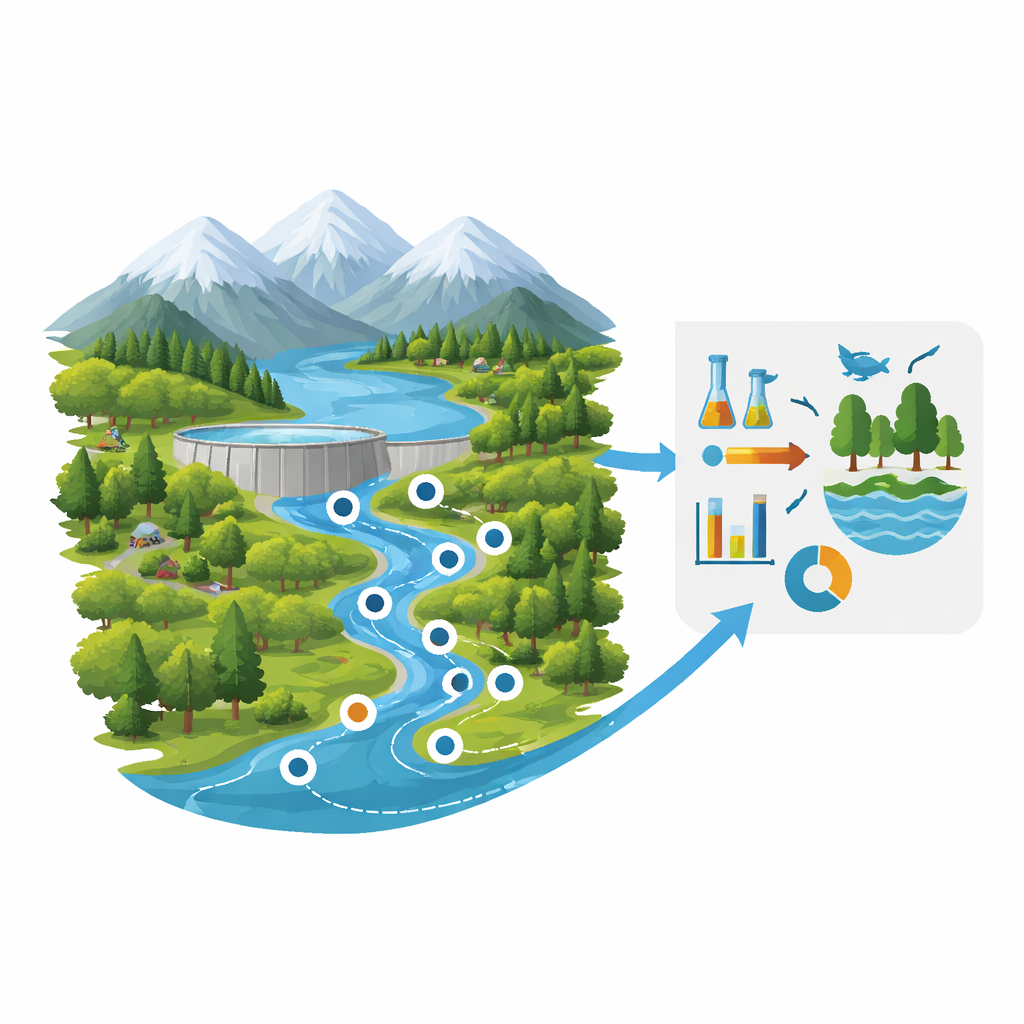
The research team set out to measure what cannot be seen with the naked eye: a suite of potentially toxic and major elements dissolved in the park’s surface waters. These include metals such as iron, manganese, aluminum, lead, arsenic, chromium, nickel, and copper, as well as abundant ingredients like calcium, magnesium, potassium, and boron. Even at very low levels, some of these can accumulate in fish and other organisms, damage DNA, and ultimately reach people through drinking water or food. To understand the full picture, the scientists did not just take a few snapshots; they monitored nine sites along a stream and the dam lake it feeds, across all four seasons from autumn 2021 to summer 2022.
How the team tracked the park’s water
The researchers combined careful field work with advanced laboratory and mapping tools. Each month, they collected water from just below the surface of the stream and from offshore points in the lake, following strict international procedures to avoid contamination. In the lab, they used a technique called ICP-MS, which ionizes the elements in the water and weighs them based on their mass and charge, allowing detection of extremely low concentrations with high precision. They then applied statistical tests suited to small datasets to see whether concentrations changed over seasons or differed between locations. Finally, using a geographic information system and a method known as inverse distance weighting, they turned these numbers into color-coded maps that reveal how each element is distributed across the park.
What the numbers say about safety
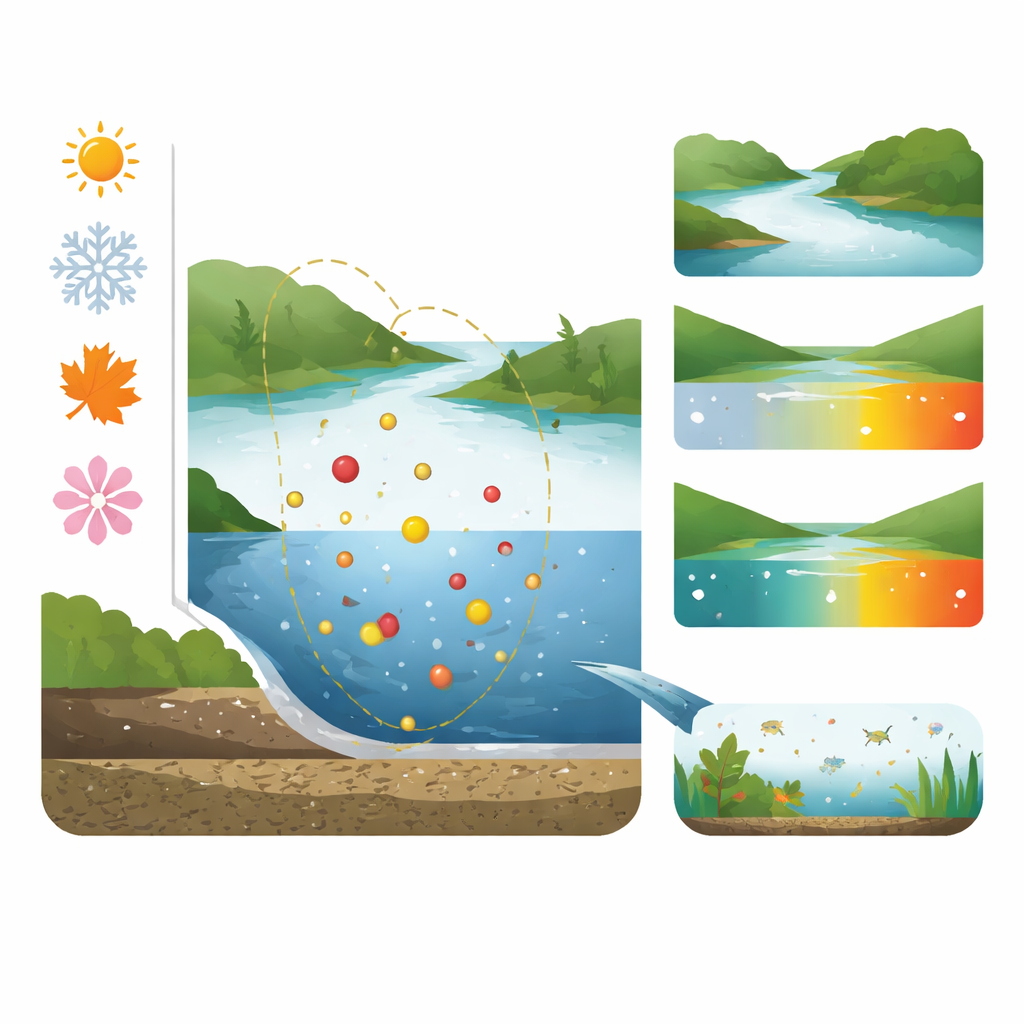
The good news is that, overall, the waters of Akdağ National Park appear chemically healthy. Levels of lead and arsenic stayed well below national and international safety limits. Most metals showed only modest changes from season to season, suggesting that natural processes such as rain, snowmelt, and evaporation are the main drivers of short-term variation. Iron, manganese, and aluminum were higher than other trace metals but still within accepted ranges, and their patterns pointed to natural release from rocks and lake-bottom sediments rather than to pollution from industry or agriculture. In contrast, the higher levels of calcium and magnesium reflected the local geology, where the bedrock naturally enriches the water in these major elements, much like hard water from household taps.
Seeing patterns across the lake and stream
The spatial maps revealed that element levels are not uniform, even in this relatively undisturbed setting. Certain stretches of the stream and parts of the lake showed slightly higher concentrations of manganese, iron, and some other metals, especially during winter and spring. These “hotter” spots likely arise where water lingers, sediments interact more strongly with the overlying water, or underground flows enter the system. For the major elements, upstream areas tended to hold more calcium and magnesium than the dam lake, again mirroring the underlying rocks. Importantly, even where concentrations were highest, they did not exceed the limits set by Turkish and European guidelines for good-quality surface waters.
What this means for the park’s future
To a lay observer, Akdağ’s waters may look pristine simply because they are clear and cold. This study shows that, at the level of invisible chemistry, that impression is largely accurate: the lake and streams currently meet strict standards and present no immediate threat to wildlife or human visitors. At the same time, the detailed seasonal records and maps provide a crucial baseline. They tell managers where natural variations occur and identify a few stations where values occasionally edge higher, making them logical places for continued checks. In plain terms, the water is clean for now, but ongoing, targeted monitoring will be vital to ensure that growing visitor numbers and changing environmental conditions do not slowly tip this mountain refuge toward unseen trouble.
Citation: Karakuş, Z., Kara, R., Yalçın, M. et al. ICP-MS based seasonal and spatiotemporal evaluation of potentially toxic and major elements in surface waters of Akdağ National Park, Türkiye. Sci Rep 16, 8508 (2026). https://doi.org/10.1038/s41598-026-35053-z
Keywords: freshwater quality, trace metals, national parks, GIS mapping, water monitoring