Clear Sky Science · en
TTF2 as a potential biomarker and immunotherapy target in glioma diagnosis and prognosis
Why this brain cancer study matters
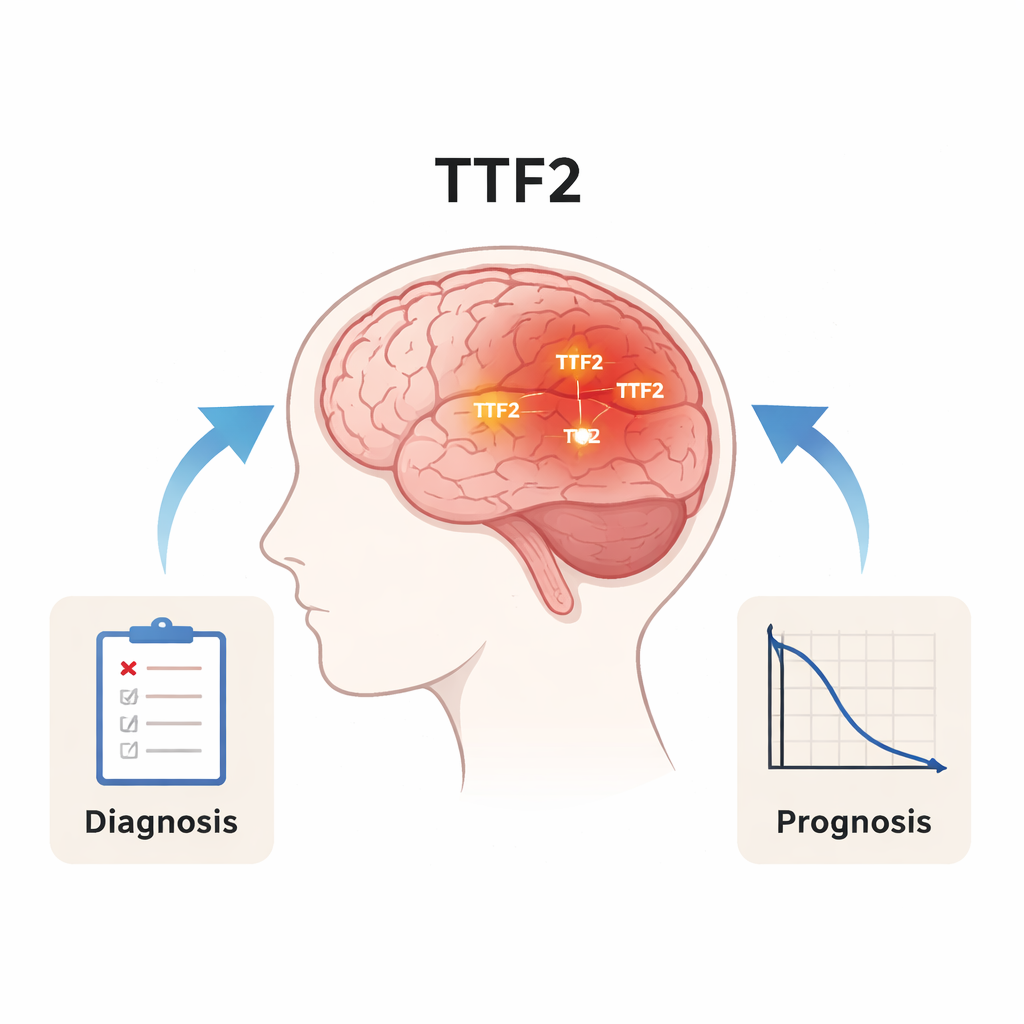
Brain tumors called gliomas are among the deadliest cancers, with most patients living only a few years after diagnosis. Doctors urgently need better ways to predict how a person’s disease will behave and to find new targets for treatment, especially for modern immune-based therapies. This study focuses on a little-known molecule, TTF2, and asks a simple question with big consequences: can levels of TTF2 in brain tumors help doctors diagnose glioma more accurately, forecast survival, and even guide future immunotherapy?
A new signal hiding in tumor genes
Glioma is not a single disease but a mixed group of brain tumors that differ in how fast they grow and how they respond to treatment. Current tools, such as microscopic examination and a handful of genetic markers, cannot fully explain why some patients do well while others decline quickly. The researchers turned to large public cancer gene databases from the United States and China to search for additional molecular clues. They focused on TTF2, a protein involved in turning off gene activity, which has been linked to several other cancers but had not been studied in depth in glioma.
High TTF2, higher risk
By comparing thousands of samples, the team found that TTF2 levels are much higher in glioma tissue than in normal brain tissue. Within gliomas, tumors with the highest TTF2 levels tended to be more advanced, belonged to more aggressive subtypes, and occurred in older patients. When the scientists followed patient outcomes, they saw a clear pattern: people whose tumors contained more TTF2 generally had shorter overall survival and more frequent disease progression. Even after accounting for powerful existing markers such as tumor grade, IDH mutation status, and a chromosomal change called 1p/19q codeletion, TTF2 remained an independent warning sign. The group built a prediction chart combining TTF2 with these standard factors, which closely matched actual one-, three-, and five‑year survival in two separate patient datasets.
Clues from the tumor’s neighborhood
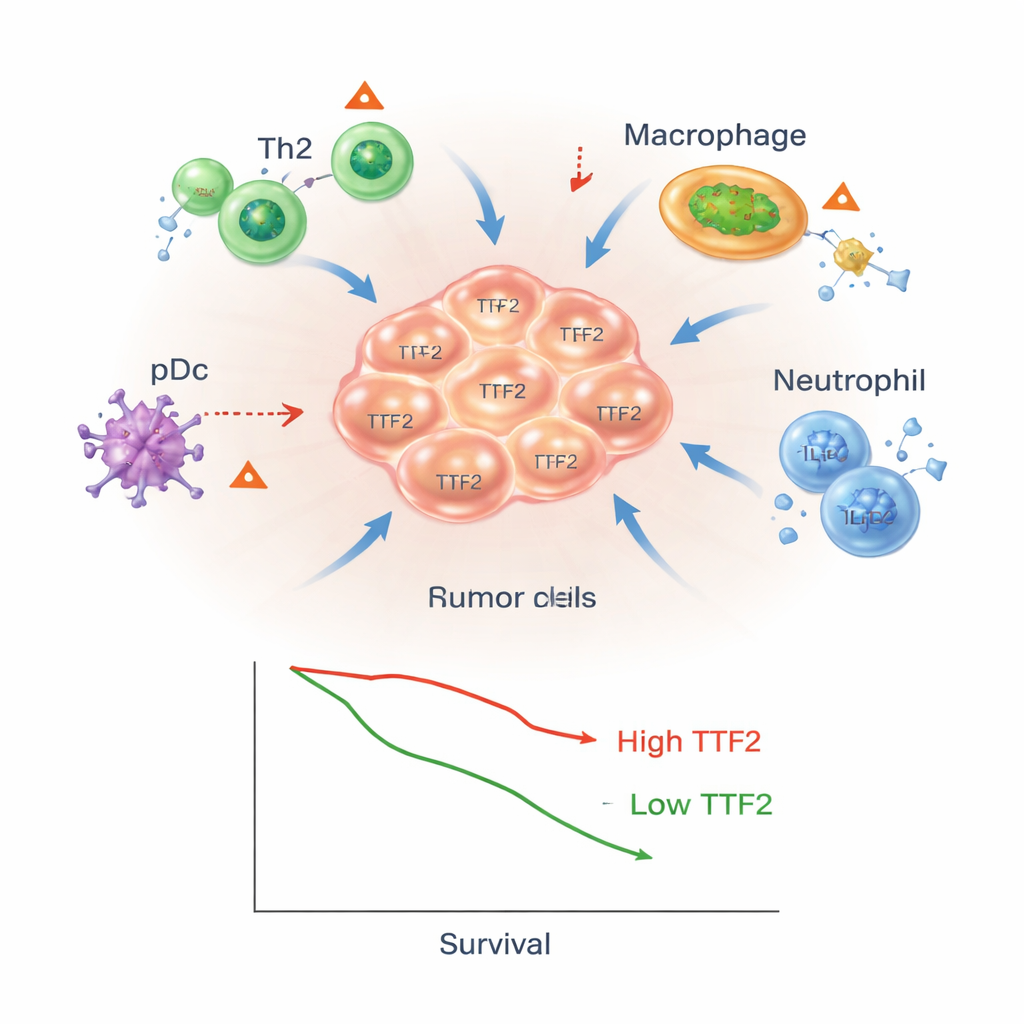
To understand why TTF2 might be tied to poor outcomes, the researchers examined which other genes rise and fall alongside it and what biological processes those gene sets represent. Tumors with high TTF2 showed stronger activity in pathways related to immune signaling, antibody production, and cell‑to‑cell communication, as well as in well‑known cancer routes such as PI3K–AKT. Using computational tools that infer the mix of immune cells from gene patterns, they then analyzed the tumor microenvironment. Gliomas rich in TTF2 were also rich in certain immune cells—Th2 helper T cells, macrophages, and neutrophils—that are often linked to a “quieted” or suppressed anti‑tumor response, and had fewer plasmacytoid dendritic cells, which can help trigger stronger immunity.
How TTF2 might help tumors hide
These findings suggest that TTF2 does more than just mark dangerous tumors; it may actively help shape a protective shield around them. The authors propose that by influencing how genes are switched off, TTF2 could alter the levels of key immune messengers and chemokines—molecules that attract or repel immune cells. This, in turn, might steer T cells toward a Th2‑dominated state that is less effective at killing cancer cells and encourage the buildup of tumor‑supporting macrophages and neutrophils. Although these ideas come from data analysis rather than direct laboratory manipulation of TTF2, they offer a testable model of how this molecule might promote both tumor growth and immune escape.
What this means for patients
The study concludes that TTF2 is strongly overproduced in gliomas and that higher levels are reliably associated with worse survival and more aggressive disease features. For patients, this raises two hopeful possibilities. First, measuring TTF2 in tumor samples could help doctors refine diagnosis and personalize risk estimates beyond what standard tests allow today. Second, if future lab work confirms that TTF2 helps tumors evade the immune system, drugs that block or modulate TTF2—or its downstream pathways—might become part of new combination therapies that make immunotherapy more effective for people with this devastating brain cancer.
Citation: Shi, D., Chen, F., Chen , Z. et al. TTF2 as a potential biomarker and immunotherapy target in glioma diagnosis and prognosis. Sci Rep 16, 7653 (2026). https://doi.org/10.1038/s41598-026-35049-9
Keywords: glioma, TTF2, brain tumor biomarker, tumor immune microenvironment, immunotherapy target