Clear Sky Science · en
Knowledge, attitude, and practice of osteoporosis and hip fracture in older Chinese adults
Why bone health in later life matters
As people grow older, their bones can quietly become weaker until a simple fall leads to a serious hip fracture, changing daily life overnight. This study looked at how well older adults in one region of China understand osteoporosis (brittle bones), how they feel about it, and what they actually do to protect themselves. By seeing where knowledge is strong and where gaps remain, the researchers hope to guide practical steps that families, communities, and doctors can take to keep older adults independent and mobile for longer.
Looking at everyday beliefs and habits
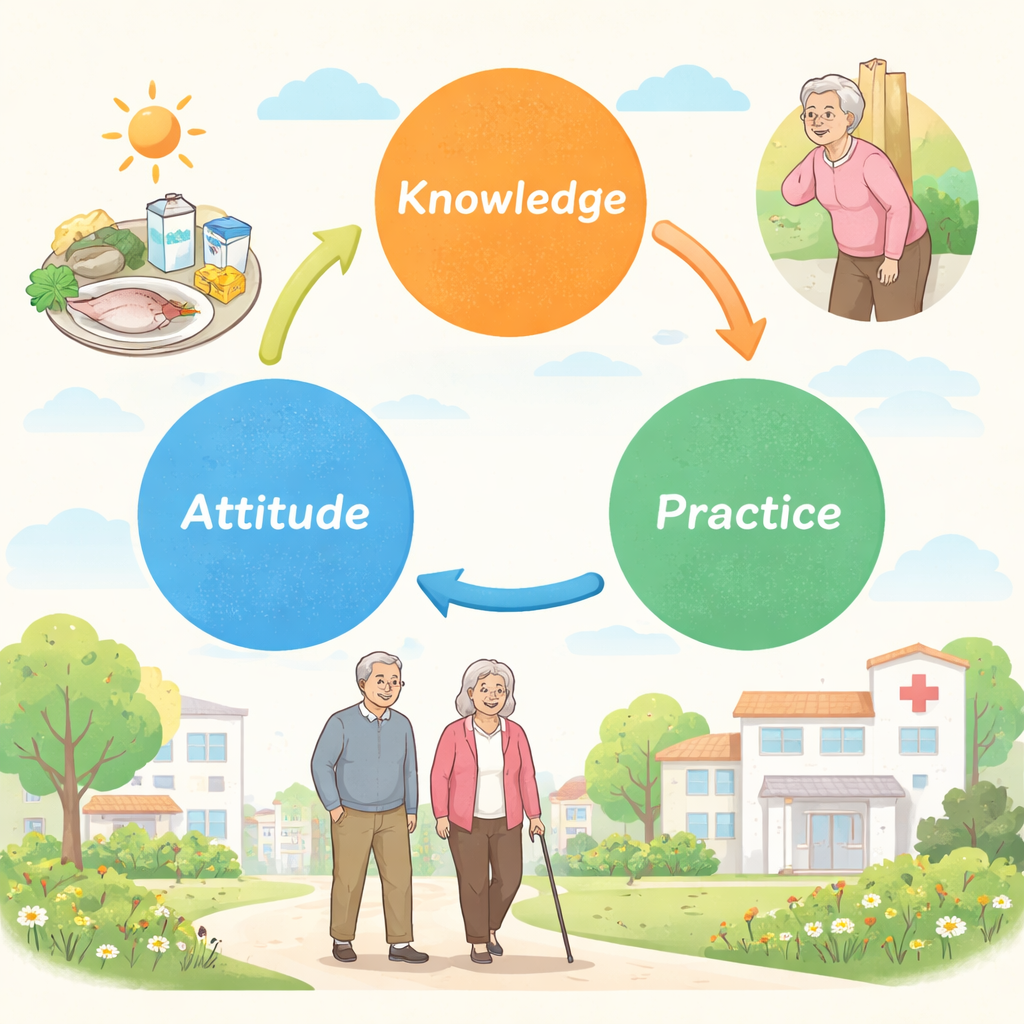
The researchers surveyed more than 500 adults over age 50 who were seen at a large hospital in Ningxia, a region in north‑central China. Participants completed an electronic questionnaire that asked about their background (such as income, education, and whether they lived in a city or rural area) and then tested three areas: what they knew about osteoporosis and hip fractures, how seriously they viewed these problems, and what they actually did in daily life to prevent them. Each of these areas—knowledge, attitude, and practice—was scored, allowing the team to see patterns across the group.
What older adults already know and do
On average, the older adults scored fairly well. Their answers suggested they knew the basics about bone thinning and falls, generally took the risks seriously, and reported taking active steps such as paying attention to tripping hazards and seeking care when needed. For example, most recognized that cluttered walkways, wet floors, and lack of movement increase the chance of falling. Many also said they would go to a doctor quickly if a fall led to pain or trouble moving. Together, these responses paint a picture of a group that is not in the dark about bone health, but is already trying to protect itself.
Who is better informed—and why that matters
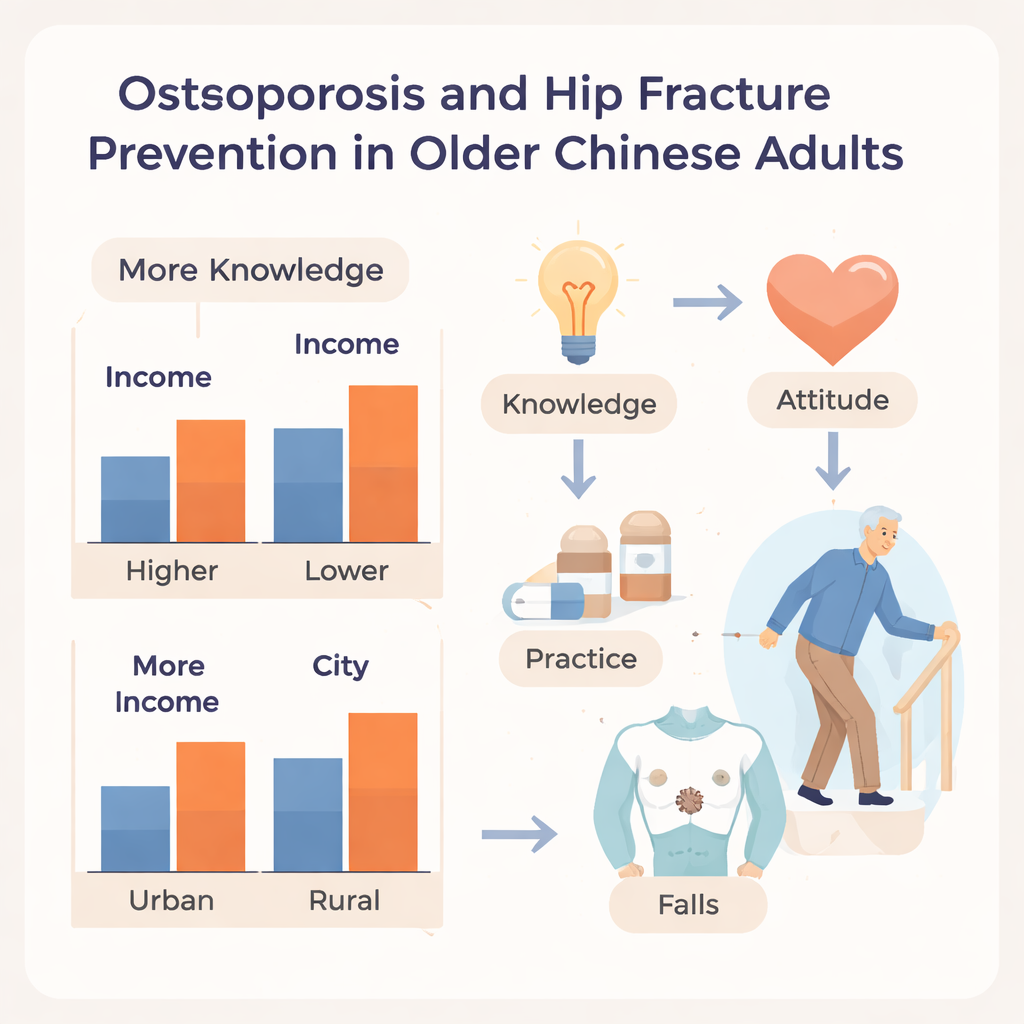
The study also revealed that not everyone was equally informed or proactive. People living in cities and those with higher incomes tended to have better knowledge scores and more protective habits. Older adults who had fallen in the past year also scored higher on knowledge, perhaps because a frightening experience pushed them to seek information or receive advice from doctors. In contrast, smoking, drinking alcohol, and lower income were linked with less favorable attitudes or behaviors. Taking osteoporosis medicines went hand in hand with more active prevention, suggesting that once people are in treatment they may be more engaged overall in protecting their bones.
Hidden blind spots in understanding
Even with generally good results, some blind spots stood out. Many participants did not fully appreciate that once you have had one fracture, your chance of breaking another bone rises sharply. Some underestimated the risk for men, viewing osteoporosis mainly as a women’s problem. Others did not clearly link aging, repeated falls, and hip fractures as part of the same chain of events. These gaps matter because they can lull people into a false sense of security, leading them to delay checkups, skip medicines, or overlook simple home changes that could prevent a fall.
Turning knowledge into stronger bones
The overall conclusion is encouraging: older adults in this Chinese region already have a fairly strong foundation of knowledge and concern about osteoporosis and hip fractures, and many are taking practical steps to stay safe. However, the study also shows that better information—especially about the dangers of repeat fractures, the risks to men, and the importance of fall prevention—could nudge attitudes and habits even further in the right direction. For families and health workers, this means that clear, targeted education and early preventive care have real potential to keep bones stronger, reduce devastating hip fractures, and help older adults stay active and independent.
Citation: Ma, F., Wang, Z., Luo, X. et al. Knowledge, attitude, and practice of osteoporosis and hip fracture in older Chinese adults. Sci Rep 16, 4861 (2026). https://doi.org/10.1038/s41598-026-35046-y
Keywords: osteoporosis, hip fracture, older adults, fall prevention, health education