Clear Sky Science · en
The miR-181d-5p/SPP1 axis inhibits the migration and invasion of colorectal cancer via the RhoA patyway
Why this research matters for everyday health
Colorectal cancer is one of the most common and deadly cancers worldwide, largely because it often spreads to other parts of the body before it is caught. This study looks at a tiny genetic regulator, a microRNA called miR-181d-5p, that acts like a natural brake on the ability of colorectal cancer cells to move and invade. Understanding how this built‑in brake works could open the door to new ways of slowing tumor spread and improving survival.
A tiny RNA with a big protective role
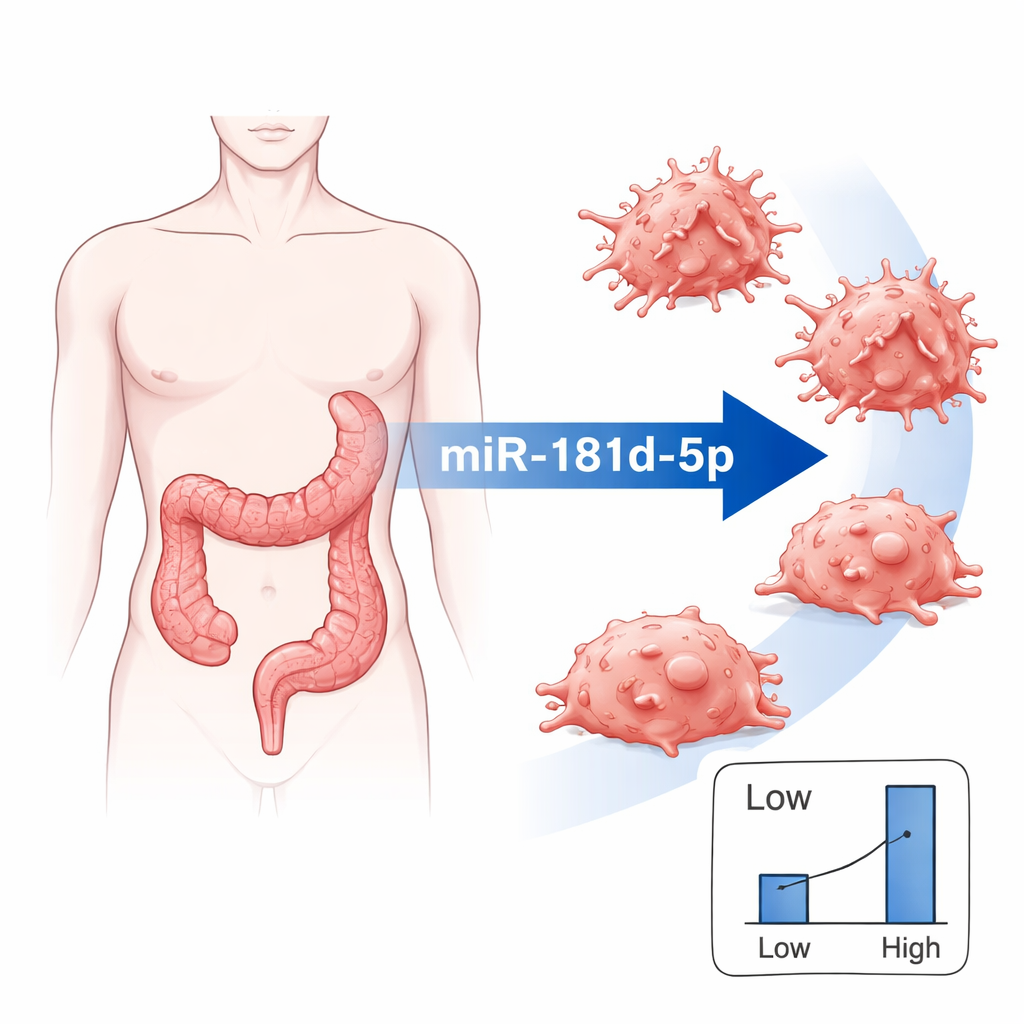
MicroRNAs are very short pieces of RNA that do not build proteins themselves but instead fine‑tune how other genes are turned on or off. The miR‑181 family has been linked to cancer in many organs. In this work, the authors found that one member, miR‑181d‑5p, is strongly reduced in human colorectal cancer tissues and in several colorectal cancer cell lines, compared with nearby non‑cancerous tissue and normal intestinal cells. This pattern suggests that, under healthy conditions, miR‑181d‑5p normally helps keep cell growth and movement in check, and that losing it may give cancer cells more freedom to spread.
How the brake affects cancer cell behavior
To see what miR‑181d‑5p actually does, the team artificially increased its level in one colorectal cancer cell line and decreased it in another. When miR‑181d‑5p was boosted, cancer cells grew more slowly, closed scratch‑like “wounds” in lab dishes more slowly, and were less able to move through a porous membrane—three standard tests of tumor aggressiveness. When the microRNA was lowered, all of these behaviors sped up. The cells also changed shape: higher miR‑181d‑5p made them rounder with weaker internal scaffolding, whereas lower levels produced elongated cells with strong stress fibers, a form that is better suited for travel through the body.
A key protein target in cancer spread
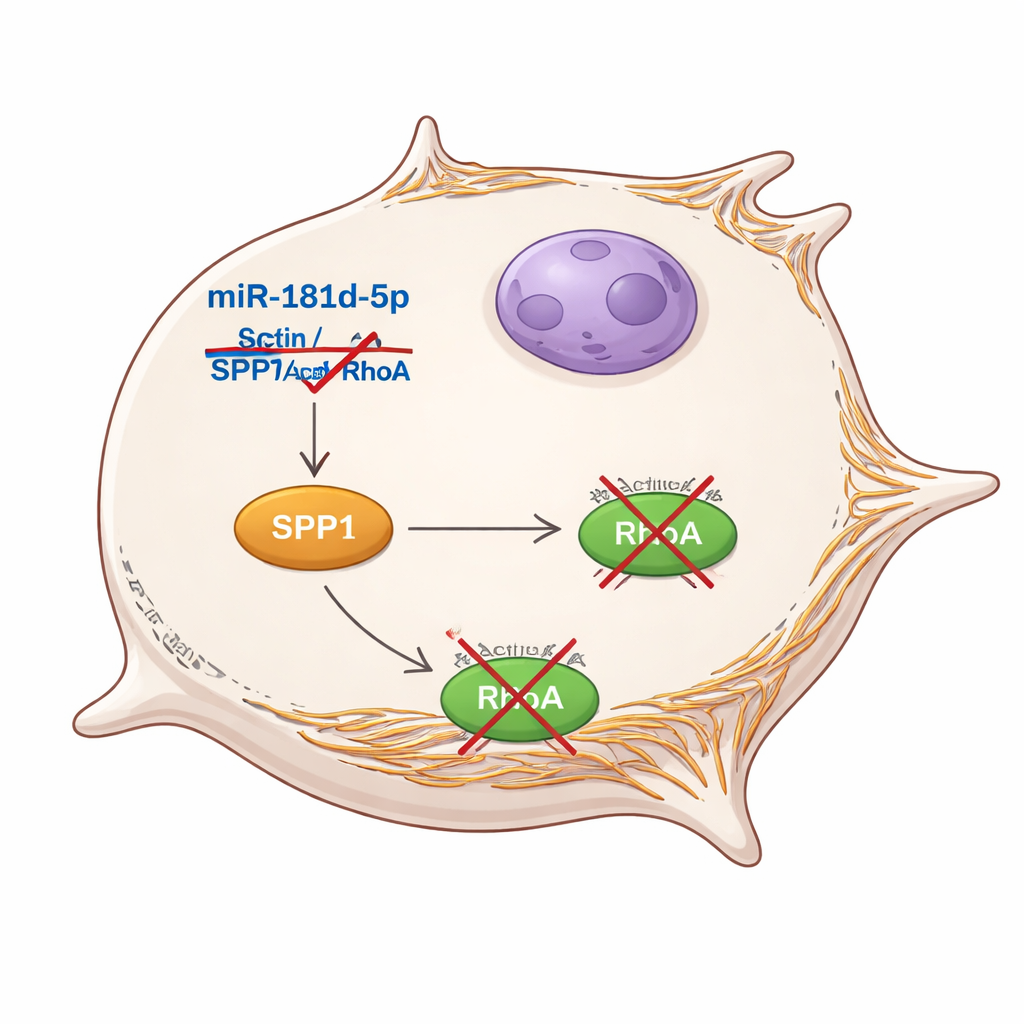
The researchers then asked which gene miR‑181d‑5p was controlling. Using computer predictions and reporter tests, they showed that this microRNA directly latches onto the message for a protein called SPP1 (also known as osteopontin) and blocks its production. SPP1 is often found at high levels in aggressive cancers and is known to promote cell movement and survival. In patient samples and cell lines, SPP1 was elevated wherever miR‑181d‑5p was low, revealing an inverse relationship between the two. Changing miR‑181d‑5p levels in cancer cells drove SPP1 up or down accordingly, along with a downstream regulator called RhoA that reshapes the cell’s internal skeleton and helps it crawl.
Untangling the pathway that drives invasion
Next, the authors manipulated SPP1 directly. For cells with high SPP1, growth, movement, and invasion all increased, and molecular markers shifted toward a more mobile, less attached state. When SPP1 was silenced, the opposite occurred. Crucially, when they raised miR‑181d‑5p but simultaneously forced cells to make extra SPP1, much of the benefit of the microRNA was lost. This “rescue” experiment shows that miR‑181d‑5p restrains colorectal cancer cells largely by keeping SPP1—and in turn the RhoA pathway—under control. In mouse models, tumors formed from cells rich in miR‑181d‑5p grew more slowly, showed fewer signs of aggressive tissue changes, and expressed lower levels of SPP1, RhoA, and the cell‑division marker Ki‑67.
What this could mean for future treatments
Put simply, this study identifies a chain of command in colorectal cancer: the microRNA miR‑181d‑5p acts as a master switch that turns down SPP1, which then quiets the RhoA system that helps cancer cells reshape and spread. When this protective microRNA is lost, SPP1 and RhoA become overactive, and tumors grow and invade more easily. While much work remains before such findings translate into therapies, restoring miR‑181d‑5p or blocking SPP1 could one day become a strategy to slow or prevent colorectal cancer metastasis and improve patient outcomes.
Citation: Hou, S., Guo, T., Wu, J. et al. The miR-181d-5p/SPP1 axis inhibits the migration and invasion of colorectal cancer via the RhoA patyway. Sci Rep 16, 4883 (2026). https://doi.org/10.1038/s41598-026-35040-4
Keywords: colorectal cancer, microRNA, metastasis, SPP1, RhoA signaling