Clear Sky Science · en
Effects of dance mindfulness and combined interventions on social anxiety in left behind rural adolescents: a randomized controlled trial
Why this matters for growing up
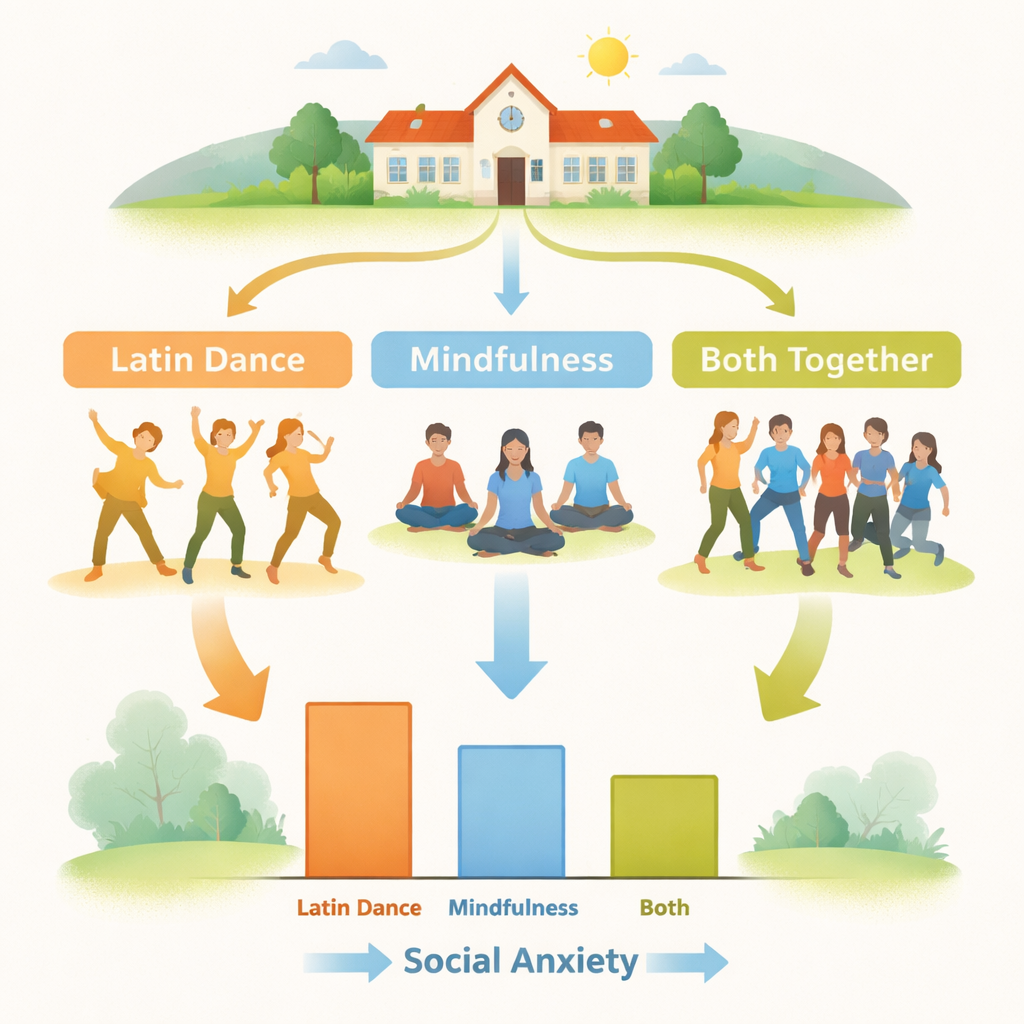
Many young people feel nervous about talking to others or being judged at school. For millions of children in rural China whose parents work far from home, this social anxiety can be especially strong and long‑lasting. This study asked a simple, practical question: can enjoyable activities that schools can realistically offer—like Latin dance and short mindfulness sessions—help these "left‑behind" adolescents feel more at ease around others, and if so, which approach works best?
A hidden struggle in rural villages
China’s economic boom has drawn huge numbers of parents from villages to cities for work, often leaving their children in the care of relatives. These left‑behind adolescents are more likely to experience sadness, worry, and behavior problems than peers who live with their parents. One of their biggest challenges is social anxiety—the intense fear of being judged or rejected in everyday situations such as answering in class or talking with classmates. High levels of social anxiety can damage friendships, school performance, and overall quality of life. Yet mental health services in rural areas are scarce, so schools urgently need low‑cost, group‑based ways to support these young people.
Dance, mindfulness, or both?
The researchers worked with 84 left‑behind adolescents in a rural middle school who showed signs of social anxiety. Students were randomly placed into four groups: a Latin dance group, a mindfulness group, a combined group that received both dance and mindfulness, and a control group that continued their usual routines. All active programs lasted 12 weeks, with four 40‑minute sessions each week for the dance and combined groups, and four shorter mindfulness sessions per week. The Latin dance classes used simple, progressive steps to create fun, face‑to‑face interaction. The mindfulness sessions taught students to notice their thoughts and feelings without judgment and to practice calm attention through guided exercises. The combined group did mindfulness first, then Latin dance in the same session, so students could immediately apply their calming skills in a lively social setting.
What changed for the students
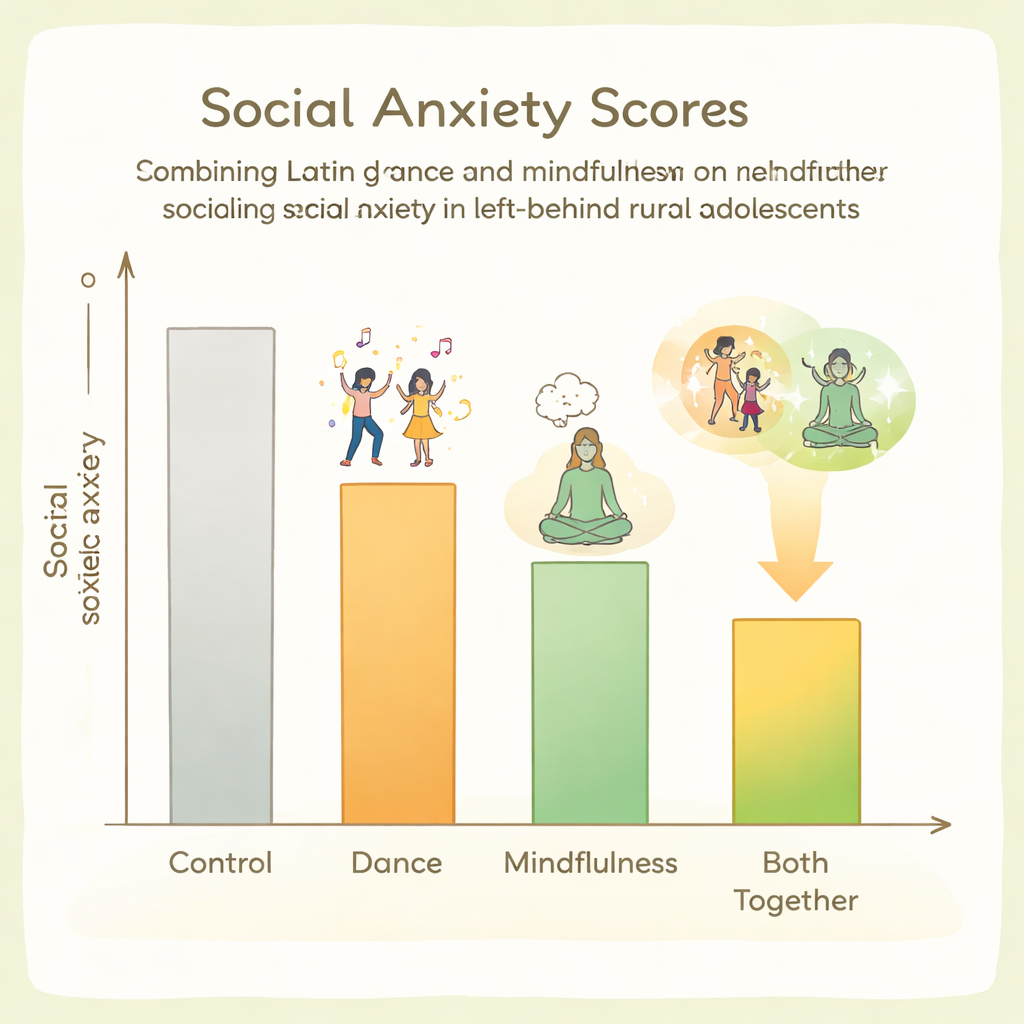
The team measured students’ social anxiety before the programs began, right after the 12 weeks ended, and again six weeks later. They looked at overall social anxiety, fear of being judged, and how much students tended to avoid social situations. In all three active groups, social anxiety scores dropped clearly after the program, while the control group stayed about the same. Latin dance led to fairly quick improvements: students felt less anxious and more willing to engage with classmates, but their gains started to fade slightly over time. Mindfulness brought more modest changes at first, yet the benefits held steady at follow‑up. The combined group, however, stood out. These students showed the largest drop in anxiety, the greatest reduction in fear of negative evaluation, and the biggest decline in social avoidance—and these improvements remained strong six weeks later.
Why combining body and mind helps most
The results suggest that Latin dance and mindfulness work through different but complementary routes. Dance offers movement, music, and shared rhythm, which can lift mood, build confidence, and create positive experiences of being with others. Mindfulness helps students notice racing thoughts and worries without being overwhelmed, and to respond more calmly. When used together, mindfulness seems to give adolescents tools to manage anxious thoughts, while dance provides real‑world social practice where those tools can be used immediately. This combination may reshape how students feel in their bodies, how they think about themselves, and how they behave with peers, leading to stronger and longer‑lasting relief from social anxiety.
What this means for schools and families
For a layperson, the takeaway is straightforward: simple school‑based programs that blend short mindfulness exercises with structured, friendly dance classes can meaningfully ease social anxiety in left‑behind rural adolescents. While either activity alone can help, doing both together seems to offer the most powerful and lasting boost in confidence and comfort around others. For communities with limited access to psychologists or clinics, this approach offers a practical way to support mental health in the very place where young people spend most of their time: the classroom.
Citation: Ding, X., Yang, Q., Sun, Y. et al. Effects of dance mindfulness and combined interventions on social anxiety in left behind rural adolescents: a randomized controlled trial. Sci Rep 16, 5468 (2026). https://doi.org/10.1038/s41598-026-35039-x
Keywords: social anxiety, mindfulness, Latin dance, adolescent mental health, left-behind children