Clear Sky Science · en
Effect of physical activity intervention on insulin resistance and appendicular body composition in gestational diabetes mellitus
Why Moving Matters During Pregnancy
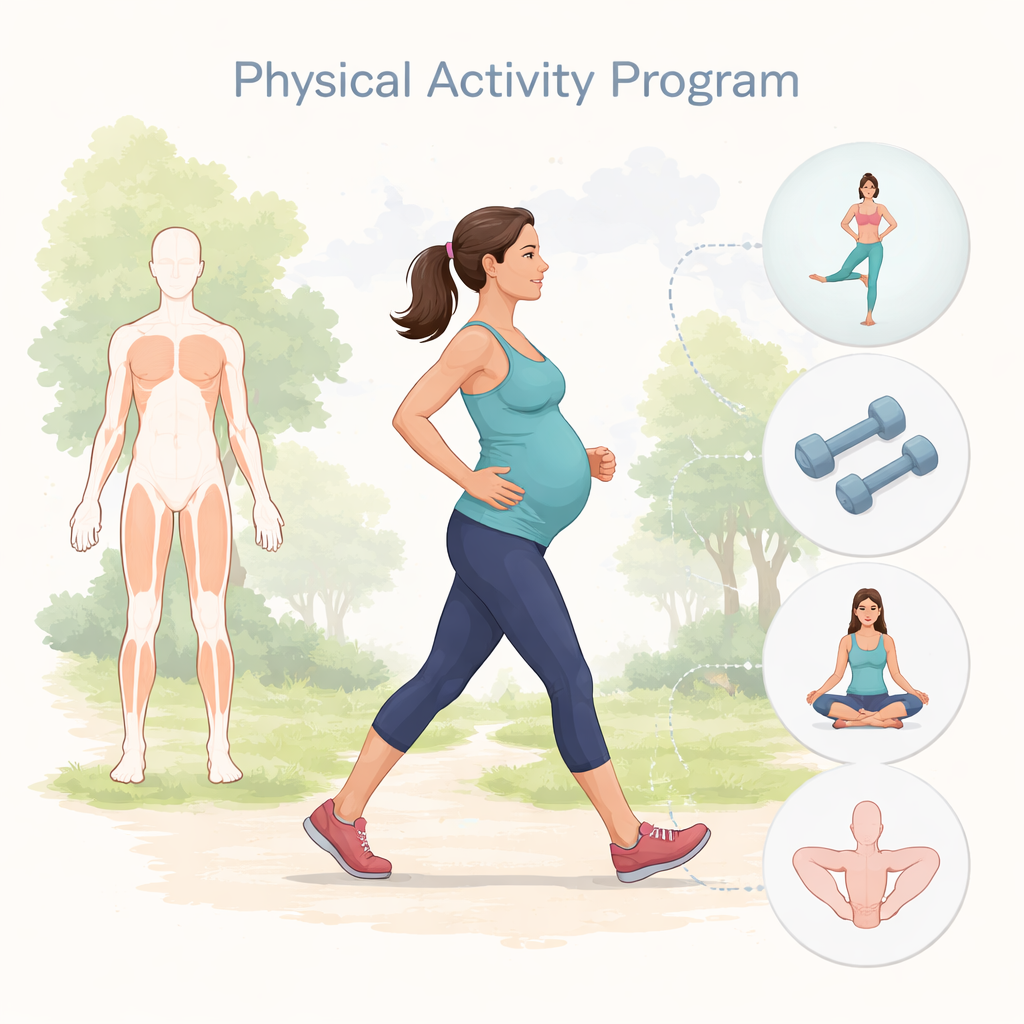
Many women are told to “take it easy” during pregnancy, especially after a diagnosis of gestational diabetes, a temporary form of high blood sugar that appears during pregnancy. Yet this study from India shows that the right kind of everyday movement—walking, simple strength exercises, and gentle yoga—can safely help pregnant women with gestational diabetes improve their blood sugar control and reshape body fat and muscle in their arms and legs. The findings suggest that structured, but practical, physical activity could become a powerful, low-cost tool to protect both mother and baby.
A Growing Problem for Mothers and Babies
Gestational diabetes is becoming more common worldwide as rates of obesity and physical inactivity rise. During a normal pregnancy, a woman’s body naturally becomes less sensitive to insulin, the hormone that helps move sugar from blood into cells. Most women compensate by making more insulin. In some, however, this system is overwhelmed, leading to high blood sugar and what doctors call gestational diabetes. Women with this condition often have more body fat and less muscle, especially in their limbs, and this pattern is linked to higher chances of cesarean birth and larger, heavier babies. Researchers therefore wondered: could increasing safe physical activity improve both the way the body handles sugar and the balance between fat and muscle?
Designing a Real-World Exercise Plan
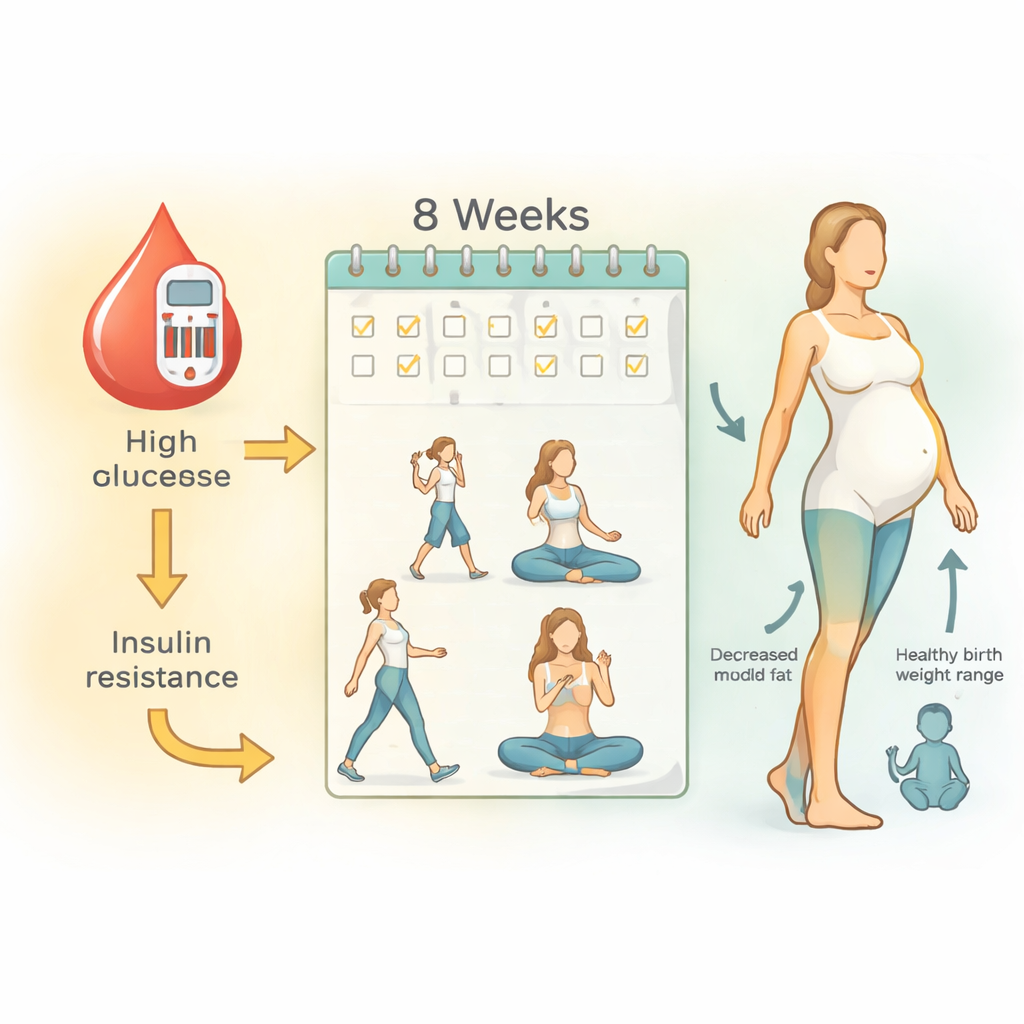
The research team carried out a feasibility trial in a hospital on India’s southern coast. From 135 pregnant women screened, 52 with gestational diabetes and low prior activity levels enrolled; 50 completed the program. All were under 28 weeks of pregnancy at the start. In addition to regular medical care and any needed diabetes medication, participants received an eight-week physical activity program plus an illustrated booklet in their local language. The plan was designed to fit into daily life, emphasizing what women could realistically do at home with little or no equipment, and aiming to reach at least 150 minutes per week of moderate activity, in line with international guidelines.
What the Women Actually Did
The program blended several types of activity. Women attended in-person sessions every two weeks, where a physiotherapist, trained in prenatal exercise and yoga, taught and progressed their routines. At home, they practiced brisk walking or slower-paced walking as tolerated, simple strength training using body weight or small water bottles, pregnancy-specific exercises like pelvic floor (Kegel) routines, and gentle yoga poses combined with breathing and relaxation techniques. Intensity was monitored using heart rate and a simple “how hard does this feel?” scale, and adjusted as pregnancy advanced. Weekly phone calls, caregiver involvement, and daily activity diaries helped maintain motivation and track adherence, which turned out to be very high: 96 percent of women met the activity target.
Changes in Blood Sugar and Body Shape
Before and after the eight-week program, the researchers measured fasting blood sugar and fasting insulin, then combined them into an index of insulin resistance, a marker of how hard the body must work to keep sugar levels normal. They also used a body composition monitor to estimate fat and muscle in the arms and legs, and calculated a simple fat-to-muscle ratio. After the program, women had lower fasting blood sugar and a modest but statistically significant drop in insulin resistance. Their arm and leg fat percentages fell, while muscle percentages rose. As a result, the fat-to-muscle ratio in both upper and lower limbs improved, indicating a healthier body composition. Importantly, no exercise-related adverse events were reported, and babies’ birth weights mostly stayed within the normal range, though heavier birthweights tended to occur in mothers with higher insulin resistance.
What This Means for Expectant Mothers
For women facing gestational diabetes, these findings offer a hopeful message: moving more—through walking, light strength work, and pregnancy-focused yoga and breathing—can gently lower blood sugar stress on the body and shift limb fat and muscle in a healthier direction, without demanding gym memberships or complex equipment. While this was a single-arm feasibility study rather than a large randomized trial, it reinforces current advice that, with medical guidance, regular moderate activity is not only safe but potentially therapeutic during pregnancy. In simple terms, staying sensibly active may help keep both mother and baby on a healthier track when blood sugar problems arise.
Citation: Apte, S., Ramachandra, P., Guruvare, S. et al. Effect of physical activity intervention on insulin resistance and appendicular body composition in gestational diabetes mellitus. Sci Rep 16, 5469 (2026). https://doi.org/10.1038/s41598-026-35036-0
Keywords: gestational diabetes, pregnancy exercise, insulin resistance, body composition, prenatal health