Clear Sky Science · en
COVID-19 outcomes in individuals with severe alpha-1 antitrypsin deficiency in Sweden
Why this matters for people at higher risk
Many people living with lung or liver problems worried that catching COVID-19 would be especially dangerous for them. One such group is individuals with severe alpha-1 antitrypsin deficiency, a hereditary condition that can damage the lungs and liver. This study from Sweden asked a simple but important question: during the COVID-19 pandemic, did people with this genetic condition actually fare worse than everyone else—and if so, why?
A rare genetic condition meets a global virus
Alpha-1 antitrypsin is a protein made in the liver that helps protect lung tissue from damage caused by inflammation. In severe alpha-1 antitrypsin deficiency, often called AAT deficiency, the body makes too little of this protective protein, putting people at higher risk of lung diseases such as chronic obstructive pulmonary disease (COPD). Because this protein can also influence how the coronavirus enters cells, scientists suspected that people with severe AAT deficiency might be more likely to suffer serious COVID-19. 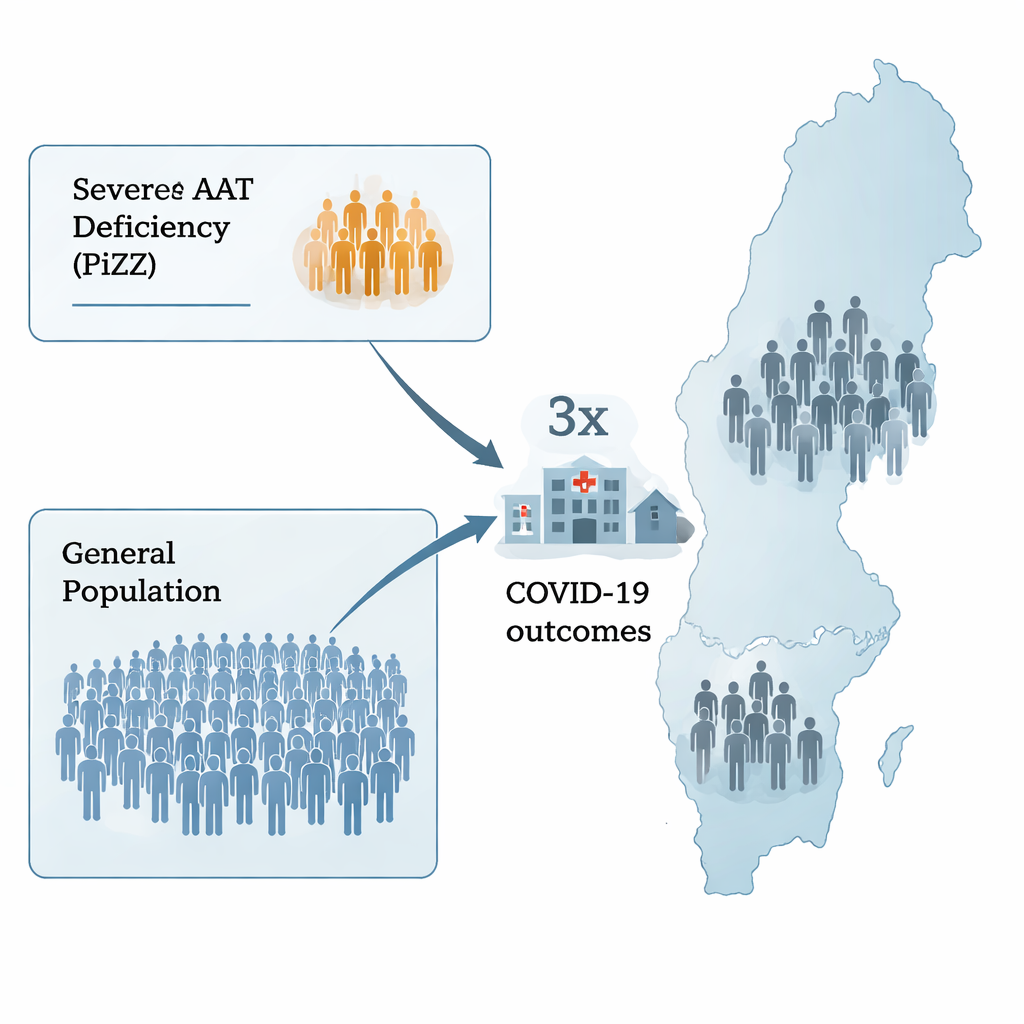
Tracking real-world outcomes across Sweden
To explore this, the researchers combined information from the Swedish national registry of people with severe AAT deficiency with nationwide hospital and death records. They followed 1,228 adults with the most severe form of the condition (called the PiZZ type) from March 2020 to June 2023. Using these records, they classified COVID-19 into three groups: mild illness managed at home or with no confirmed infection, moderate illness requiring an emergency or outpatient visit, and severe illness requiring hospital admission. They then compared how often people with severe AAT deficiency were hospitalized for COVID-19 to what would be expected in the general Swedish population of the same age and sex.
Who got seriously ill—and why
Most people with severe AAT deficiency either did not get COVID-19 or had only mild symptoms that never required hospital care. Over the three years of follow-up, 61 people were hospitalized for COVID-19 and 32 needed emergency or outpatient care, while 1,135 had mild or no documented infection. However, when hospitalizations did occur, they were more common than expected: the rate in this group was more than three times higher than in the general population. The people who became seriously ill tended to be older, more likely to have ever smoked, and more likely to already have COPD, cardiovascular disease, diabetes, or a history of lung transplantation. 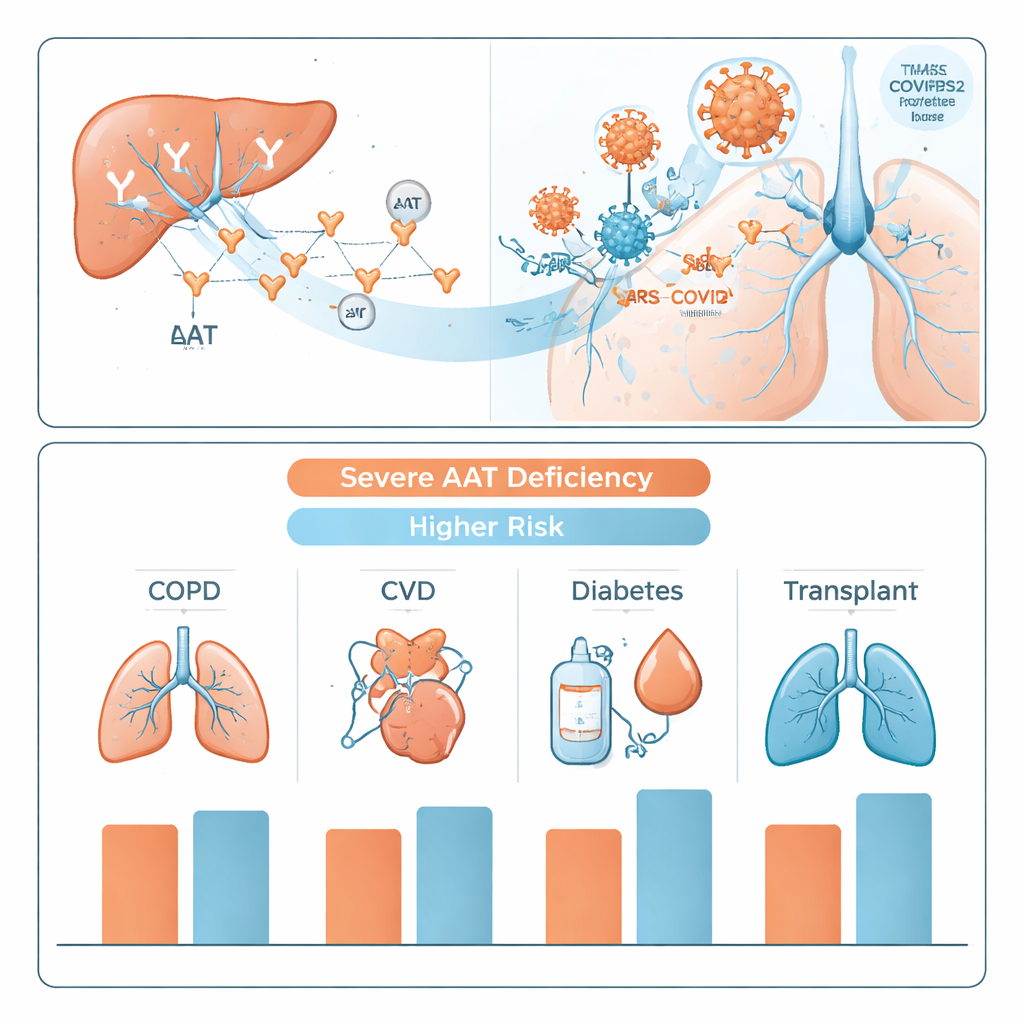
Untangling genes from other health problems
To separate the role of the genetic condition from the role of other illnesses, the team used statistical models that took age, sex, and smoking into account. They found that having COPD roughly doubled to tripled the odds of moderate or severe COVID-19, and having cardiovascular disease more than tripled the odds. Diabetes and prior lung transplantation also raised the risk. In other words, within this group of people with severe AAT deficiency, those with additional serious health problems were the ones most likely to end up in the hospital. The study also recorded eight COVID-19-related deaths (about 0.7% of the group), and nearly all of these individuals had both COPD and heart or blood-vessel disease.
What this means for patients and families
For people living with severe alpha-1 antitrypsin deficiency—and for their doctors—these findings offer both reassurance and a clear warning. On the reassuring side, having this genetic condition alone did not mean that most patients would experience life-threatening COVID-19; the majority had mild disease or no known infection. On the cautionary side, those who also had lung or heart disease, diabetes, or a prior lung transplant faced a clearly higher risk and were more likely to need hospital care. In simple terms, the study suggests that everyday factors familiar from the broader pandemic—older age, smoking history, and serious chronic illnesses—remain the main drivers of bad outcomes, even in people with this rare genetic disorder.
Citation: Zaigham, S., Piitulainen, E. & Tanash, H. COVID-19 outcomes in individuals with severe alpha-1 antitrypsin deficiency in Sweden. Sci Rep 16, 1616 (2026). https://doi.org/10.1038/s41598-026-35016-4
Keywords: alpha-1 antitrypsin deficiency, COVID-19, lung disease, genetic risk, comorbidities