Clear Sky Science · en
ATR-FTIR spectroscopy combined with chemometrics reveals molecular alterations and anticancer effects of Nigella sativa extract in human colon cancer cells
Ancient spice, modern cancer question
Black cumin seed, known from traditional medicine as Nigella sativa, has long been used as a household remedy. This study asks a very modern question about this ancient spice: when an extract from these seeds is applied to human colon cancer cells in the lab, what exactly happens inside the cells, molecule by molecule? By looking beyond simple “kills cells or not” tests, the researchers trace how the extract disrupts the internal chemistry of cancer cells and explore whether it might one day complement existing colon cancer treatments.
Colon cancer and the search for gentler helpers
Colon and rectal cancers together are among the top killers worldwide, and standard treatments such as surgery, chemotherapy and radiation, while often lifesaving, can come with serious side effects and sometimes lose effectiveness. Many scientists are therefore exploring natural products as add‑on therapies, not as miracle cures but as potential helpers that could make treatment more effective or less toxic. Black cumin seeds are a promising candidate because they are rich in biologically active molecules, including the well‑studied compound thymoquinone, and past work has hinted at anticancer effects in various tumor types.
Looking at cells through their molecular “fingerprints”
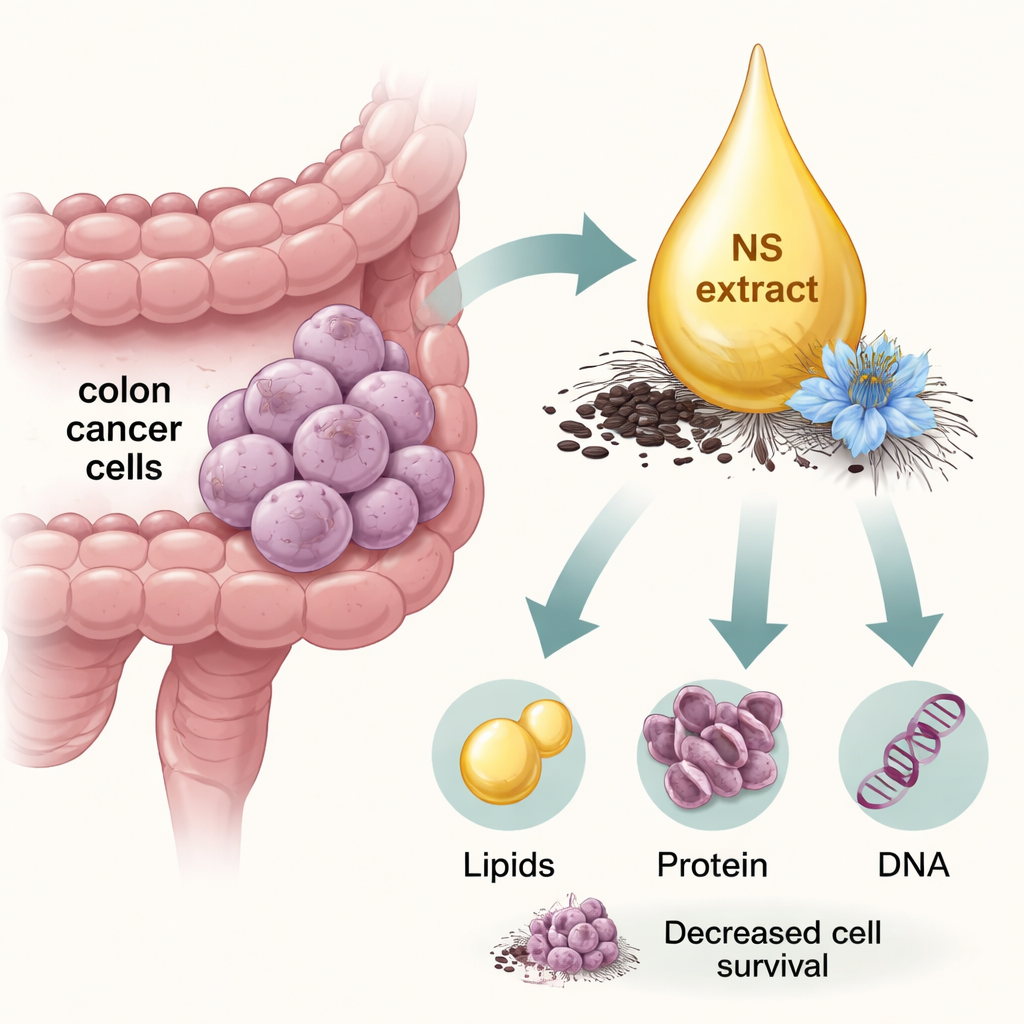
In this study, the team did not focus on a single purified chemical. Instead, they used a crude methanol extract of Nigella sativa seeds, preserving the natural cocktail of fats, aromatic compounds and other plant ingredients that may work together. They exposed human colon cancer cells (a cell line called Caco‑2) to different concentrations of this extract for 24 hours and measured how many cells survived. About half of the cells died at a mid‑range dose, which they chose for deeper analysis. To see what changed inside the surviving cells, they used a technique called ATR‑FTIR spectroscopy, which shines infrared light through dried cell samples and records a detailed “spectrum” that reflects the amounts and structures of major cell components such as fats, proteins and DNA. Advanced computer methods then sorted and compared these spectral fingerprints.
How black cumin extract reshapes cell building blocks
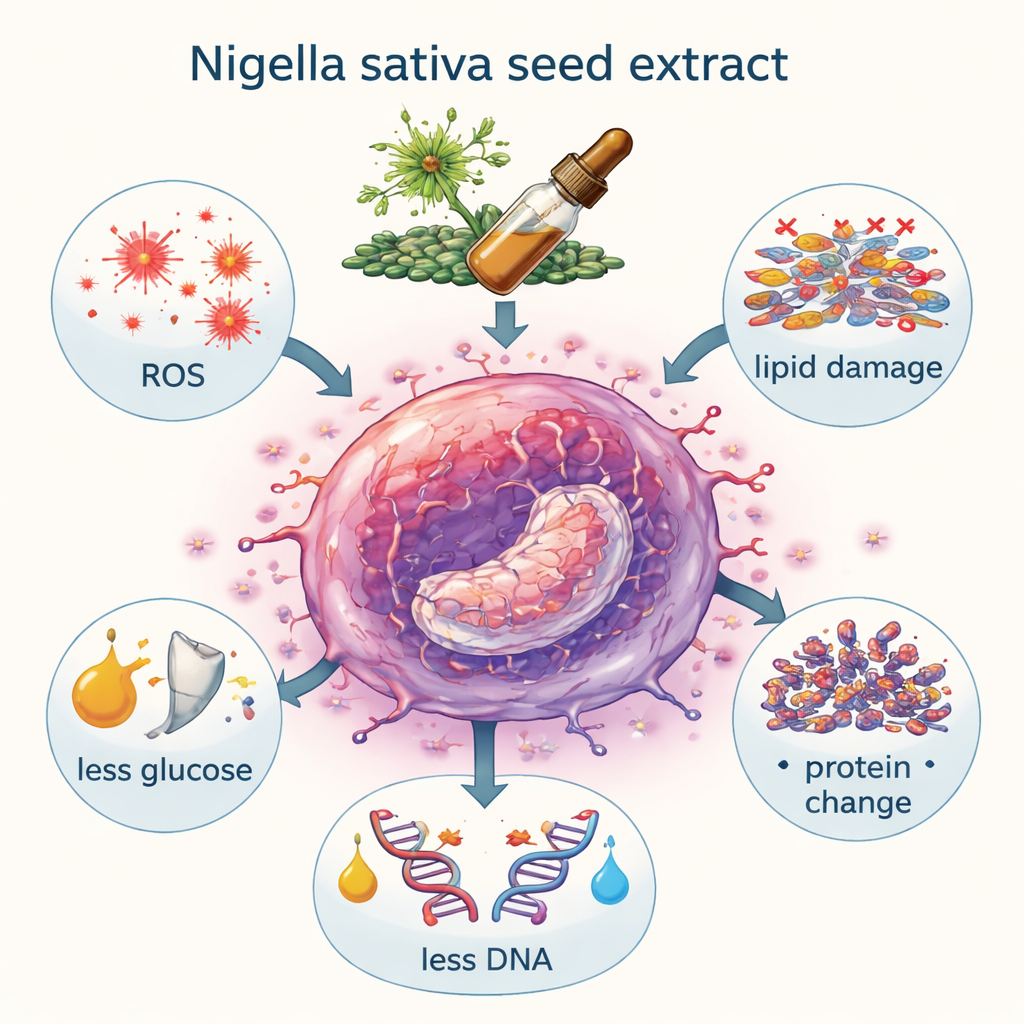
The spectra from treated and untreated cells fell into completely separate groups, meaning the extract caused sweeping molecular changes. The researchers found that unsaturated fats in the cell membranes decreased, while saturated fats and fat‑storage molecules called triglycerides increased. The fatty chains in the membranes became shorter, more flexible and more disordered, a pattern consistent with oxidative damage—essentially chemical “rusting” driven by reactive oxygen species (ROS). At the same time, the overall protein content of the cells fell, while the remaining proteins showed telltale signs of stress: more “aggregated” forms that indicate misfolding and denaturation, and higher levels of carbonyl groups, a marker of irreversible oxidative injury.
Disrupting signals, fuel and genetic material
The extract also appeared to interfere with how cancer cells signal and fuel themselves. Levels of protein phosphorylation, a common on–off switch used in growth and survival pathways, dropped after treatment, hinting that key signaling circuits were being dampened. Measures linked to glucose suggested that the cells had less access to their preferred fuel and that sugar processing was impaired. DNA‑related signals in the spectra also declined sharply, compatible with reduced DNA content or increased DNA damage. Taken together, these changes paint a picture of cells under heavy oxidative and metabolic stress: their membranes become leaky and disordered, their proteins lose proper shape and function, and their genetic material is harmed enough to trigger cell death pathways.
What this could mean for future therapies
For non‑specialists, the key message is that black cumin seed extract does much more than simply slow colon cancer cell growth in a petri dish. It launches a coordinated attack on fundamental cell structures and processes—fats, proteins, energy use and DNA—largely through boosting ROS and oxidative damage. This does not mean people should self‑medicate with seeds or oils; the doses, purity and delivery in the lab differ vastly from everyday use, and such strong oxidative effects could harm healthy cells if not carefully controlled. But the work provides a detailed molecular map showing why Nigella sativa is worth further study as a carefully formulated partner to conventional colon cancer treatments, and it showcases infrared spectroscopy as a powerful, fast way to track how complex natural mixtures act inside cancer cells.
Citation: Ozek, N.S., Ozyurt, I., Kucukcankurt, F. et al. ATR-FTIR spectroscopy combined with chemometrics reveals molecular alterations and anticancer effects of Nigella sativa extract in human colon cancer cells. Sci Rep 16, 5458 (2026). https://doi.org/10.1038/s41598-026-34994-9
Keywords: colorectal cancer, Nigella sativa, black cumin, natural anticancer agents, ATR-FTIR spectroscopy