Clear Sky Science · en
Valorization of breadnut (Artocarpus camansi) leaves in gnocchi-type product
A New Life for Discarded Leaves
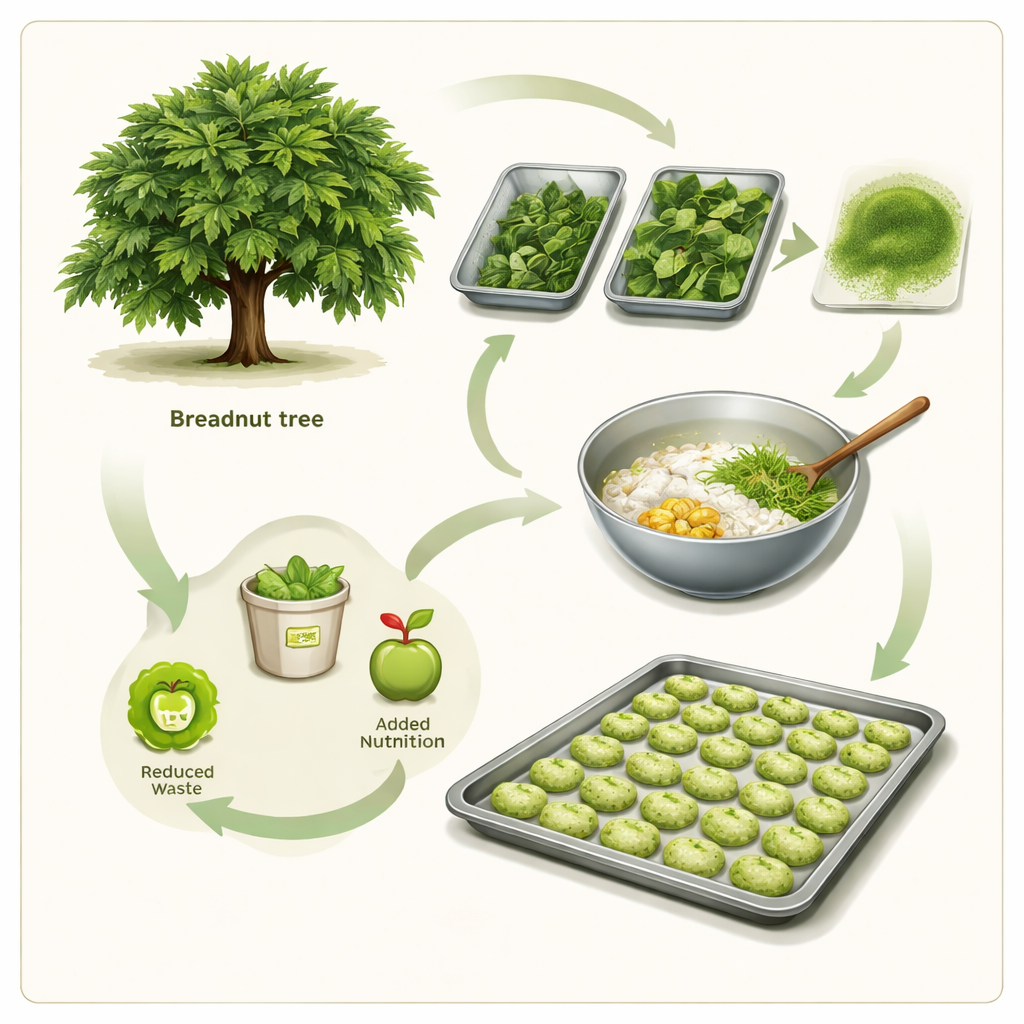
Every year, mountains of edible plants and by‑products are thrown away, even as consumers search for foods that are healthier and kinder to the planet. This study asks a simple but powerful question: what if some of that “green waste” could become part of our dinner? Researchers explored whether the leaves of the breadnut tree—a tropical relative of breadfruit whose seeds are eaten but whose leaves are usually discarded—can be turned into a nutritious green powder and used to make a gnocchi‑type pasta. Their work shows how an overlooked leaf can boost fibre and protective plant compounds in a familiar comfort food while helping cut agricultural waste.
From Tropical Tree to Dinner Plate
The breadnut tree grows abundantly across tropical regions such as the Caribbean, West Africa, and parts of Asia. Its starchy seeds are eaten locally, but its evergreen leaves are typically treated as waste or, at best, animal fodder. Earlier research had hinted that these leaves are rich in valuable molecules like polyphenols, flavonoids, and plant sterols, which are linked to antioxidant and antimicrobial effects. In this study, the team carefully collected breadnut leaves in Guadeloupe, washed and gently dried them at low temperature, then milled them into a fine green powder. They blended this powder with instant potato flakes—the base for gluten‑free gnocchi—and systematically measured how the mixtures behaved, from water and oil absorption to foaming, thickening and dough consistency, as well as their content of bioactive compounds.
Testing Texture, Dough and Leafy Power
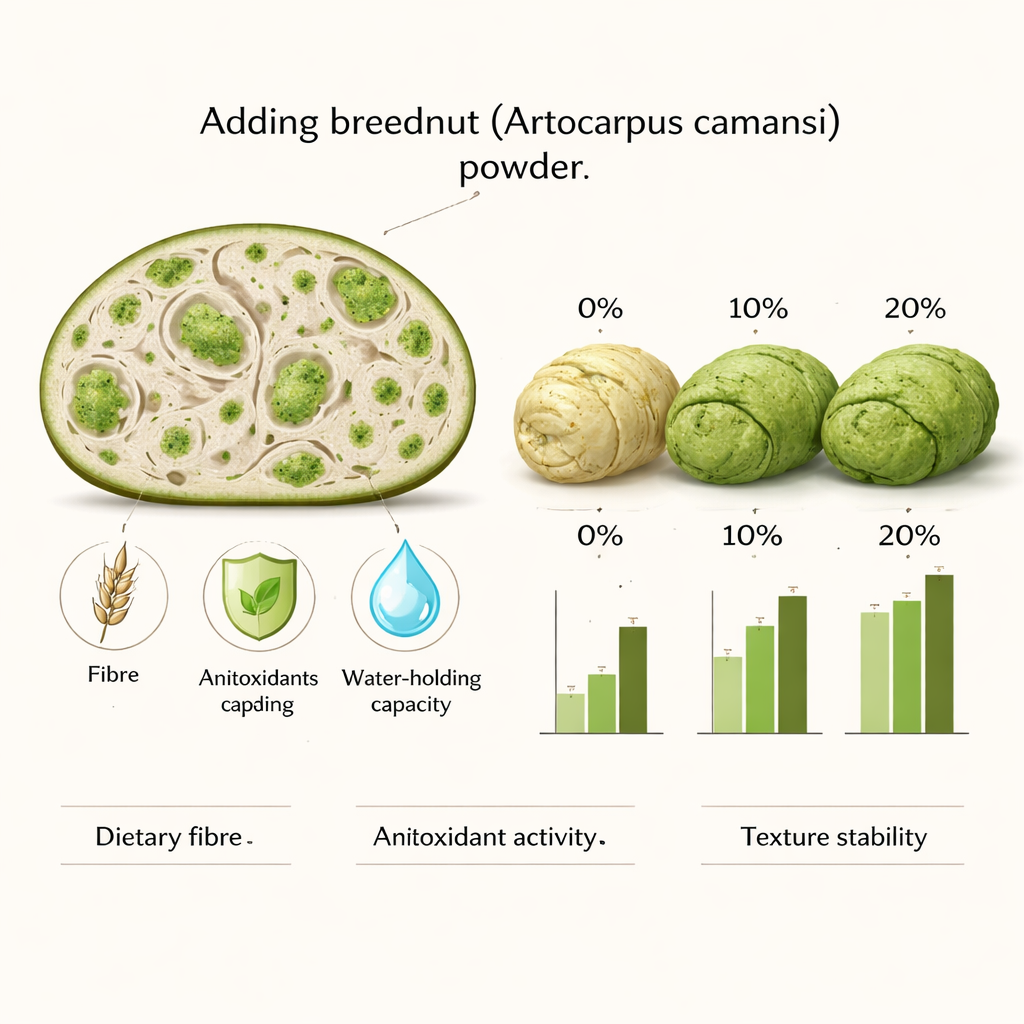
To find out how much leaf powder the dough could handle, the scientists prepared blends containing 5%, 10%, 15% and 20% breadnut leaf powder alongside a potato‑only control. They discovered that adding leaves changed how the mixture soaked up water and oil and how it thickened when heated. As leaf content rose, the blends generally became less viscous, but they also absorbed oil better and showed strong water‑binding, which is important for pasta that must hold its shape during cooking and storage. Advanced dough tests revealed that leaf addition mostly affected the early mixing stage—where proteins and fibre interact—while leaving the basic starch behaviour largely intact. In practice, this means the dough becomes slightly different to handle, but still workable for making small dumplings.
Greener Gnocchi: Nutrition and Shelf Life
Based on their trials, the researchers selected a recipe with 10% breadnut leaf powder in the flakes portion as the best compromise between taste, colour, texture and nutrition. Compared with regular potato gnocchi, this green‑flecked version had more than four times the total dietary fibre (about 5.7% versus 1.3% on a dry basis), with a good balance of soluble and insoluble fibre, both important for digestive health and satiety. It also contained more plant phenolics and showed measurable antioxidant activity, suggesting potential to help mop up damaging free radicals in the body. At the same time, its acidity (pH) stayed within a safe and familiar range, and the texture remained acceptable over a few days in the fridge, although the dumplings gradually became firmer and darker green as pigments slowly degraded and starch re‑set.
Safety, Storage and Practical Limits
The team also checked whether the new ingredient was microbiologically safe. The dried breadnut leaf powder itself showed very low levels of bacteria, yeast and mould, even after a month in the freezer, indicating that careful washing, drying and storage can produce a stable pantry ingredient. The gnocchi, however, spoiled quickly in the refrigerator: bacterial counts became unacceptably high within two to four days, even though harmful species like Escherichia coli were not detected. This behaviour is similar to many fresh pasta products and suggests that breadnut‑leaf gnocchi would need either rapid freezing, better packaging with controlled atmospheres, or natural preservatives to keep them safe for longer retail shelf life.
What This Means for Everyday Eating
For non‑specialists, the takeaway is straightforward: the leaves of a common tropical tree, usually thrown away, can be turned into a fine powder that meaningfully boosts fibre and antioxidant content in a simple pasta dish without ruining its cooking quality. A 10% addition emerged as the sweet spot, giving greener, slightly firmer gnocchi that are richer in beneficial plant compounds yet still familiar on the plate. While more work is needed to refine storage methods and navigate food‑safety rules—especially in regions where breadnut leaves are not traditionally eaten—this study shows how rethinking “waste” plants can create healthier, gluten‑free foods and support a more circular, less wasteful food system.
Citation: Masiala, A., Aurore, G., Pejcz, E. et al. Valorization of breadnut (Artocarpus camansi) leaves in gnocchi-type product. Sci Rep 16, 5206 (2026). https://doi.org/10.1038/s41598-026-34991-y
Keywords: breadnut leaves, functional pasta, food waste valorization, gluten-free gnocchi, antioxidant-rich foods