Clear Sky Science · en
Prevalence of drug resistant tuberculosis and its associated factors among tuberculosis patients at wolkite health center in central Ethiopia
Why tuberculosis drug resistance matters
Tuberculosis, or TB, is an age‑old lung infection that still kills more than a million people every year. It is usually curable with antibiotics, but when the germ learns to resist these drugs, treatment becomes longer, more expensive, and far less certain. This study from Wolkite Health Center in central Ethiopia looks closely at how common drug‑resistant TB is in one rural area and who is most likely to develop it, offering clues that can help protect both local communities and the wider world.
A closer look at one Ethiopian clinic
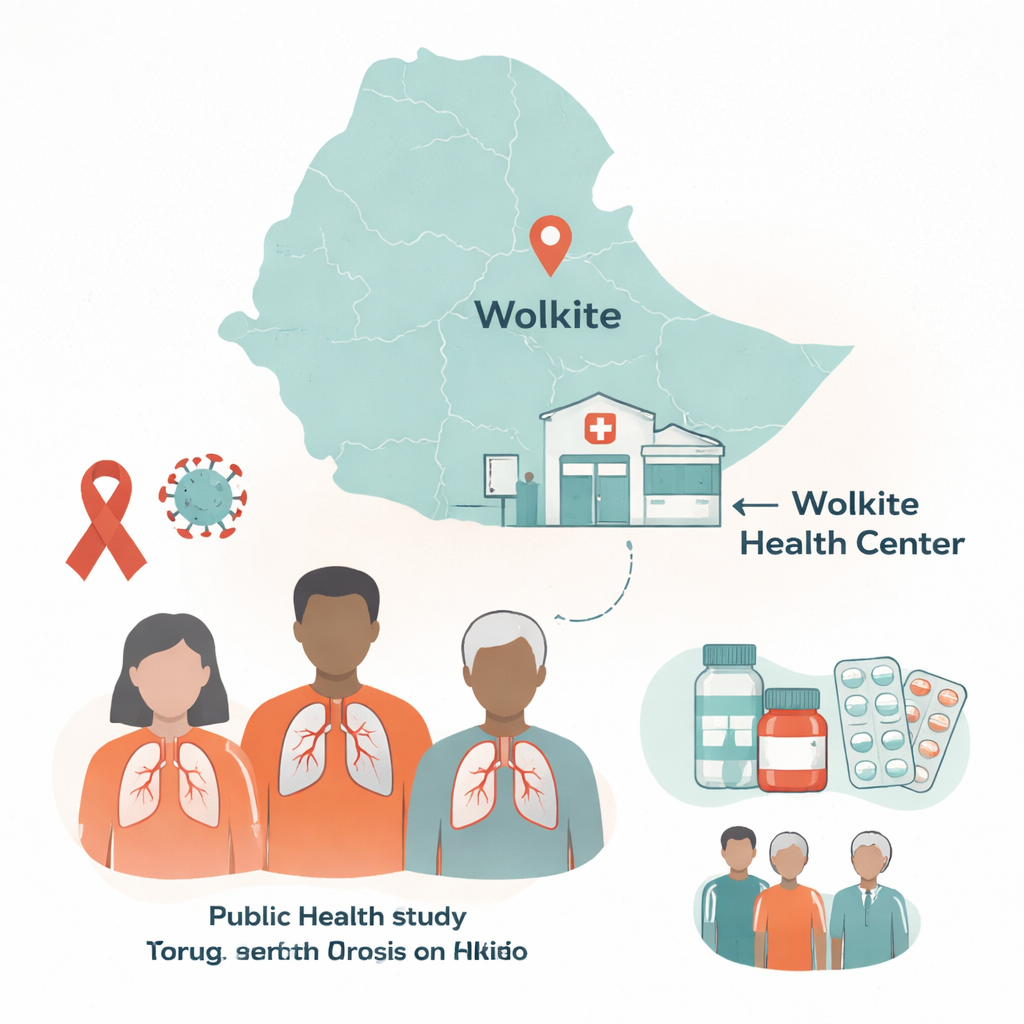
Wolkite Health Center serves a largely rural population about 160 kilometers from Ethiopia’s capital, Addis Ababa. The researchers reviewed three years of patient records, from early 2021 through the end of 2023, focusing on people whose TB diagnosis was confirmed by a rapid DNA test called Xpert MTB/RIF. This test not only detects TB bacteria but also shows whether the germ is resistant to rifampicin, one of the most important first‑line TB drugs. By examining age, sex, place of residence, HIV status, type of TB, and any past history of TB, the team set out to identify which patients were at highest risk of carrying drug‑resistant strains.
How common was drug‑resistant TB?
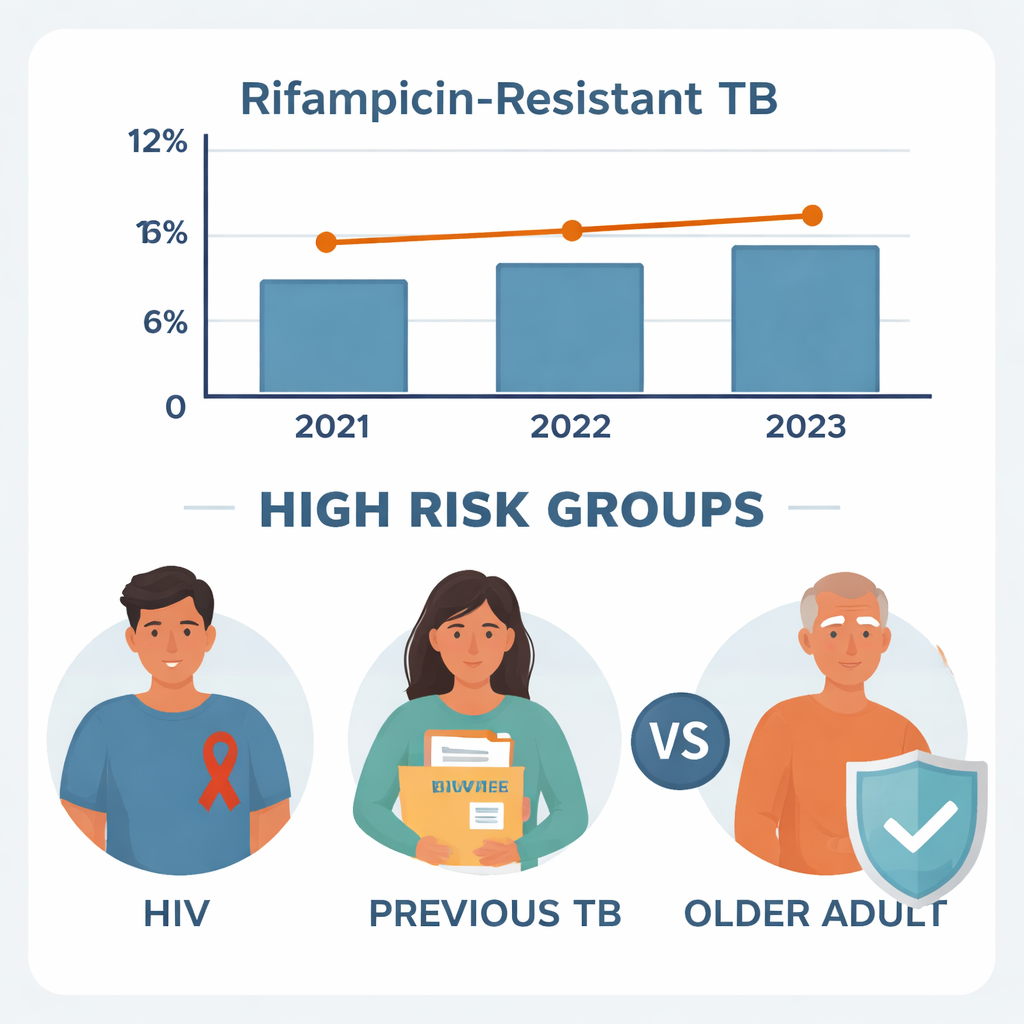
Among 1,600 people tested for suspected TB, 470 turned out to have the disease, and 452 had complete records that could be studied in detail. Of these 452 TB patients, 47—about one in ten—had rifampicin‑resistant TB. This level of resistance is similar to what has been reported in other parts of Ethiopia, suggesting that the problem is not limited to big cities. When the researchers looked at each year separately, resistance rates stayed fairly steady: about 10.2% in 2021, 8.7% in 2022, and 12.2% in 2023. A statistical test showed that these small ups and downs were likely due to chance rather than a true rising or falling trend.
Past illness and HIV sharply raise the risk
The clearest warning sign for drug‑resistant TB was a previous episode of the disease. Roughly 28% of patients had been treated for TB at some time in the past. Among them, nearly a quarter (24.4%) now had rifampicin‑resistant TB, compared with only 4.9% of people facing TB for the first time. After taking other factors into account, those with a past history of TB were about five times more likely to have resistant germs. This pattern supports a common concern: if treatment in the past was incomplete, interrupted, or poorly supervised, the surviving bacteria may have evolved to withstand standard drugs, making future infections much harder to cure.
The double burden of TB and HIV
HIV infection also emerged as a powerful driver of resistance. About one in four TB patients at Wolkite were living with HIV. Within this group, more than one in five had rifampicin‑resistant TB, compared with fewer than one in fourteen among HIV‑negative patients. In the final analysis, HIV‑positive patients were roughly six to seven times more likely to have drug‑resistant TB. Doctors suspect several reasons: HIV weakens the immune system, can interfere with how TB medicines are absorbed, and often requires complex drug combinations that may be difficult to tolerate or complete. All of this makes it easier for resistant strains of TB to appear and spread.
Age differences and what they might mean
Age also played a role, but in a surprising way. The largest share of patients were young adults between 18 and 34 years, yet this group had the lowest share of rifampicin‑resistant cases. When compared with patients over 65, young adults were estimated to have about a 95% lower chance of resistant TB. Middle‑aged adults fell in between. Older people may have weaker immune defenses, more other illnesses, and a higher chance of having been treated for TB in the past, all of which can contribute to resistance. These findings suggest that extra attention may be needed for older patients, including careful follow‑up and support to finish every dose of medicine.
What this means for patients and communities
Overall, the study shows that drug‑resistant TB is already firmly present in this rural Ethiopian setting and is not yet declining. People who have had TB before, those living with HIV, and older adults face the greatest danger of encountering strains that no longer respond to standard treatment. For patients, this means that sticking closely to the full course of TB drugs the first time is vital. For health systems, it points to the need for stronger follow‑up, better integration of HIV and TB services, and special support for high‑risk groups. By focusing resources where they are most needed, communities like Wolkite can slow the spread of drug‑resistant TB and help keep lifesaving medicines effective for future generations.
Citation: Simieneh, A., Dereje, R., Misganaw, T. et al. Prevalence of drug resistant tuberculosis and its associated factors among tuberculosis patients at wolkite health center in central Ethiopia. Sci Rep 16, 4888 (2026). https://doi.org/10.1038/s41598-026-34986-9
Keywords: tuberculosis, drug-resistant TB, Ethiopia, HIV coinfection, public health