Clear Sky Science · en
Ancestry informative markers in indigenous populations from Brazil
Why our roots in Brazil matter
Our DNA quietly carries a record of ancient journeys, family ties, and encounters between peoples. In Brazil, where Indigenous, African, and European histories have intertwined for centuries, this genetic story is especially rich. This study looks closely at the DNA of Indigenous communities in the North and Center-West of Brazil to understand how much of their genetic heritage today traces back to Native American, African, and European ancestors—and what that can tell us about history, identity, and health.
Who was included in the study
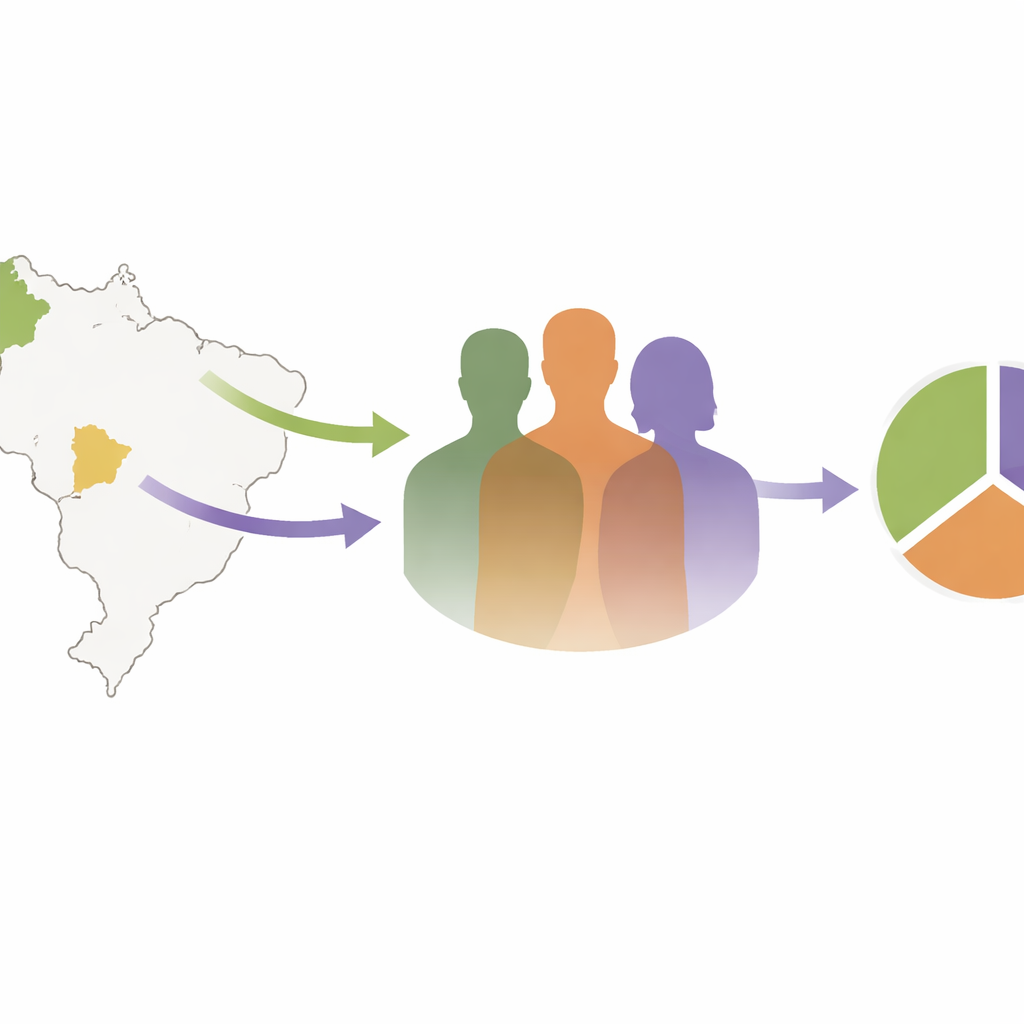
The researchers focused on four Indigenous communities spread across two important regions. In the far north, the Tiriyó and Waiampi live in relatively remote forest areas, far from large cities. In the Center-West, the Jaguapiru and Bororó villages form Brazil’s largest peri-urban Indigenous area, located near the city of Dourados in Mato Grosso do Sul, where daily contact with non-Indigenous neighbors is common. From these villages, 302 volunteers donated blood samples. Care was taken to avoid including close relatives, and all participants gave informed consent, with the work approved by ethics committees in Brazil.
Reading ancestry from tiny DNA signposts
To trace ancestral roots, the team used ten special points in the genome called ancestry-informative markers. These are tiny DNA differences that tend to be much more common in one broad population—such as Africans, Europeans, or Native Americans—than in others. By examining patterns across these markers, scientists can estimate what fraction of a person’s ancestry comes from each of these source groups. The study compared the Indigenous volunteers’ DNA to reference data from hundreds of people of African, European, and Native American origin, using statistical programs that group individuals based on shared genetic patterns.
What the DNA reveals about Indigenous heritage
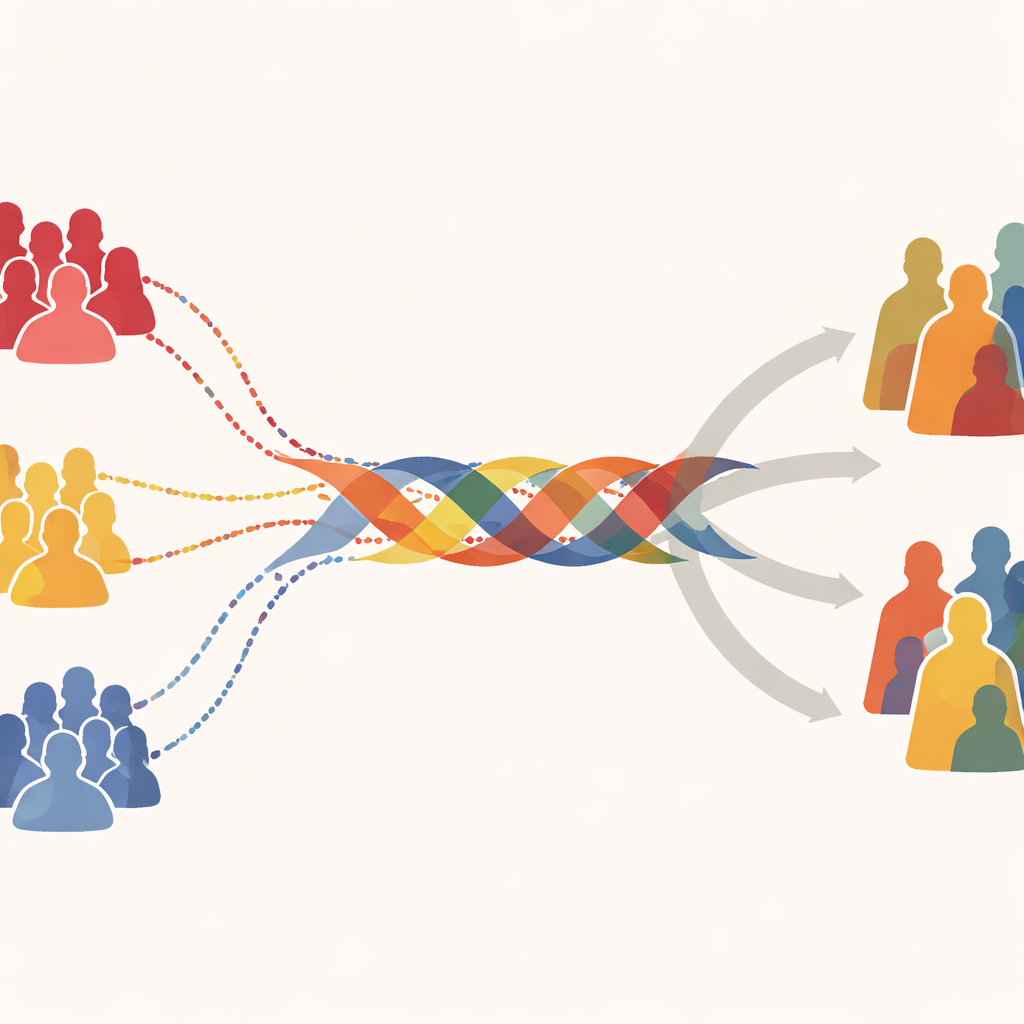
The results showed that all four Indigenous communities retain a strong Native American genetic background. Tiriyó participants had the highest Native contribution, around three quarters of their ancestry, with relatively low European and African input. Waiampi, while still mainly Native American, showed more European ancestry, and the Jaguapiru and Bororó villagers—living closer to urban centers—had the highest European share, almost matching their Native contribution, plus a smaller African portion. Overall, DNA markers that are typical of African populations were rare, while those common in Native Americans were frequent. Some markers usually linked to Europeans also appeared at high levels, reflecting the long and complex shared history between European and Native populations in the Americas.
Differences between isolated and mixed communities
When the researchers looked at how similar or different the communities were from one another, clear patterns emerged. The more geographically isolated villages, such as Tiriyó and Waiampi, appeared more genetically homogeneous, suggesting long-standing marriages mostly within the group and limited outside mixing. In contrast, the peri-urban Jaguapiru and Bororó villages, which have more contact with non-Indigenous populations, showed greater genetic mixing and distinct ancestry profiles. Measures of genetic distance confirmed that Indigenous groups are very different from African reference populations, somewhat closer to Native American references, and occupy their own space relative to European groups. These distinctions mirror known migration routes, settlement histories, and varying degrees of isolation or interaction over time.
Why this knowledge is important today
Understanding ancestry in these Indigenous communities is not just about tracing lineages; it also has real-world implications. Genetic background can influence how people respond to infections, medications, or chronic diseases, so knowing the specific mix of ancestral contributions can help tailor public health strategies and medical research to Indigenous realities rather than relying on data from distant populations. This study shows that, despite centuries of contact, many Indigenous Brazilians have largely preserved their Native genetic heritage, while also carrying traces of African and European history. Recognizing and studying this unique genetic legacy can support fairer health policies, deepen our understanding of Brazil’s past, and ensure that Indigenous voices and bodies are better represented in future biomedical research.
Citation: Almeida, G.B., Palma, T.F., Barbosa, D.d. et al. Ancestry informative markers in indigenous populations from Brazil. Sci Rep 16, 8990 (2026). https://doi.org/10.1038/s41598-025-95436-6
Keywords: genomic ancestry, indigenous Brazil, genetic diversity, population history, health disparities