Clear Sky Science · en
Log-transformed variance from individual growth curves as a potential indicator of resilience in Nile tilapia Oreochromis niloticus
Why steady growth in farmed fish matters
For fish farmers, it is not just how fast fish grow that matters, but how steadily they grow when conditions are less than perfect. Sudden heat waves, low oxygen, or handling can all slow growth and cost money. This study asks whether tiny ups and downs in a fish’s weight over time can reveal how well it copes with such challenges—and whether breeders can use that information to develop hardier Nile tilapia for real‑world ponds.
Looking for a simple signal of tough fish
The researchers focused on Nile tilapia, one of the world’s most important farmed fish. All animals react to stressful events with hormonal and behavioral changes that can disrupt feeding and digestion, and fish are no exception. Some individuals bounce back quickly, keeping their growth on track, while others show more erratic progress. The team treated “resilience” as the ability to keep growing smoothly through everyday disturbances. Instead of measuring hormones or behavior, they looked directly at growth records—five weight measurements taken during the grow‑out period—and asked whether the variability around each fish’s expected growth path could serve as a practical yardstick for resilience.
Following individual growth instead of group averages
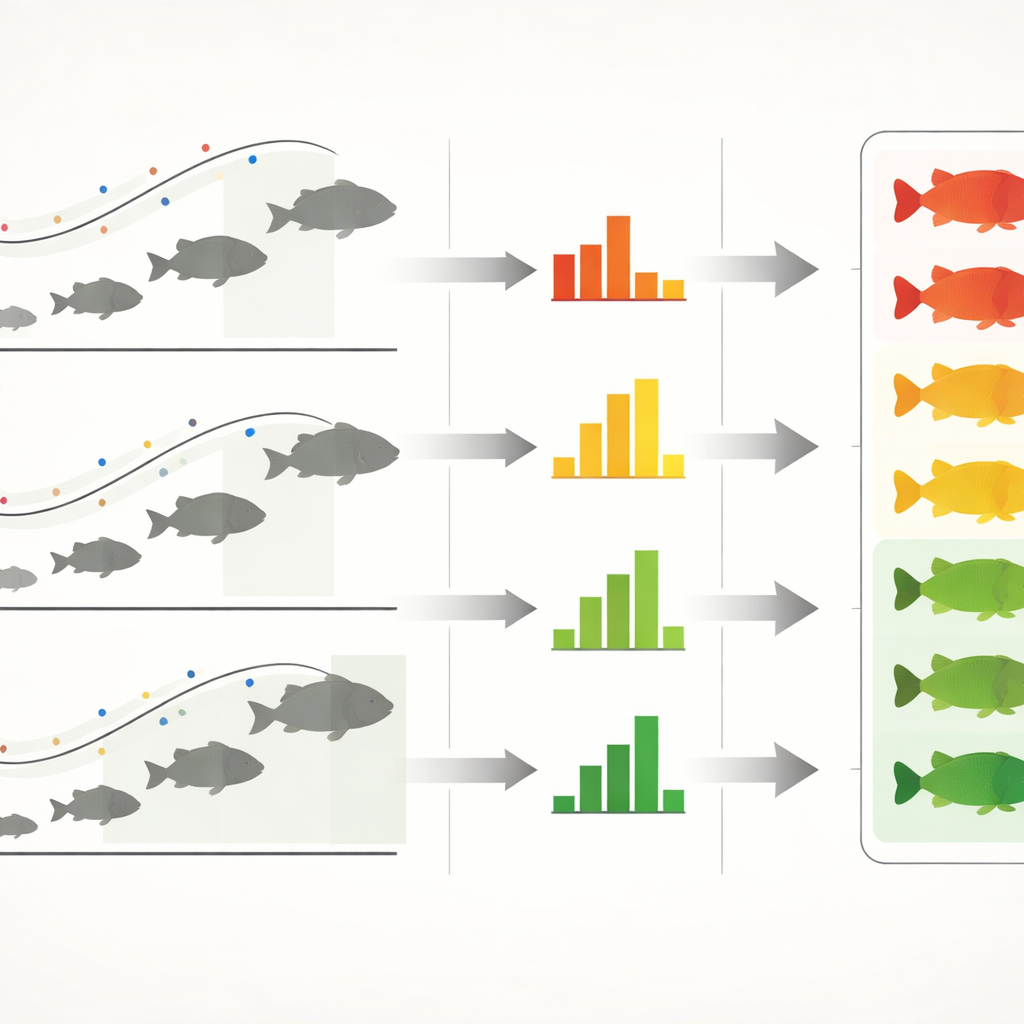
Earlier work had measured fluctuations by comparing each fish to the average weight of its group at every time point. But group averages also rise and fall with changing water quality, so that method blends together the environment’s impact on the whole group with the differences between individuals. In this new study, the scientists fitted a personalized growth curve for each tagged tilapia using a non‑linear model that captures how fish gain weight over time. For every fish they calculated how much its actual weights deviated from its own smooth curve, then condensed the variability of those deviations into a single number after a mathematical transformation. This measure, called the log‑transformed variance from the individual curve, reflects how constant or bumpy an animal’s growth has been, independent of shared environmental swings.
Testing fish in easy and challenging ponds
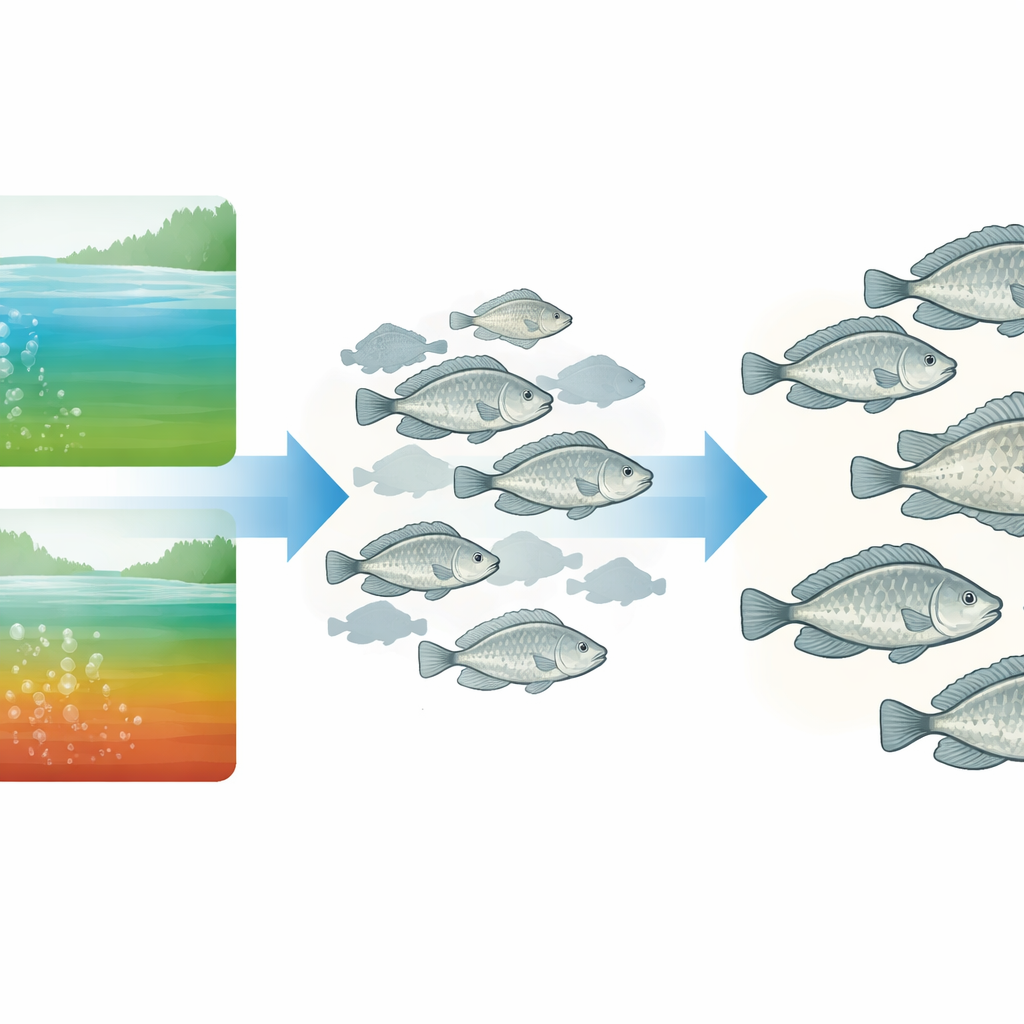
To see how this measure behaves under different conditions, the team raised closely related tilapia in two earthen ponds in Malaysia: one with mechanical aeration providing stable, oxygen‑rich water, and one without aeration, where oxygen levels rose and fell naturally each day, creating a more demanding setting. They estimated how much of the differences in growth variability were due to genetics rather than chance, and how this variability was related to overall growth rate and final harvest weight. In the more stressful, non‑aerated pond, the new individual‑curve measure showed moderate heritability—meaning it can respond to selective breeding—and its genetic variation was clearly higher than in the aerated pond. By contrast, the older group‑average measure captured less genetic variation in that challenging environment.
Linking steady growth with fast growth
An important question for breeders is whether selecting fish that grow fast will accidentally make them more or less resilient. The study found that fish families with higher growth rates and larger harvest weights tended to have lower variability around their individual growth curves—an advantageous negative genetic relationship. In plain terms, tilapia that grow quickly also tend to grow more steadily, particularly in the more difficult non‑aerated pond. The research also revealed that the genetic control of growth stability differed between the two pond types, implying that fish lines can respond differently depending on the environment. This “genotype by environment” interaction means that data from relatives raised in non‑aerated ponds are especially valuable when breeding fish meant for such conditions.
What this means for future tilapia breeding
By tracking how closely each fish follows its own expected growth path, the researchers developed a practical indicator that appears to reflect resilience to everyday stress in farm ponds. This individual‑based measure is more informative in fluctuating, low‑oxygen ponds and is genetically linked to faster growth, suggesting that standard selection for growth may already be improving resilience. The authors argue that breeding programs should routinely record repeated weights and use individual growth curves to identify fish that not only grow fast but also grow consistently. As automated imaging systems make frequent, low‑stress measurements easier, this approach could help produce tilapia that handle environmental ups and downs better, use feed more efficiently, and support more reliable aquaculture production.
Citation: Aththar, M.H.F., Mengistu, S.B., Benzie, J.A. et al. Log-transformed variance from individual growth curves as a potential indicator of resilience in Nile tilapia Oreochromis niloticus. Sci Rep 16, 9558 (2026). https://doi.org/10.1038/s41598-025-91353-w
Keywords: Nile tilapia, fish resilience, aquaculture breeding, growth variability, pond aeration