Clear Sky Science · en
Fluoride contamination and water quality fluctuations in Mianwali District Pakistan and its implications for human health and sustainable agriculture
Why Water Under Our Feet Matters
For millions of people in dry regions, the safest-looking glass of water often comes not from a river but from deep underground. In Pakistan’s Mianwali District, that hidden supply keeps homes running and crops alive. This study asks a simple but urgent question: when families and farmers draw water from the ground, are they also drawing in invisible threats—especially the mineral fluoride—that could quietly damage teeth, bones and soils over a lifetime?
Taking a Close Look at Everyday Wells
The researchers carried out one of the most extensive groundwater checks yet for this part of Pakistan. They sampled 510 underground water sources—government supply schemes, boreholes and hand pumps—across all three local sub-districts. Each sample was tested in certified laboratories for basic measures like saltiness and acidity, as well as key ingredients such as calcium, magnesium, sodium, sulphate, arsenic and, crucially, fluoride. They compared the results with health-based guidelines from the World Health Organization to see which sources were safe for drinking and which might endanger people or farmland.
What They Found in the Water
The good news is that many basic water-quality measures fell within recommended limits: most samples had acceptable levels of calcium, magnesium and several other dissolved ingredients. Overall, about four out of five samples were rated “excellent” or “good” for drinking when all factors were combined into a single water quality score. But trouble emerged when the team focused on individual hazards. Roughly 41 percent of samples were too salty, and more than a third held fluoride above the health guideline of 1.5 milligrams per liter. Some spots showed particularly high fluoride and sulphate, especially in Isa Khel, a sub-district where over half the tested wells exceeded the safe fluoride level.
Rocks, Heat and Human Use Shape the Risk
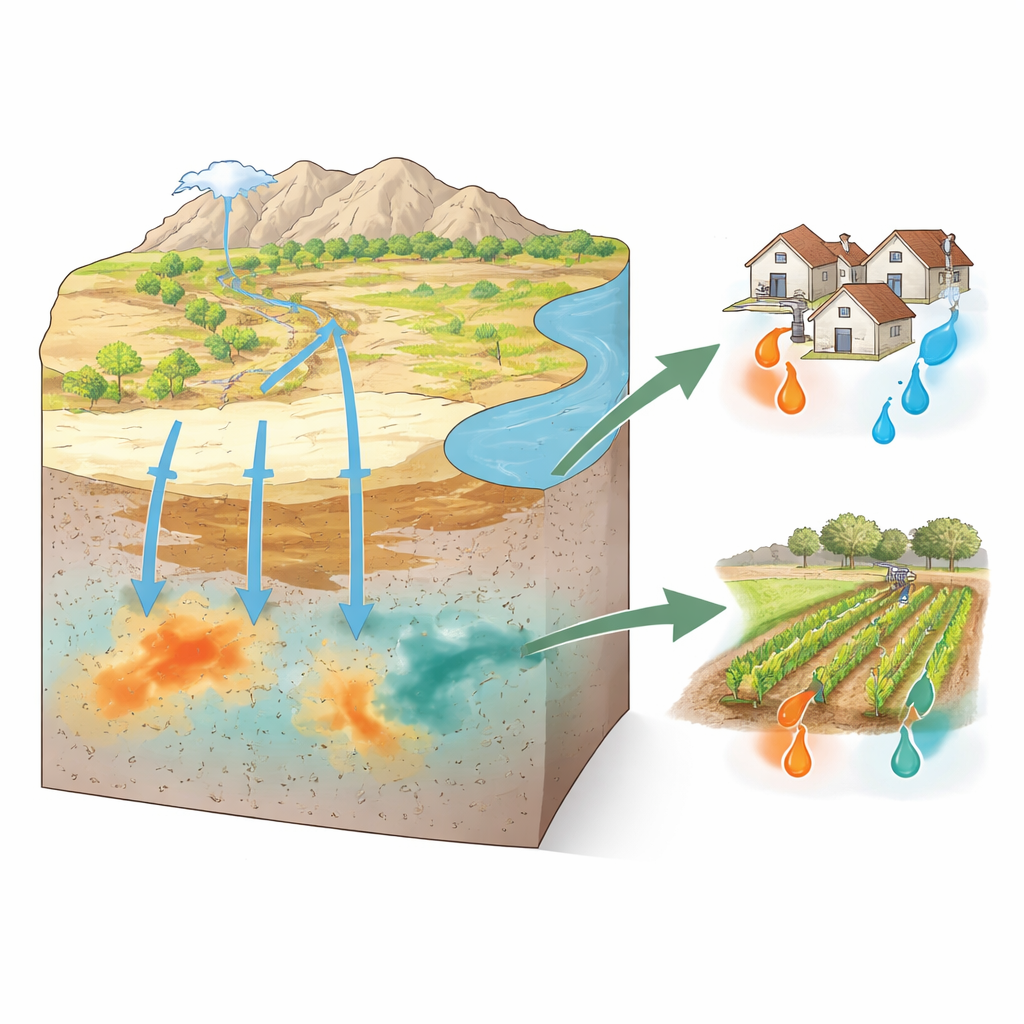
Where does the extra fluoride come from? The study points to the very rocks that cradle the aquifer. Much of Mianwali is built from ancient, mineral-rich layers overlain by loose river deposits. As rain and irrigation water seep down, they linger in contact with fluoride-bearing minerals, slowly dissolving them. Using standard chemical diagrams, the team found that about 59 percent of samples showed strong signs of rock–water interaction, while the rest were more influenced by intense evaporation in the hot, dry climate, which concentrates salts as water is lost to the air. Heavy pumping for farms and towns further lowers water levels, encouraging deeper flow paths through these fluoride-rich layers and increasing the chance that wells will tap contaminated zones.
Impacts on Families and Fields
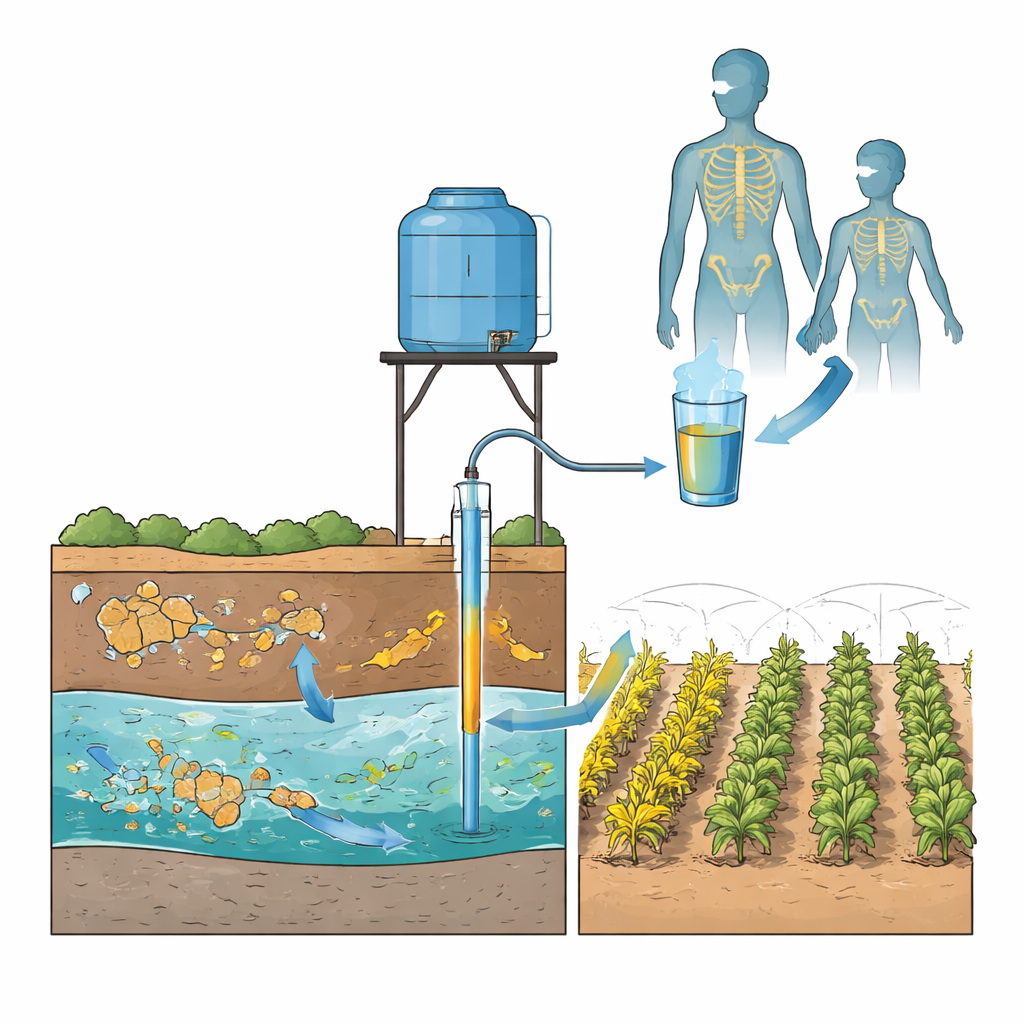
To move beyond simple pass–fail limits, the scientists estimated how much fluoride people actually ingest from their drinking water over many years. They calculated a “hazard quotient” for adults and children, which compares daily intake to a level considered unlikely to cause harm. About one in five samples had values pointing to potential health risks, with children at greater danger because they drink more water for their body weight and their teeth and bones are still forming. Long-term exposure in these areas can stain and weaken teeth (dental fluorosis) and, at higher doses, stiffen and damage bones (skeletal fluorosis). The same water also irrigates fields. Over time, fluoride can build up in soils, disturb the balance of nutrients that plants need, and reduce crop yield or quality, threatening both farm income and food security.
Mapping Hotspots and Planning Ahead
To help planners see where action is most urgent, the team combined fluoride and related chemical traits into a single “fluoride pollution index” and mapped it across the district. Around two-thirds of samples fell into a moderate contamination band and nearly one in ten into a high band, forming clear clusters where groundwater is far more risky. For local authorities, this map becomes a practical guide: it flags where new wells should be sited with care, where household filters or community treatment plants are most needed, and where farmers might require different water sources or soil management practices.
What This Means for People Living There
In simple terms, the study shows that the very groundwater sustaining Mianwali’s households and farms is a mixed blessing. Many wells still provide safe, fresh water—but a sizeable share carries enough fluoride and salt to threaten human health and agricultural output, especially for children and sensitive crops. The authors argue that protecting the region’s future will require more than drilling deeper wells. It calls for regular testing, targeted treatment, smarter irrigation, and public awareness so that communities know which taps are safe and which need fixing. By turning complex chemistry into clear maps and risk scores, this work offers a roadmap for safer drinking water and more sustainable farming in one parched corner of the world—and a warning for other dry regions that rely heavily on unseen water beneath their feet.
Citation: Rehman, F., Ullah, Z., Azeem, T. et al. Fluoride contamination and water quality fluctuations in Mianwali District Pakistan and its implications for human health and sustainable agriculture. Sci Rep 16, 9555 (2026). https://doi.org/10.1038/s41598-025-89321-5
Keywords: groundwater, fluoride, water quality, Pakistan, sustainable agriculture