Clear Sky Science · en
Characteristics associated with Lactobacillus-depleted vaginal microbiota in women with different sexual behavior
Why the Bacteria in the Vagina Matter
The communities of bacteria that live in the vagina play a quiet but powerful role in women’s health, influencing everyday comfort and the risk of infections such as HIV and HPV. This study, carried out with women in Brazil, asks a timely question: do these bacterial communities look different in women who have sex only with women compared with those who have sex only with men, and what habits are linked to less-protective bacteria? The answers shed light on how social factors, sexual practices, and invisible microbes intertwine in ways that can either guard or undermine health.
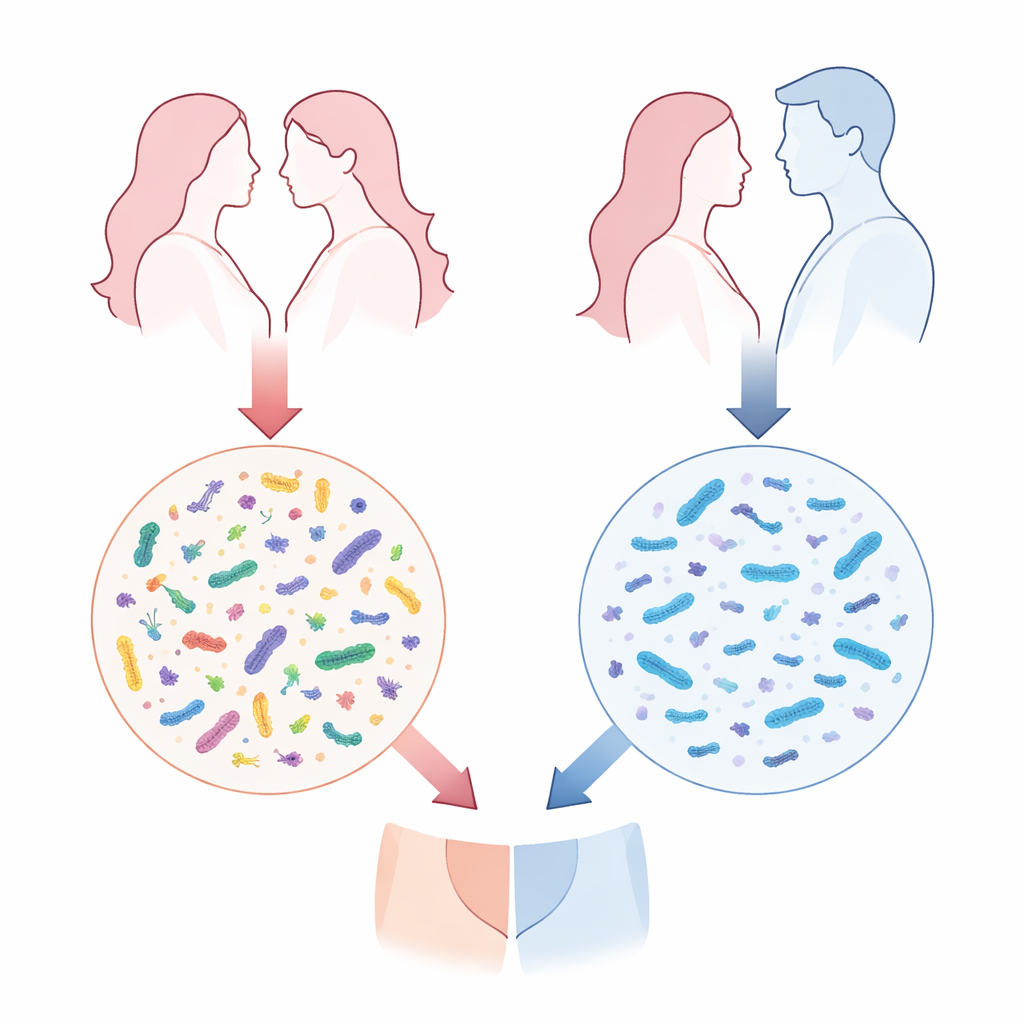
The Hidden Community Inside the Body
In a healthy vagina, one type of helpful bacteria, called Lactobacillus, usually dominates. These microbes keep the environment slightly acidic and discourage the growth of other, potentially troublesome species. When Lactobacillus is lost or greatly reduced, many different bacteria move in, creating a more crowded and mixed community often linked to a condition known as bacterial vaginosis. Women with this kind of “sub‑optimal” microbiome are more likely to experience odor or discharge and to become infected with sexually transmitted infections.
Comparing Two Groups of Women
The researchers enrolled 109 cisgender women in a Brazilian city, dividing them into two clearly defined groups: 54 women who had sex only with women in the previous year, and 55 who had sex only with men. All participants answered detailed questions about their lives, sexual practices, and hygiene, and provided vaginal samples. The team then used DNA sequencing to map which bacteria were present and how varied the communities were, grouping each woman’s sample into standard “community state types,” ranging from Lactobacillus‑rich to Lactobacillus‑poor profiles.
What the Microbes Revealed
Overall, both groups showed a similar mix of the main community types, and in both, the most common pattern was one dominated by a species called Lactobacillus iners, which is less reliably protective than other Lactobacillus species. However, women who had sex only with women tended to have more diverse bacterial communities, a sign that more kinds of microbes were sharing space in the vagina. Nearly one third of these women had the Lactobacillus‑depleted pattern (known as community type IV), compared with about one in six women who had sex only with men, and they also showed higher levels of bacteria strongly linked to bacterial vaginosis.
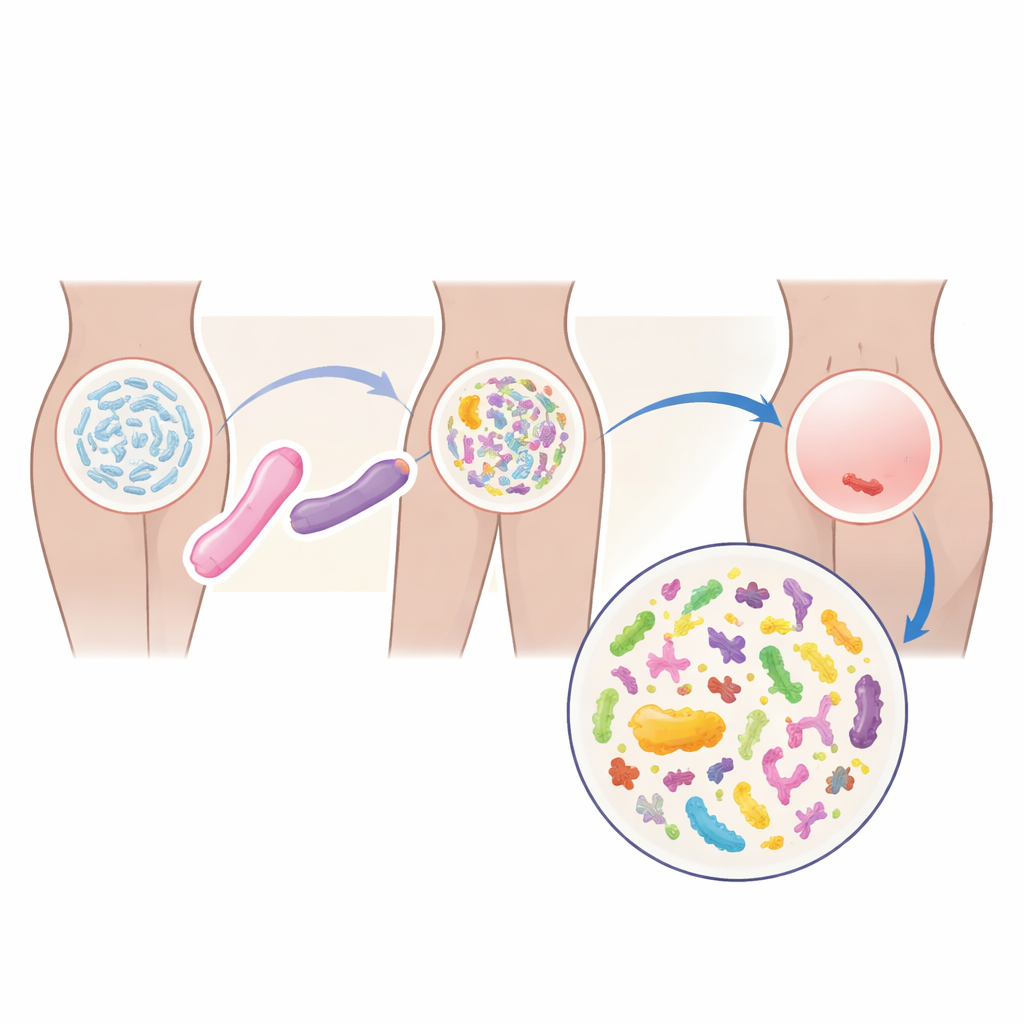
Sexual Practices and Everyday Circumstances
To understand what might be driving these less‑protective patterns, the authors examined links between women’s characteristics and their bacterial communities. When they took many factors into account at once, two stood out. Women from lower‑income households were more than four times as likely to have the Lactobacillus‑depleted pattern. In addition, using sex toys during sexual activity was associated with nearly a fourfold increase in the odds of having this less‑healthy microbiome, especially among women who have sex only with women. These findings support the idea that intimate items can transfer clusters of bacteria between partners and that economic hardship may indirectly shape microbiome health through access to care, products, or living conditions.
What This Means for Women’s Health
For non‑specialists, the core message of this work is straightforward: the mix of bacteria in the vagina is not random. It is shaped by who women have sex with, how they have sex, and the social and economic context of their lives. Many women who have sex only with women in this study carried a microbiome that offers less protection and appears easier to disturb or share between partners. Recognizing the role of practices such as sex toy use and the impact of low income can help clinicians and communities craft practical advice—like cleaning or using barriers on shared toys—and design care that includes women who have sex with women, a group often overlooked in research. In essence, tending to vaginal health means paying attention not only to the body, but also to behavior and social conditions that quietly shape the microscopic world within.
Citation: de Oliveira Ignacio, M.A., Marconi, C., Bidinotto, L.T. et al. Characteristics associated with Lactobacillus-depleted vaginal microbiota in women with different sexual behavior. Sci Rep 16, 9642 (2026). https://doi.org/10.1038/s41598-025-34977-2
Keywords: vaginal microbiome, bacterial vaginosis, women who have sex with women, Lactobacillus, sexual health