Clear Sky Science · en
Multidisciplinary identification of human skeletal remains from the karst abyss in Demänovská Valley (19th–20th century calCE, Slovakia)
A Hidden Story in a Mountain Hole
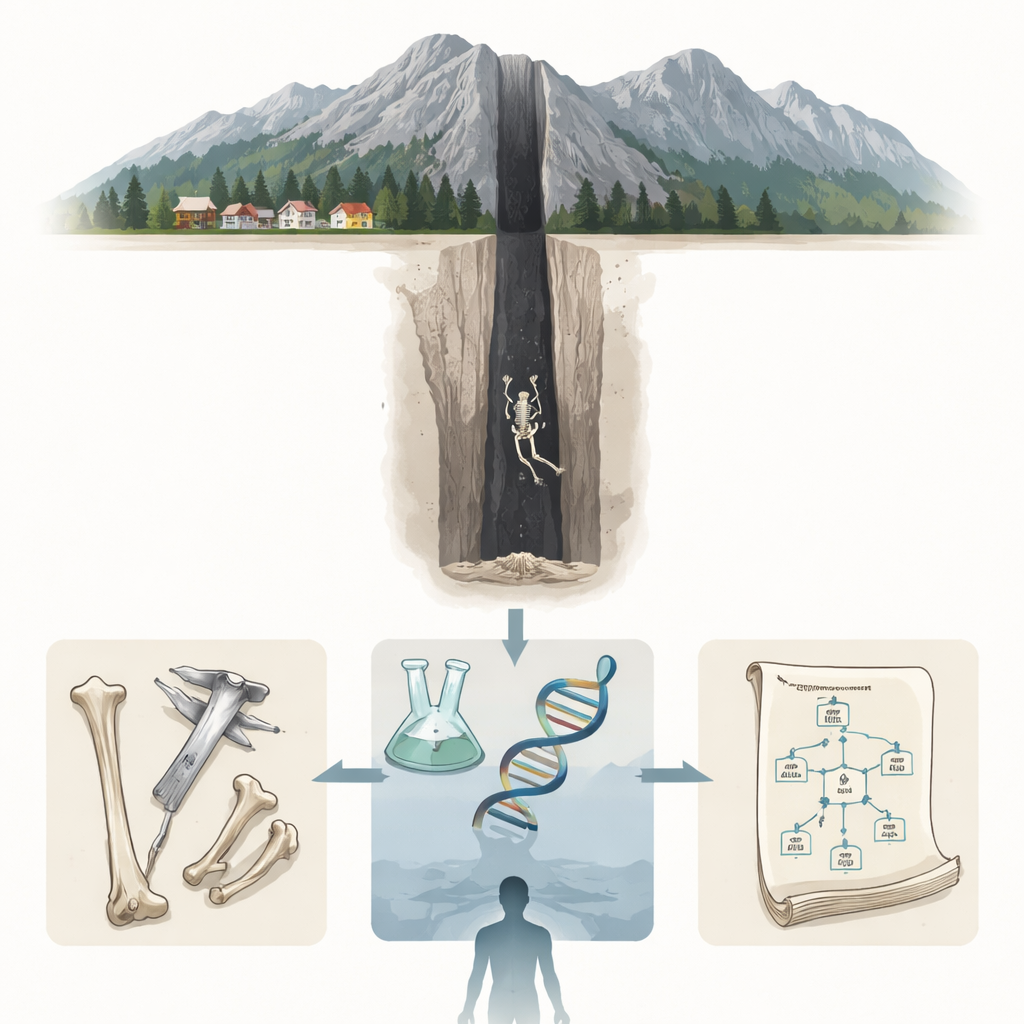
High in the Slovak mountains, cavers exploring a deep, narrow sinkhole stumbled on something chilling: the almost complete skeleton of a middle‑aged woman, lying 14 meters below the surface. No clothes, no objects, and no written records lay beside her, only bare bone in ancient rock. This study tells the story of how scientists from many fields—cave explorers, archaeologists, bone specialists, geneticists and archivists—worked together like detectives to turn an anonymous skeleton into a named person who vanished from a nearby village more than a century ago.
The Mountain Pit and the Missing Villager
The skeleton was found in a karst abyss called Studňa na Jame, perched on a ridge above Slovakia’s Demänovská Valley. The site lies within an old fortified hilltop area that had been occupied in the Iron Age, so at first glance the bones might have been thousands of years old. Yet the way the body was buried—below loose stones likely tossed in from above—hinted at a more recent tragedy. Local villagers added a crucial clue: a long‑told story that, after the late 1800s, an older woman from the nearby village of Pavčina Lehota had disappeared and was believed to have died in that very abyss.
What the Bones Revealed About Her Life
Careful study of the skeleton showed it belonged to a woman about 40 to 49 years old and roughly 157 centimeters tall. Her joints and the places where muscles attach to bone were heavily worn, especially on the right side, suggesting years of hard physical work and walking in steep terrain—fitting the life of a working woman in a mountain village. Healed fractures in her spine and a rib told of earlier injuries, perhaps from heavy labor or falls. A sunken defect in the right side of her skull might have been caused near the time of death by a blow or by a falling stone, but the damage cannot be clearly tied to violence or accident. Chemical analysis of the collagen in her bones showed a diet rooted in typical local farming: foods from temperate plants and a notable amount of animal protein, likely including sheep products common in northern Slovakia.
Dating a Death in a Difficult Time Window
To work out when she died, the team used radiocarbon dating on collagen from one tooth and a rib, and then refined those dates with computer modeling. Because atmospheric carbon levels wobbled in the 17th to 20th centuries, simple radiocarbon results spread across a wide time span from the late 1600s to the mid‑1900s. By combining these measurements with what is known about how fast teeth and ribs form in life and with her estimated age at death, the researchers narrowed her likely death to between the early 1800s and mid‑1900s. This was still too broad to link her confidently to the missing villager, so the scientists turned to the archives.
Paper Records and Shared DNA
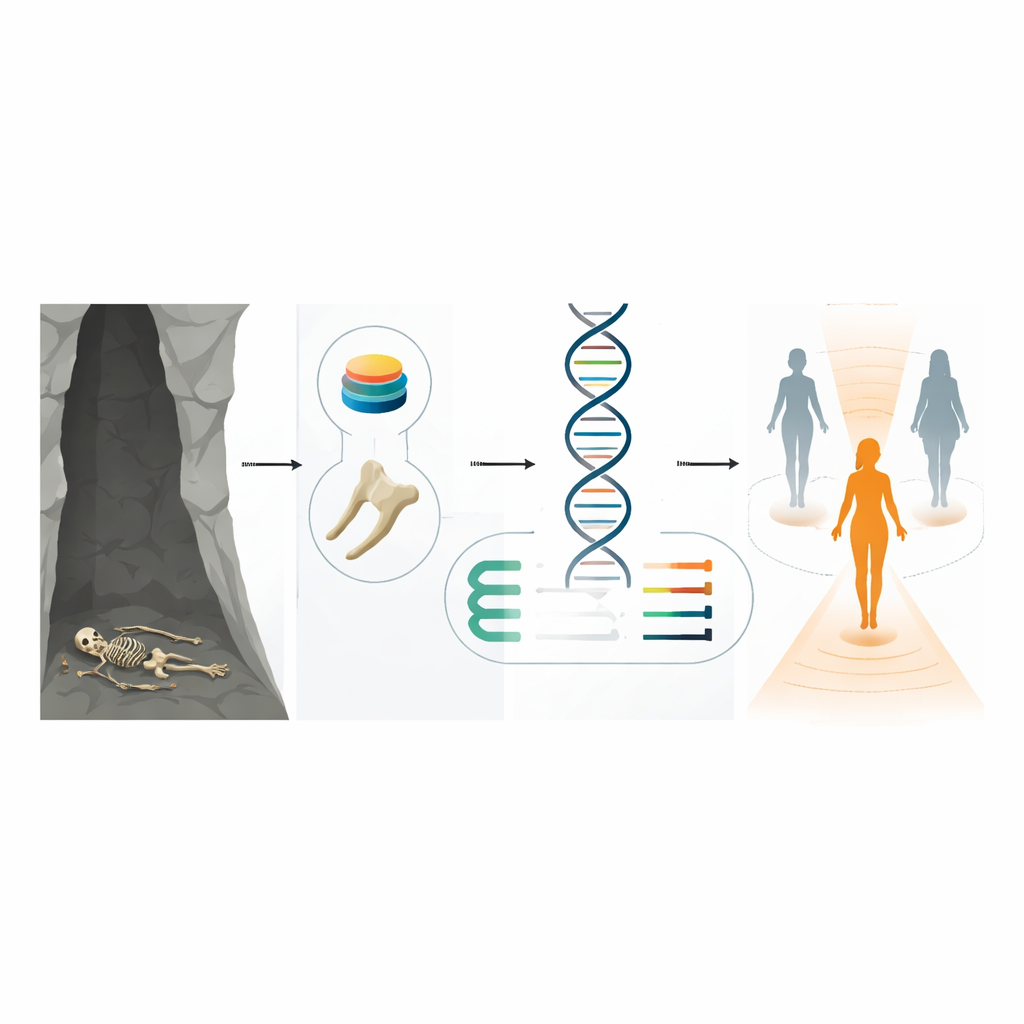
Archivists scoured church and civil registers to reconstruct the family history of the woman rumored to have vanished. They found that she was born in 1848, married twice, and was last definitely alive in 1891, when she remarried at age 42. Her only granddaughter was still living during the research but, out of respect for her age and well‑being, the team did not ask her for a DNA sample. Instead, they built a large family tree looking for relatives linked only through the female line, because such relatives share the same mitochondrial DNA, passed from mothers to children. Two distant relatives were identified and gave cheek‑swab samples. Comparing their mitochondrial DNA to that extracted from one of the dead woman’s teeth showed an extremely rare shared genetic pattern, making it overwhelmingly likely that the skeleton and the living relatives descended from the same maternal ancestor.
Putting a Name and Time to a Lost Life
With the missing villager’s birth year and marriage date added as prior information into the dating model, the team could now estimate that the woman in the abyss died between 1891 and 1911, matching the refined family history and her skeletal age. While the precise circumstances—accident, foul play, or suicide—remain uncertain, the study powerfully demonstrates how caves can hold not only prehistoric remains but also modern human stories. Most importantly, it shows that by blending cave exploration, bone analysis, radiocarbon dating, chemical clues, oral history, archives, and DNA, scientists in Slovakia were able, for the first time, to identify a long‑missing person from skeletal remains alone and move toward giving her a proper burial and a restored place in community memory.
Citation: Barta, P., Dörnhöferová, M., Baldovič, M. et al. Multidisciplinary identification of human skeletal remains from the karst abyss in Demänovská Valley (19th–20th century calCE, Slovakia). Sci Rep 16, 8373 (2026). https://doi.org/10.1038/s41598-025-34905-4
Keywords: forensic anthropology, ancient DNA, radiocarbon dating, missing persons, karst caves