Clear Sky Science · en
The ubiquitin–proteasome system is an important driver of EBV-associated nasopharyngeal carcinoma progression: a meta-analysis of transcriptomic data
Cancer in a Hidden Corner of the Throat
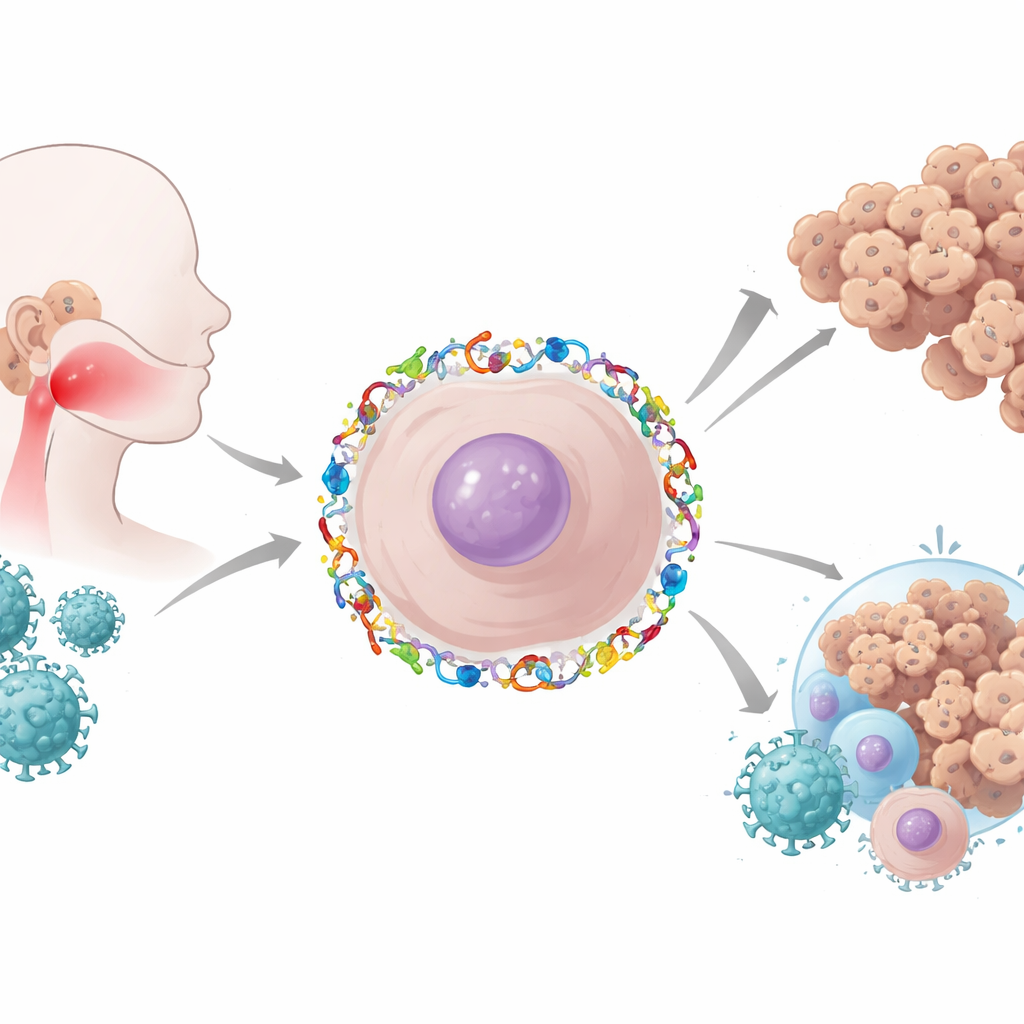
Nasopharyngeal carcinoma is a cancer that arises in a small, hard‑to‑reach space behind the nose and above the back of the throat. It is relatively uncommon worldwide but strikes many people in parts of Southeast Asia and China, often with deadly results. Almost all of these tumors carry a long‑lasting infection with Epstein–Barr virus (EBV), the same virus that can cause mononucleosis. This study asks a pressing question for patients and doctors alike: how does this virus quietly reshape cells and their surroundings so that cancer can grow, hide from the immune system, and resist treatment?
A Viral Intruder and a Crowded Immune Battlefield
EBV‑related nasopharyngeal tumors are packed with immune cells, including T cells, natural killer cells and macrophages. In many cancers, such heavy immune presence is a good sign, hinting that the body is fighting back. Here, however, the immune cells are strangely ineffective. EBV helps engineer this paradox by releasing viral proteins and small RNAs that skew the surrounding tissue toward suppression rather than attack. The virus nudges cells to secrete calming signals, to express “brakes” that exhaust T cells, and to alter how cancer cells present viral and tumor pieces on their surface. The result is a bustling but muted immune neighborhood where the tumor can quietly thrive.
The Cell’s Garbage Disposal Becomes a Double Agent
The authors focus on the cell’s protein recycling machinery, known as the ubiquitin–proteasome system. Under normal conditions, this system tags worn‑out or damaged proteins and feeds them into a molecular shredder. It also produces small fragments that help immune cells recognize infected or malignant cells. By combining six large genetic datasets from tumors and healthy tissue, the researchers identified thousands of genes that change in nasopharyngeal cancer. Among these, 85 human genes physically interact with EBV proteins, and a tightly knit cluster is devoted to this protein‑recycling system. Many of these host genes are controlled by EBV proteins active during the virus’s “lytic” phase, when it briefly wakes up to replicate. This suggests that periodic viral reactivation can tune the cancer cell’s internal garbage disposal in ways that favor the tumor.
Single Cells Reveal Two Faces of the Tumor
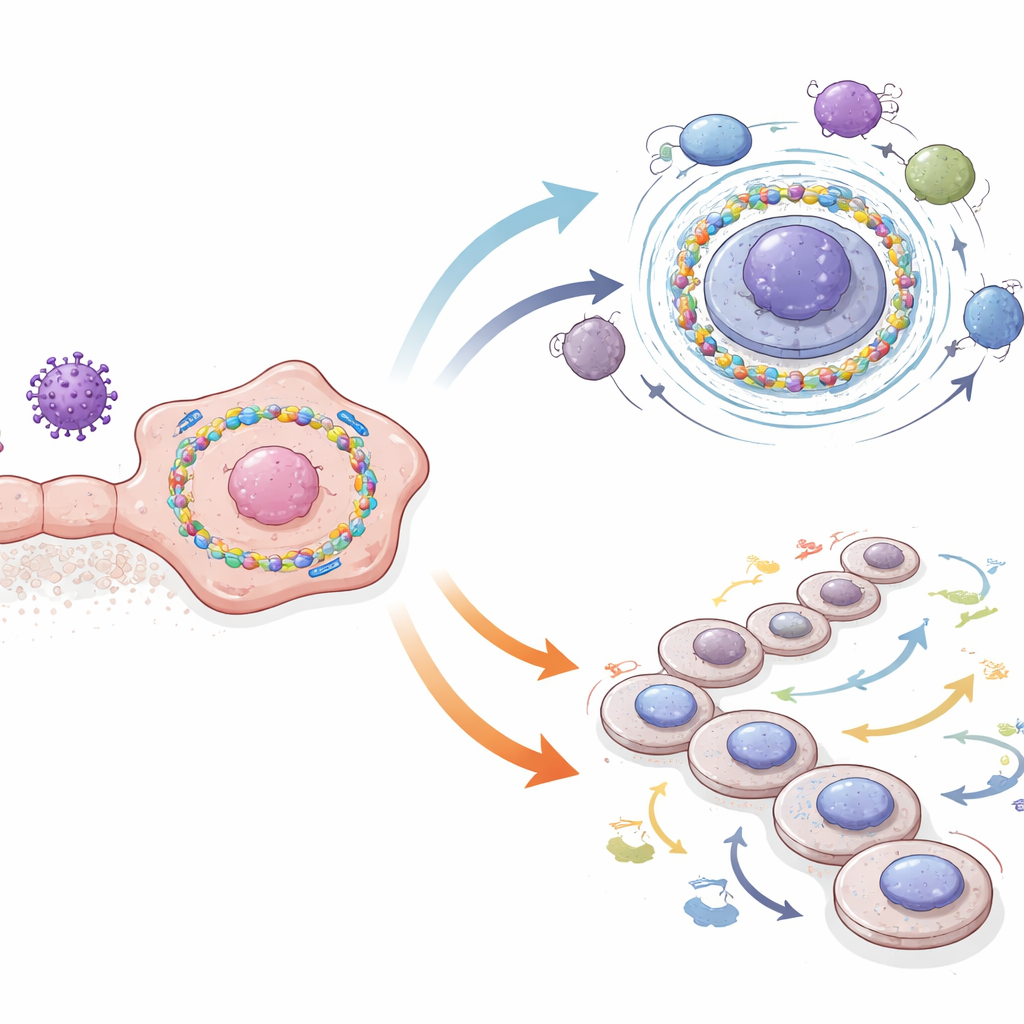
To see where these genes are active, the team turned to single‑cell RNA sequencing, a method that reads out gene activity in thousands of individual cells taken from tumors. They compared EBV‑positive nasopharyngeal cancers with virus‑negative oropharyngeal cancers from a nearby part of the throat. Cancer cells in nasopharyngeal tumors showed consistently higher activity of the protein‑recycling genes than their counterparts, and some immune cells also displayed elevated activity. When the researchers grouped tumor cells based on this signature, two main states emerged. “UPS‑High” cells had very active recycling machinery, lower signs of cell division, and stronger links to stem‑like behaviors and immune‑dampening signals. “UPS‑Low” cells divided more rapidly and were tied to classic growth‑driving pathways, such as those driven by fibroblast growth factors and Wnt proteins.
How Tumor Cells Talk to Their Neighbors
The team then used computational tools to predict how these two tumor cell states communicate with nearby immune cells. Cells in the UPS‑High state appeared to broadcast messages that encourage immune tolerance rather than attack. They showed reduced activity of the signals that normally display internal proteins to immune sentinels, making them harder to “see.” At the same time, they engaged pathways linked to immune suppression, including cues from molecules such as macrophage migration inhibitory factor and certain basement‑membrane components. In contrast, UPS‑Low cells sent and received more signals related to growth and tissue remodeling, consistent with a more fast‑growing but less stealthy population.
What This Means for Patients and Future Treatments
By studying patient datasets across many cancer types, including head and neck tumors and a smaller nasopharyngeal cohort, the researchers found that higher expression of this 12‑gene protein‑recycling signature tends to track with worse survival. They propose that EBV steers some tumor cells into a UPS‑High state that grows more slowly but hides better and behaves more like a reservoir of stem‑like cells that can survive therapy and seed recurrence. Other cells remain UPS‑Low, driving rapid tumor expansion. Although these insights come mainly from RNA measurements and need laboratory confirmation, they point to the protein‑recycling machinery as both a marker of aggressive disease and a promising drug target. Carefully tuning this system—especially in combination with immune‑based treatments—could one day help unmask EBV‑driven tumor cells and improve outcomes for people with nasopharyngeal carcinoma.
Citation: Ratnawati, H., Sanjaya, A., Christiandy, A. et al. The ubiquitin–proteasome system is an important driver of EBV-associated nasopharyngeal carcinoma progression: a meta-analysis of transcriptomic data. Sci Rep 16, 8892 (2026). https://doi.org/10.1038/s41598-025-34808-4
Keywords: nasopharyngeal carcinoma, Epstein–Barr virus, ubiquitin–proteasome system, tumor immune microenvironment, immune evasion