Clear Sky Science · en
Interplay between autophagy and p38 MAPK during salinomycin-induced cell death in cisplatin-resistant melanoma
Why this research matters
Melanoma is one of the deadliest forms of skin cancer, in part because tumors often learn to shrug off standard chemotherapy drugs such as cisplatin. This study explores whether an unusual antibiotic called salinomycin can cut through that resistance, and it digs into the cell’s own recycling and stress‑response systems to understand how the drug works. For anyone interested in why some cancers bounce back after treatment—and how we might outsmart them—this work offers a window into the hidden life-or-death decisions happening inside tumor cells.
When cancer cells stop listening to treatment
Cisplatin is a workhorse drug used against many solid tumors, but melanoma cells frequently adapt and become harder to kill. The researchers built a mouse melanoma cell line that had been trained to resist cisplatin and then tested salinomycin on it. In dishes, rising doses of salinomycin sharply reduced the number of living melanoma cells, triggered classic signs of programmed cell death, and wiped out their ability to form new colonies even after brief exposure. In mice carrying cisplatin‑resistant melanoma tumors, injections of salinomycin slowed growth dramatically, shrinking tumor volume and weight without obvious toxicity. Together, these results suggest that salinomycin can hit melanoma cells that no longer respond to standard chemotherapy. 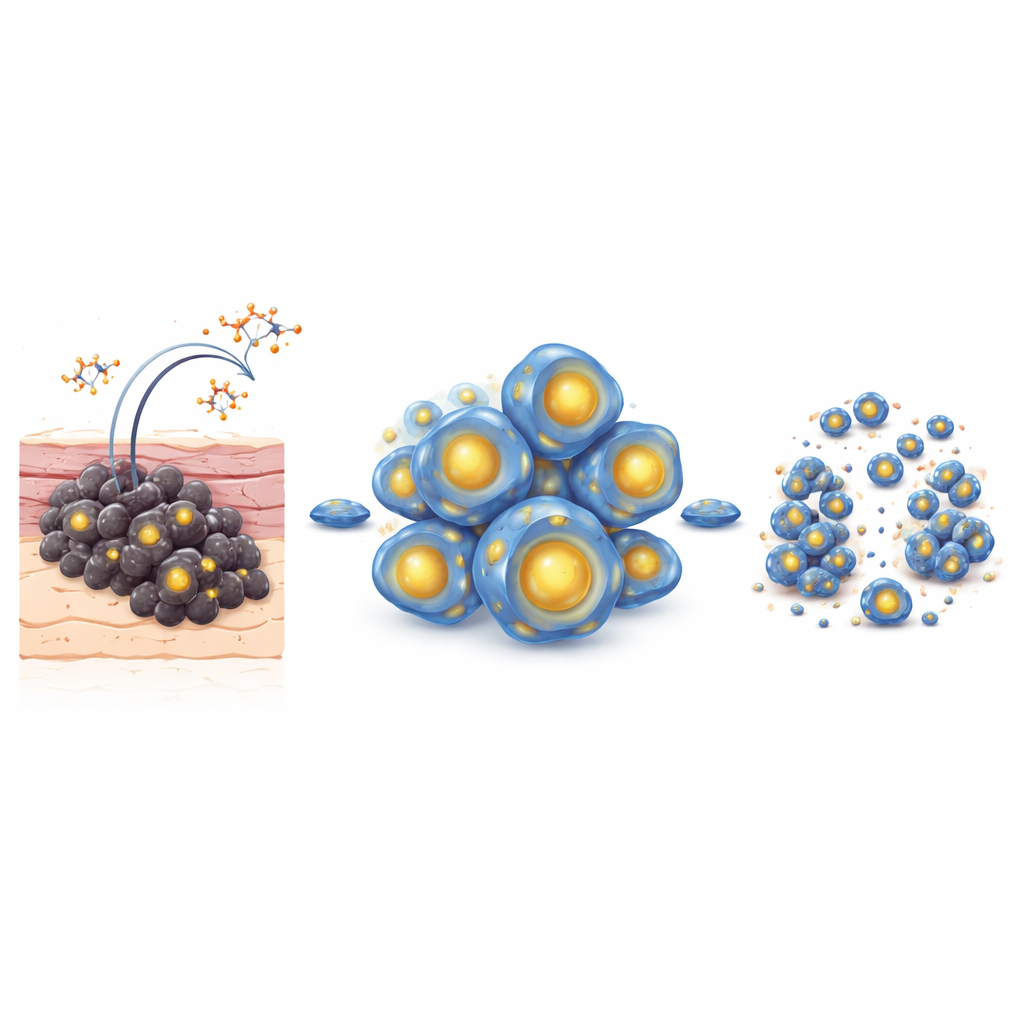
Cell stress, calcium waves, and a recycling system under strain
To find out what salinomycin does inside the cell, the team focused on the endoplasmic reticulum, a membrane maze that helps fold and process new proteins. Salinomycin behaves like an ion shuttle and disrupts the flow of charged particles across membranes, which can cause this organelle to misbehave. The researchers saw a strong activation of protein markers that appear when the cell’s protein‑folding machinery is under strain. At the same time, they detected a surge of calcium leaking from the endoplasmic reticulum into the surrounding fluid and toward the mitochondria, the cell’s power plants. When they blocked the mitochondria’s ability to soak up this calcium, the cells died even more readily, implying that mitochondria normally act as a buffer to delay death under salinomycin stress.
Self-cleaning turned into a lethal traffic jam
Cells rely on a process often described as “self‑eating” to survive tough conditions: they wrap damaged material in small sacs and send it to acidic compartments for breakdown and recycling. Salinomycin strongly boosted the early steps of this pathway, increasing proteins that drive formation of these sacs. But crucially, the team found that the final cleanup step was impaired. Markers that should have been chewed up instead piled up, and microscopic imaging showed large vacuole‑like structures that did not properly fuse with lysosomes, the cell’s digestive units. Further tests indicated that lysosomal membranes became leaky and certain digestive enzymes were activated in the wrong place. The result is a kind of cellular traffic jam: recycling packets keep forming but are not efficiently cleared, which can turn a normally protective process into a trigger for cell death.
A stress signaling switch that can be turned against the tumor
Another piece of the puzzle is a family of stress‑sensing enzymes known collectively as MAP kinases. Salinomycin activated three branches of this system, but one branch in particular, called p38, stood out. When the researchers blocked p38, salinomycin killed many more melanoma cells and caused a striking increase in the number and size of the cytoplasmic vacuoles. Blocking a calcium‑dependent enzyme called calpain had a similar effect, both on vacuole buildup and on long‑term survival. In contrast, a drug that promotes more efficient self‑cleaning (rapamycin) reduced the harmful buildup of recycling sacs and protected cells from salinomycin. These experiments suggest that, under salinomycin stress, p38 and calpain help melanoma cells use a slowed, imperfect recycling response as a survival tactic—and that disabling this backup makes the drug more lethal. 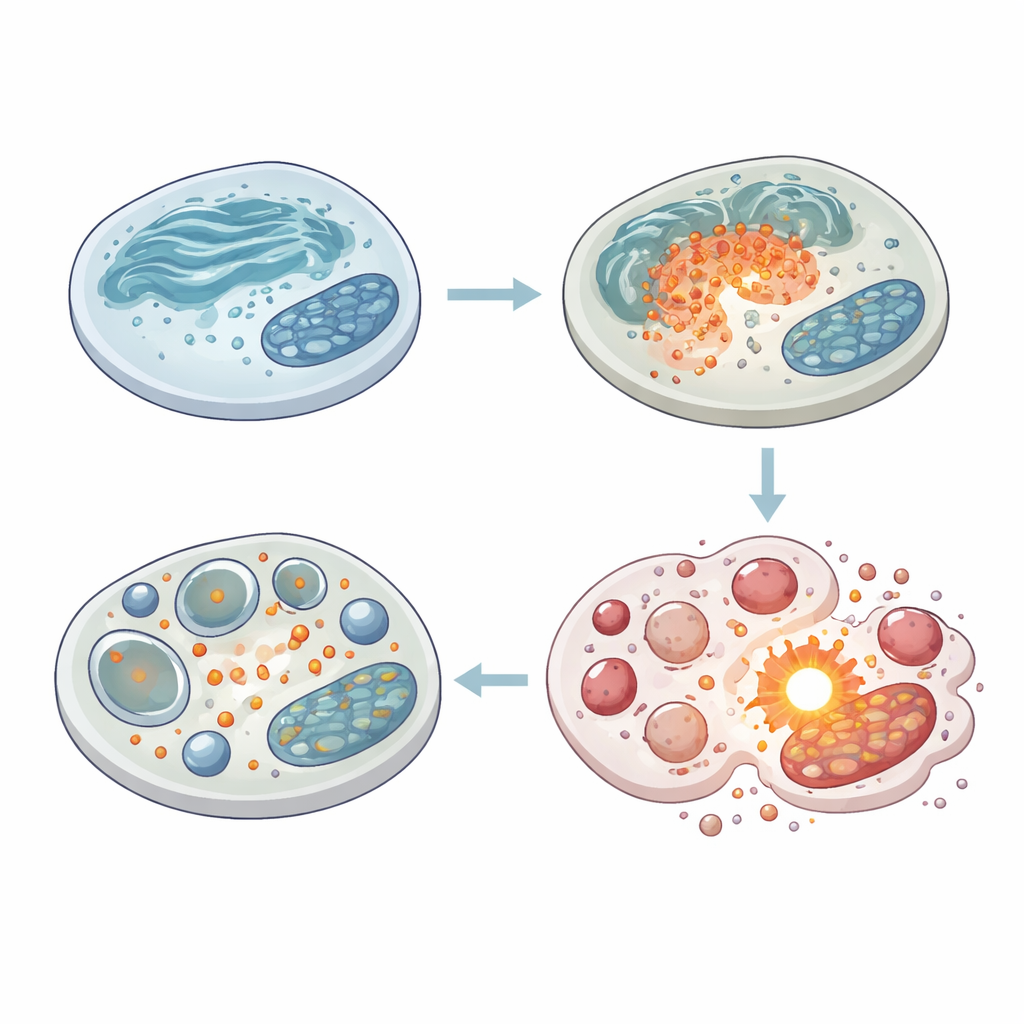
What this could mean for future cancer care
Overall, the study paints salinomycin as a double‑edged agent that pushes cisplatin‑resistant melanoma cells into severe internal stress, floods them with calcium, jams their waste‑handling system, and ultimately drives them toward programmed death. At the same time, the cells try to defend themselves using a p38‑guided recycling response and other survival pathways. For patients, the practical message is that salinomycin—or improved relatives of it—might one day be paired with drugs that block these survival routes, such as p38 inhibitors or autophagy blockers, to selectively topple stubborn melanoma cells while using lower doses of each drug. Although much work remains before this strategy reaches the clinic, the study offers a detailed roadmap of vulnerabilities that combination therapies could exploit.
Citation: Tyagi, M., Patro, B.S. Interplay between autophagy and p38 MAPK during salinomycin-induced cell death in cisplatin-resistant melanoma. Sci Rep 16, 9640 (2026). https://doi.org/10.1038/s41598-025-34796-5
Keywords: melanoma, drug resistance, salinomycin, autophagy, combination therapy