Clear Sky Science · en
Integrated bioinformatics and experimental validation identify CCDC78 as a prognostic biomarker in colon adenocarcinoma
Why This Matters for People Facing Colon Cancer
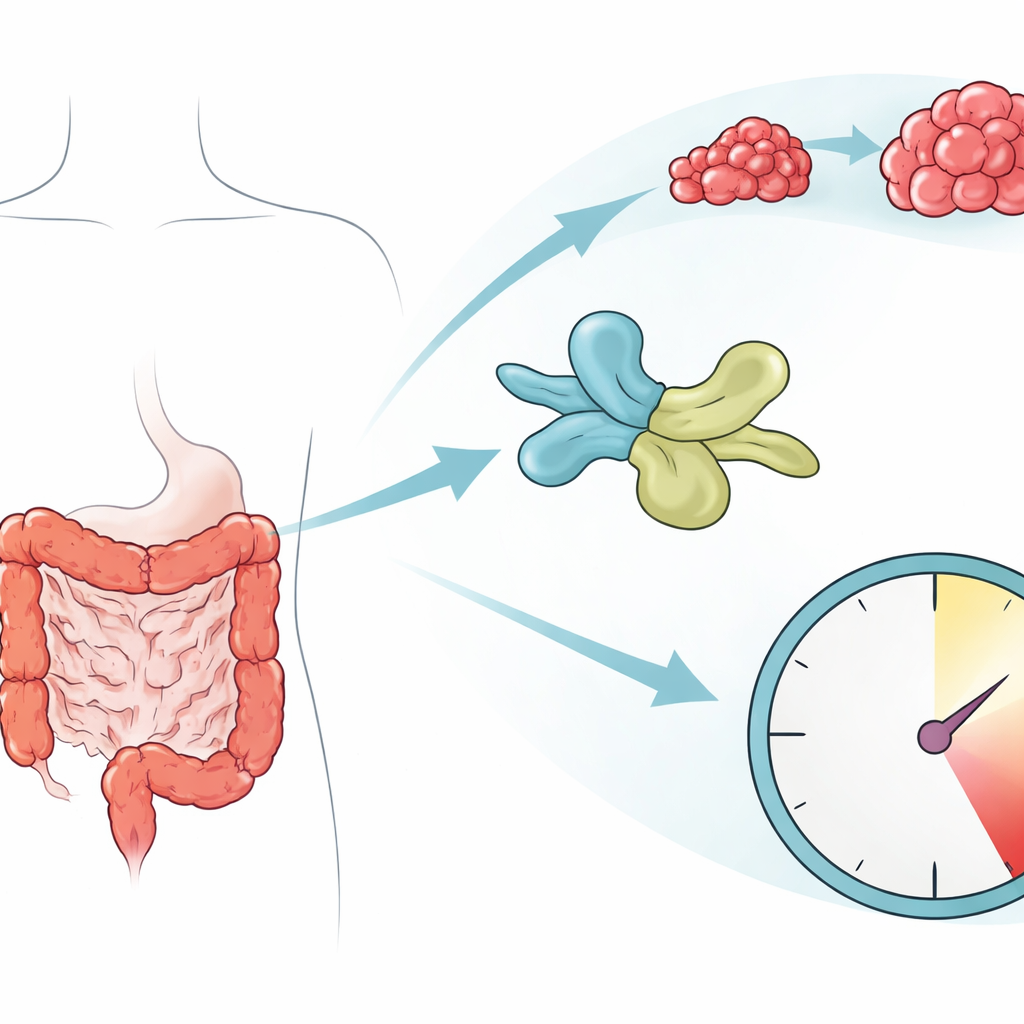
Colon cancer remains one of the leading causes of cancer death worldwide, largely because many tumors return or spread even after surgery and modern treatments. Doctors urgently need better warning signs that reveal which tumors are most dangerous and which patients might benefit from extra monitoring or tailored therapies. This study focuses on a little-known molecule called CCDC78 and shows that it could help flag high‑risk colon cancers and point toward new treatment strategies.
A Closer Look at a Little-Known Molecule
Our cells are filled with proteins that act like workers on a factory floor, keeping growth and repair under control. CCDC78 is one of these proteins and is part of a family known to shape cell structure and division. Until now, its role in colon cancer was largely a mystery. By mining large international cancer databases and testing real tumor samples from patients, the researchers discovered that CCDC78 is consistently found at higher levels in colon adenocarcinoma, the most common type of colon cancer, than in nearby healthy tissue. This pattern appeared across multiple patient groups and different laboratory methods, making the finding more reliable.
High CCDC78 Levels Signal More Dangerous Disease
Numbers from hundreds of patients revealed a clear pattern: people whose tumors had more CCDC78 tended to have more advanced disease and poorer outcomes. High CCDC78 was linked to cancers that had already spread to lymph nodes or distant organs and to overall higher clinical stage. When the team followed patients over time, those with CCDC78‑rich tumors died sooner and had more recurrences than those with low levels. Even after accounting for age, tumor size, and spread, CCDC78 remained an independent risk factor. The authors built a prediction chart that combines CCDC78 with routine clinical information to estimate a person’s chance of surviving one, three, or five years, showing that this marker could enhance everyday decision‑making in the clinic.
How CCDC78 Helps Tumor Cells Grow and Move
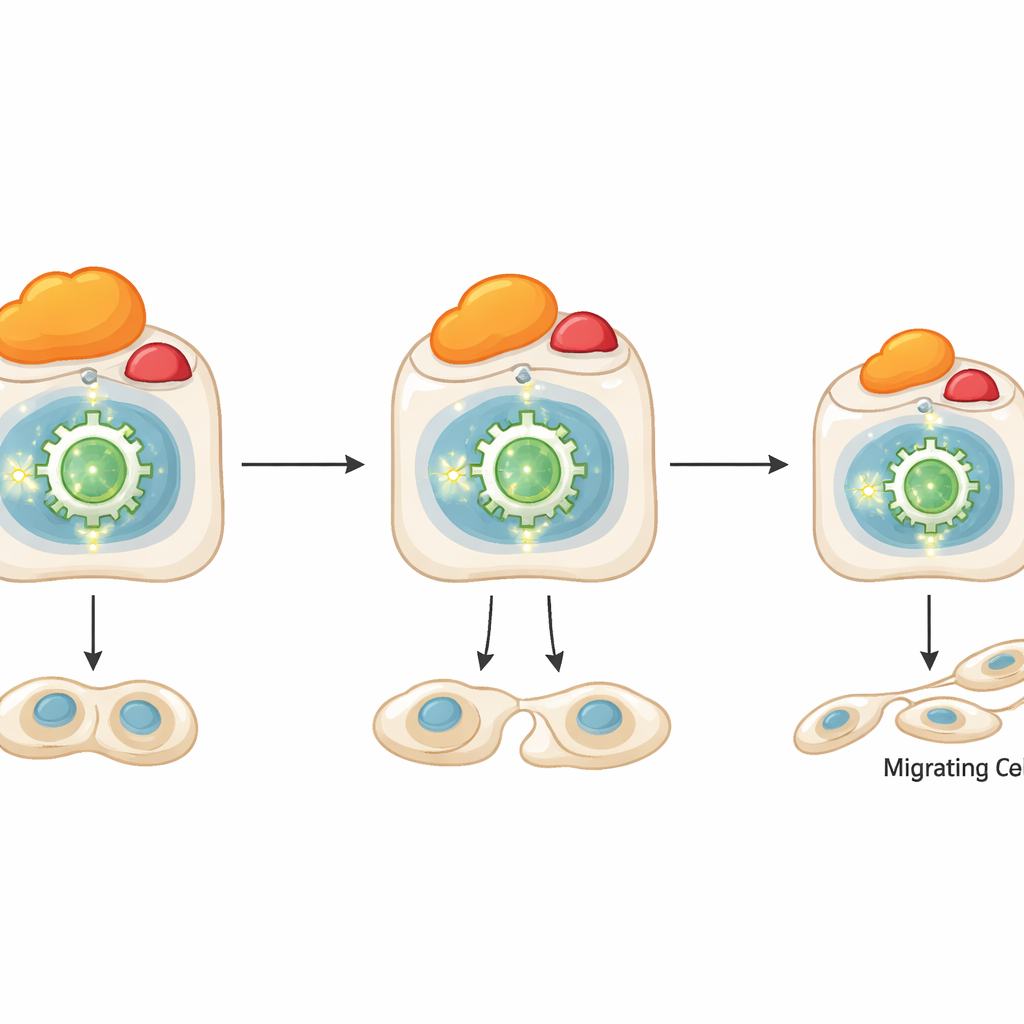
To move beyond statistics and understand what CCDC78 is doing inside cells, the researchers turned to colon cancer cell lines grown in the lab. When they used genetic tools to switch off CCDC78, cancer cells slowed their growth, formed fewer colonies, and were less able to migrate across a surface or through a membrane—behaviors that mirror reduced tumor spread. At the molecular level, shutting down CCDC78 turned up a key “brake” protein (often called p21) and turned down a growth‑driving enzyme (CDK4) and a master switch that pushes cells into DNA‑copying mode (E2F1). Together, these shifts suggest that CCDC78 normally helps push cells through a critical checkpoint in the division cycle; when it is reduced, cells hesitate instead of racing ahead.
Links to the Body’s Defenses and Drug Response
The team also explored how CCDC78 might shape the neighborhood around a tumor, including immune cells that can either attack cancer or help it hide. Tumors with higher CCDC78 showed altered patterns of immune cell presence, including more killer T cells alongside more regulatory T cells that can dampen immune attacks. Several molecules that serve as “brakes” on the immune system, and are targets of modern immunotherapy drugs, also tended to be higher when CCDC78 was elevated. In addition, large‑scale analyses suggested that tumors with more CCDC78 may be less sensitive to certain drugs, hinting that this molecule could be involved in treatment resistance, possibly through its strong influence on cell division pathways.
What This Could Mean for Future Care
Put simply, this study identifies CCDC78 as a red‑flag molecule in colon cancer: when it is high, tumors are more aggressive, patients fare worse, and the cancer cells divide and migrate more easily. Because turning CCDC78 down in the lab slowed tumor‑like behavior, it may eventually become both a blood‑ or tissue‑based marker to guide prognosis and a potential target for new drugs. While animal studies and clinical trials are still needed, the work offers a clearer map of how a once‑obscure protein helps fuel colon cancer and why measuring it could help doctors tailor care to those who need it most.
Citation: Mo, Q., Du, M., Zheng, J. et al. Integrated bioinformatics and experimental validation identify CCDC78 as a prognostic biomarker in colon adenocarcinoma. Sci Rep 16, 8476 (2026). https://doi.org/10.1038/s41598-025-34784-9
Keywords: colon cancer, biomarker, prognosis, cell cycle, tumor microenvironment