Clear Sky Science · en
Turning constraints into catalysts through bricolage to spur green agricultural entrepreneurship among returnees
Why small farms and returning migrants matter
In many parts of the world, villages are losing people and facing harsher weather, shrinking water supplies, and worn-out soils. Yet these same places must keep feeding growing populations. This study looks at an unexpected source of solutions: people who leave rural Pakistan to work or study in cities, then come back home and try to build environmentally friendly farm businesses. It asks a simple question with big consequences: when money, land, and equipment are scarce, can creativity with what is already at hand turn constraints into a springboard for greener farming?
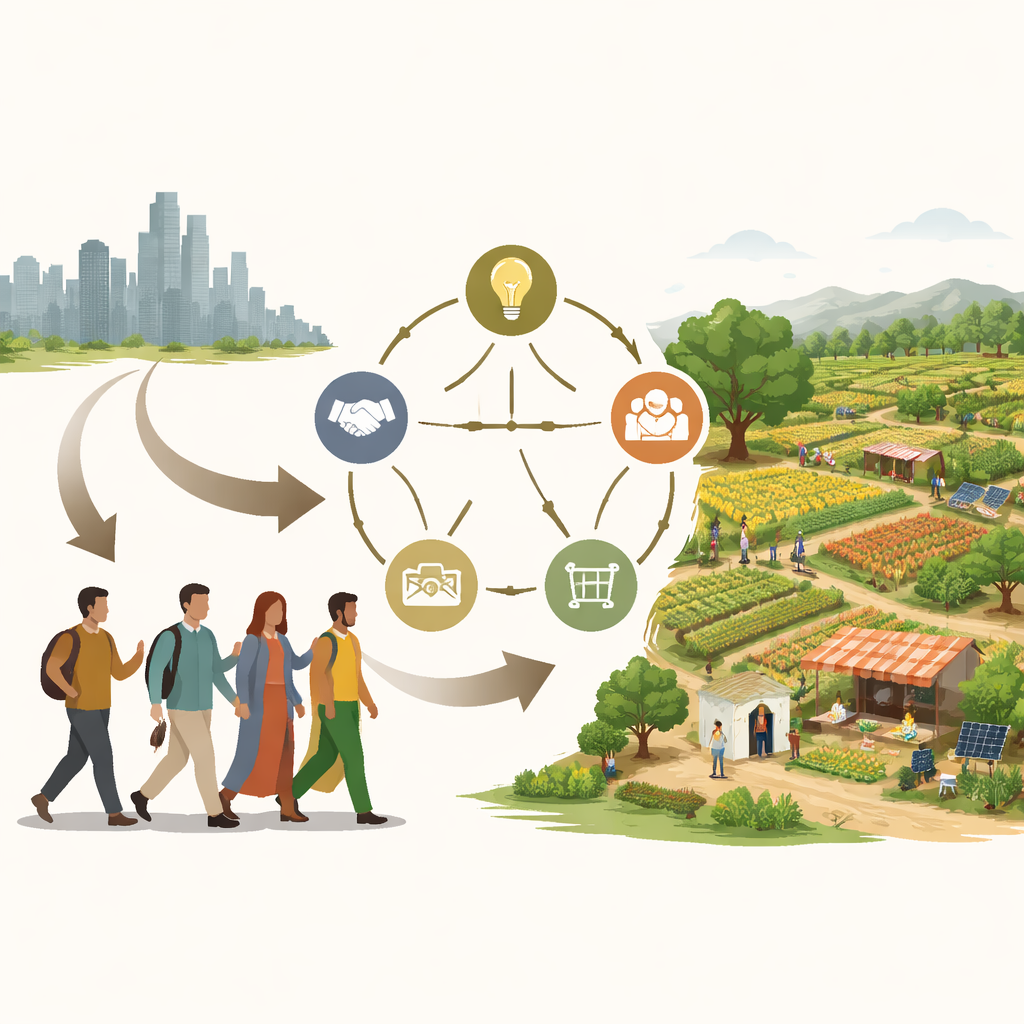
Making the most of what you have
The authors focus on a concept called “bricolage,” which, in everyday terms, means making do with whatever resources you can gather and combining them in inventive ways. Instead of relying on large loans or brand-new technologies, these returnee farmers draw on their own skills, relatives’ help, local contacts, and existing rules and programs. The study breaks this down into four types: skill bricolage (using and adapting know‑how), customer bricolage (working closely with buyers and markets), institutional bricolage (navigating local policies and support schemes), and network bricolage (tapping social ties). The idea is that, together, these forms of creativity can help build “green” farm ventures that protect soil and water while still earning a living.
A closer look at farms in two provinces
To see how this plays out in real life, the researchers surveyed 480 returning agricultural entrepreneurs in 24 villages across Punjab and Balochistan, two major farming regions of Pakistan. Everyone in the study was already using at least some recognized green practices: things like organic manure, mulching, soil conservation, straw recycling, or low‑toxicity pest control. The team then built an index of how “green” each farm business was, considering production methods, day‑to‑day operations, and innovation. They also measured how strongly each farmer engaged in the four kinds of bricolage and collected background information such as age, education, distance to markets, and earlier work experience.
How creativity turns into greener farms
When the data were analyzed, a clear pattern emerged. Farmers who were more active bricoleurs tended to run greener and more innovative farm businesses. Among the four types, skill bricolage stood out: those who were better at learning and adapting techniques were most likely to adopt eco‑friendly technologies and use resources more efficiently. Customer, institutional, and network bricolage also helped, but to a slightly lesser degree. The study shows two main ways this creative resource‑mixing works. First, it encourages farmers to broaden what they do on the farm, for example by adding processing, services, or new crops. Second, it helps them open more sales channels, such as informal networks, local markets, or digital platforms, which can make green products more profitable and less risky.
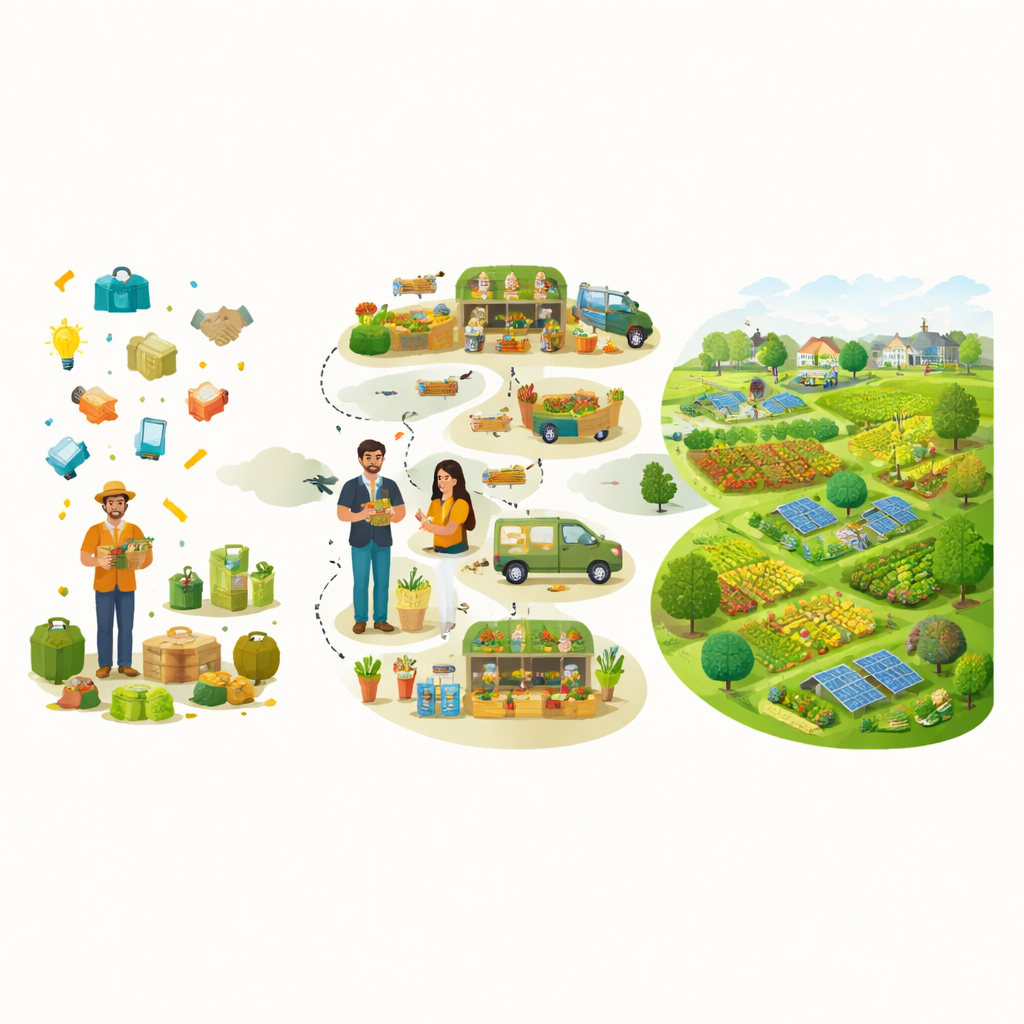
Who benefits most from creative problem‑solving
The impact of bricolage is not the same for everyone. Market‑oriented entrepreneurs – those motivated mainly by demand and income – gain the most from it, likely because they are constantly scanning for opportunities. Younger returnees and those with fewer years of work experience also benefit strongly, using creativity to compensate for limited capital and established connections. Migrant workers who come back from manual jobs in cities appear to lean on bricolage even more than returnees with formal education or professional careers, because they often have fewer financial and technical resources. At the same time, conditions around them matter: being closer to towns, located in areas with agricultural clusters, or able to use regional product brands all strengthen the chances that creative efforts lead to real green business growth.
What this means for villages and the planet
For non‑specialists, the main takeaway is straightforward: greener farming in poor rural areas does not always start with big investments, but with people learning to repurpose what they already have. Returning migrants in Pakistan are turning scattered skills, family ties, and local institutions into viable green farm ventures by experimenting, combining resources, and steadily widening both what they produce and where they can sell it. The study suggests that policies should not focus only on subsidies or equipment, but also on training, mentoring, and networks that strengthen this kind of everyday ingenuity. Done well, such support can help small farmers improve their incomes, protect land and water, and make rural communities more resilient in the face of climate and economic shocks.
Citation: Imran, M., Wei, N., Zhang, J. et al. Turning constraints into catalysts through bricolage to spur green agricultural entrepreneurship among returnees. Sci Rep 16, 7855 (2026). https://doi.org/10.1038/s41598-025-34732-7
Keywords: green entrepreneurship, rural Pakistan, returnee migrants, sustainable agriculture, resource bricolage