Clear Sky Science · en
Curcumin delivery system based on biodegradable polyhydroxybuterate Chitosan copolymer and Cobalt oxide nanoparticles against colorectal cancer
Why a spice from your kitchen matters for cancer care
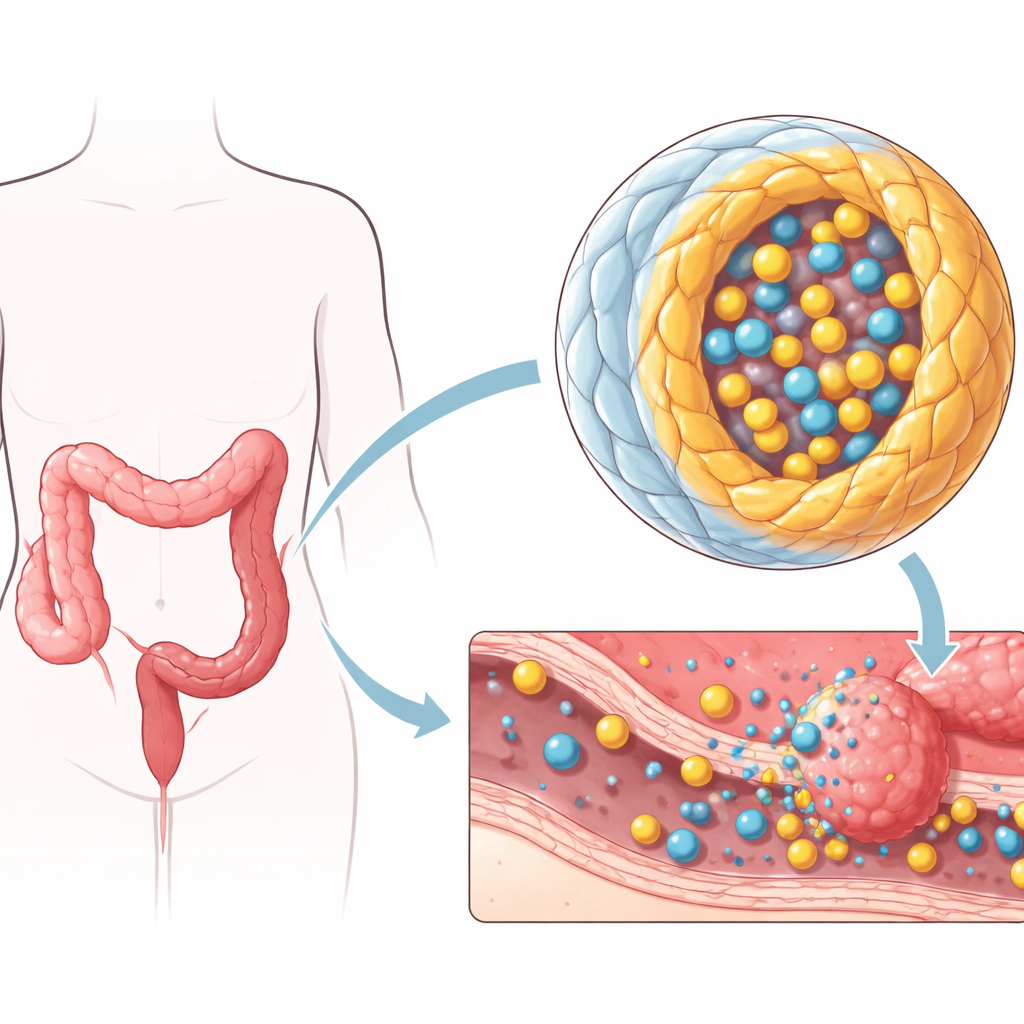
Colorectal cancer is one of the most common and deadly cancers worldwide, and many current treatments come with harsh side effects. Curcumin, the bright yellow compound in the spice turmeric, has long been known to have cancer-fighting properties, but the body breaks it down too quickly for it to work well as a medicine. This study describes a new way to package curcumin inside tiny, biodegradable particles so it can travel safely through the body, reach tumors in the colon, and be released slowly where it is needed most.
Building a smart carrier from natural materials
To protect and guide curcumin, the researchers combined two naturally derived plastics: polyhydroxybutyrate, made by bacteria, and chitosan, obtained from the shells of shrimp and other crustaceans. Both materials are already known to be friendly to the body and to break down over time. By chemically linking them together, the team created a new mixed material that can be tuned to be tougher or softer and to absorb more or less water. They then blended this with very small particles of cobalt oxide, a magnetic material a few billionths of a meter across. These cobalt-based particles act like tiny anchors and heaters, giving the carrier extra abilities such as responding to magnetic fields and changing how the drug comes out.
Loading curcumin into tiny delivery capsules
The next step was to load curcumin onto the surface of the cobalt oxide particles and then trap these drug-filled particles inside the biodegradable coating made from the new mixed plastic. This produced a family of nanocomposites—tiny capsules—with different recipes: some used shorter-chain chitosan, some longer-chain, and some contained more or less cobalt oxide. Laboratory tests showed that the cobalt particles could hold a high amount of curcumin, with over 90 percent of the curcumin in the preparation sticking to the particles. Careful measurements using techniques such as infrared light and X-ray scattering confirmed that the new material was formed as planned and that the cobalt particles were well embedded inside the coating.
Letting more drug out at tumor-like conditions
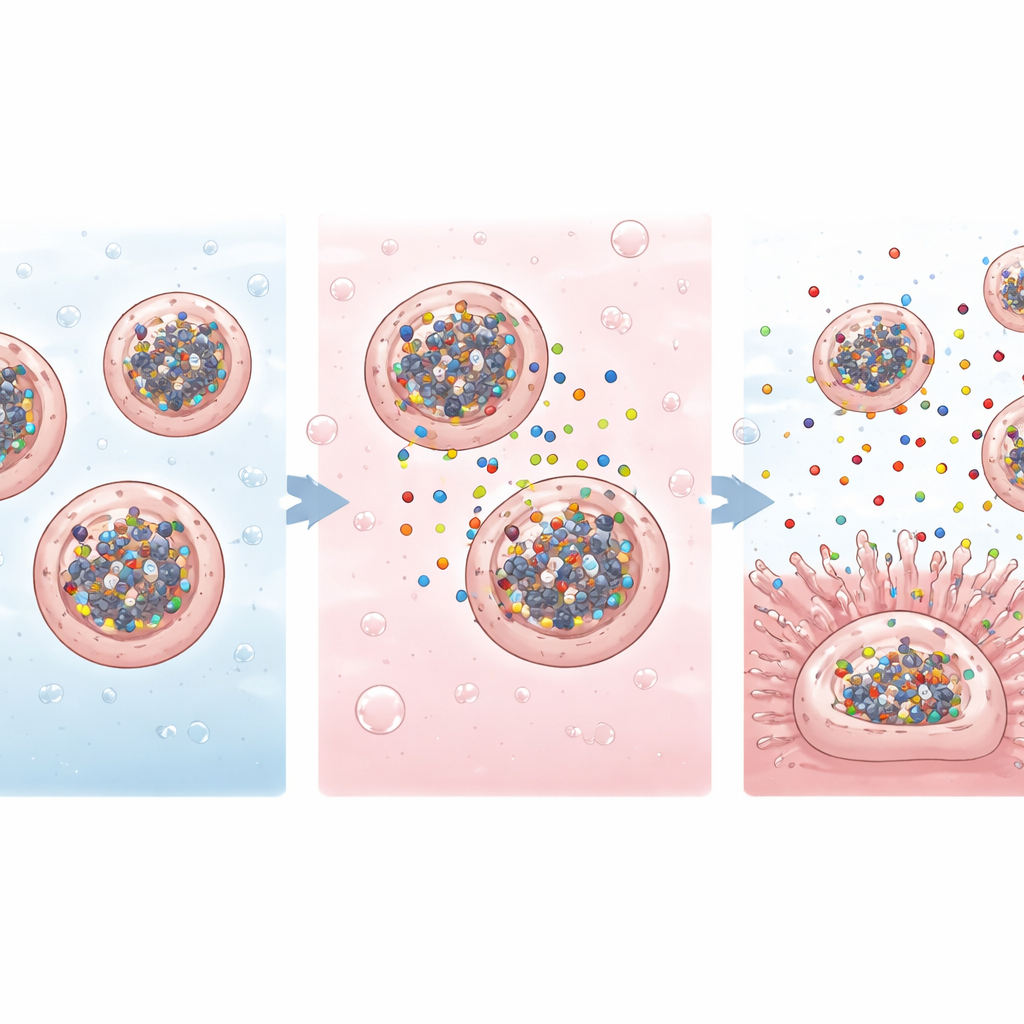
Because tumors often create a slightly more acidic environment than healthy tissue, the team tested how the capsules released curcumin in liquids that matched normal body fluid and tumor-like acidity. They found that all of the capsules released curcumin faster in the more acidic liquid, which means more drug would be available around a tumor than in healthy areas. Capsules that used the shorter version of chitosan let the drug out more quickly, because this form dissolves and loosens more easily. In contrast, adding more cobalt oxide slowed the escape of curcumin, stretching the release over weeks. Mathematical analysis of the release patterns showed that at one acidity level the drug came out at a nearly constant rate, while at normal body acidity it seeped out mainly by slow diffusion through the coating.
Testing the attack on cancer cells
To see whether these designer capsules could actually harm cancer cells, the researchers exposed a human colorectal cancer cell line to different formulations. They compared plain curcumin, curcumin attached only to cobalt oxide, and curcumin enclosed in the full biodegradable coating with different recipes. All curcumin-containing systems reduced cancer cell survival, but one stood out: capsules made with low–molecular weight chitosan and a higher share of cobalt oxide showed the strongest effect, cutting the number of viable cancer cells in half at the lowest dose among the tested formulations. This points to a sweet spot where the balance of shell softness, cobalt content, and drug loading maximizes impact on tumor cells while still relying on materials that are meant to break down in the body.
What this means for future treatments
In simple terms, the study shows a promising way to turn a familiar food ingredient into a more practical cancer treatment. By tucking curcumin inside tiny, biodegradable capsules that respond to the acidic surroundings of tumors and that can be guided or heated by magnetic fields, the researchers created a system that releases more drug where it is most needed and does so over an extended period. While these results are from lab tests and not from patients, they suggest that carefully designed, eco-friendly materials could one day help deliver natural compounds like curcumin more effectively against colorectal cancer and possibly other tumors.
Citation: Salahuddin, N., Gaber, M., Mousa, M. et al. Curcumin delivery system based on biodegradable polyhydroxybuterate Chitosan copolymer and Cobalt oxide nanoparticles against colorectal cancer. Sci Rep 16, 8722 (2026). https://doi.org/10.1038/s41598-025-34587-y
Keywords: curcumin, colorectal cancer, nanoparticles, drug delivery, biodegradable polymers