Clear Sky Science · en
Multi-stream deep learning framework integrating images and feature representations to predict mild cognitive impairment using the rey complex figure test
Why drawing can reveal hidden memory problems
As people live longer, many worry about subtle memory lapses and whether they might signal the early stages of dementia. Doctors have long used simple paper-and-pencil drawing tests to check thinking and memory, because they are quick, low-cost, and easy to give in any clinic. This study shows how modern artificial intelligence can squeeze far more information out of one classic drawing test, turning it into a powerful early warning tool for mild cognitive impairment, a condition that often precedes dementia.
A classic picture with new digital eyes
One widely used drawing task is the Rey Complex Figure Test. A person is first asked to copy a detailed, abstract line drawing and later to draw it again from memory. Traditionally, experts score each drawing on a 36-point scale, judging how accurately different parts are placed and shaped. Those scores give a useful snapshot of visuospatial skills and visual memory, but they inevitably ignore many subtle features of the drawing. The authors of this paper set out to build an automated system that could look at the entire image, combine it with the usual point score and basic background information such as age, sex, and years of education, and then decide whether someone likely has mild cognitive impairment.
Two pathways to read a drawing
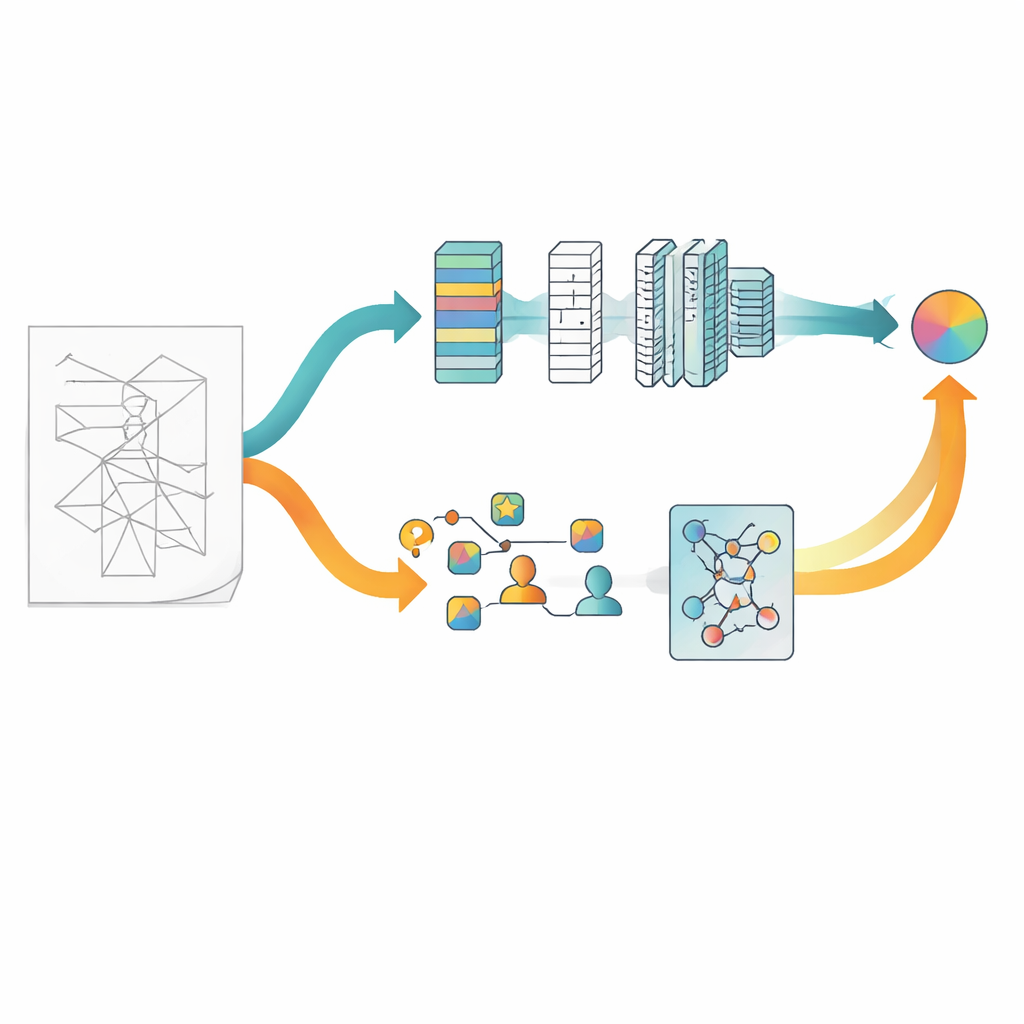
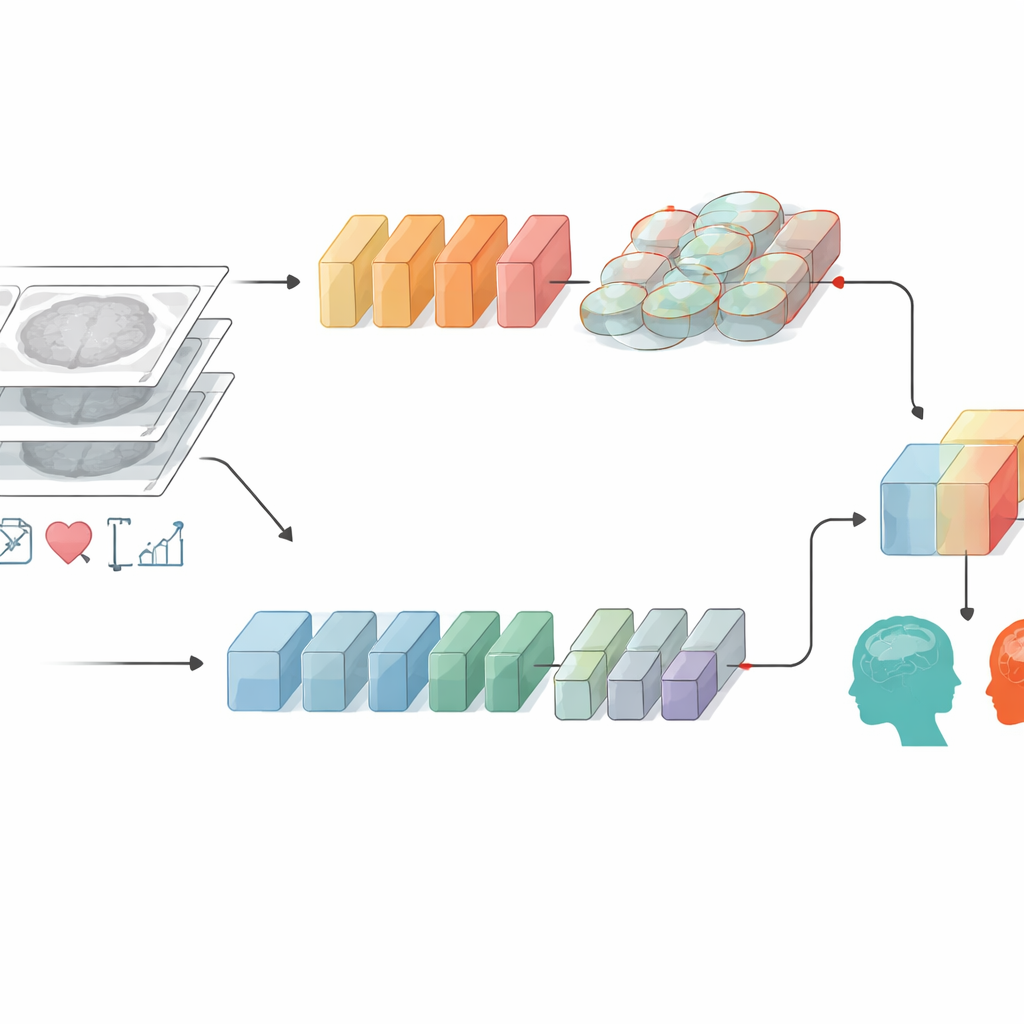
The researchers designed a “two-stream” deep learning model that processes each person’s drawings in two different ways at once. In the first pathway, called the spatial stream, the raw scanned images of three drawings (the copy, the immediate recall, and the delayed recall) are fed into an image-recognition network. This network, based on an architecture known as EfficientNet, automatically learns visual features like shapes, line thickness, and drawing style. A special attention module then helps the system focus more on the most informative regions of the drawing. In the second pathway, called the scoring stream, the model takes in the usual Rey test scores—generated automatically by a previously trained scoring network—along with the person’s age, sex, and education. These structured numbers are combined through a simpler prediction network. Finally, the outputs of the two streams are averaged to produce a single probability that the person has mild cognitive impairment rather than normal cognition.
Learning from many older adults
To train and test their system, the team used drawings from 1,740 older adults in a large Korean research cohort, about half with normal cognition and half with mild cognitive impairment. They repeatedly split this dataset into training, validation, and test sets to fine-tune the model and guard against overfitting. Crucially, they also evaluated performance on an independent group of 222 patients from a different hospital. Before building prediction models on this external set, they used their automated scoring tool to check for large mismatches between machine and human scores; in cases with big disagreements, experts rechecked and corrected their ratings. This quality-control step improved the agreement between human and AI scores, tightening the link between manual and automated assessments.
How well the system spots early impairment
The researchers compared their two-stream model with several alternatives: simple statistical models using a common brief test of general cognition, models using only human Rey scores, models using only AI-generated Rey scores, and a deep learning model that looked only at the images without the scoring stream. Across many repeats inside the main cohort and in the external hospital group, the combined two-stream system consistently came out on top. In the external test, it reached an area under the receiver operating characteristic curve of 0.872 and an overall accuracy of about 78 percent, outperforming both traditional scoring-based models and the image-only deep network. These gains suggest that the mix of rich visual detail and structured scoring information provides a more stable and reliable picture of early cognitive change.
What this could mean for everyday clinics
From a patient’s point of view, nothing about the test needs to change: they still sit down with pencil and paper and copy a complex figure. Behind the scenes, however, a scanner and the AI system can now evaluate the drawings in seconds, generate standardized scores, and estimate the person’s risk of mild cognitive impairment more accurately than many existing quick screening tools. Because it requires only a single familiar test plus routine background information, the method could be slotted into busy check-up centers without major disruptions. Although the study focused on Korean participants and used only static images, the approach points toward a future in which simple drawings, interpreted by intelligent software, help flag subtle cognitive problems early enough for meaningful intervention.
Citation: Park, J., Seo, E.H., Kim, S. et al. Multi-stream deep learning framework integrating images and feature representations to predict mild cognitive impairment using the rey complex figure test. Sci Rep 16, 9629 (2026). https://doi.org/10.1038/s41598-025-34491-5
Keywords: mild cognitive impairment, Rey complex figure test, deep learning screening, cognitive assessment, dementia prevention