Clear Sky Science · en
Alleviation of tannery wastewater toxicity in Spinacia oleracea through application of metal oxide nanoparticles
Why dirty water on our greens matters
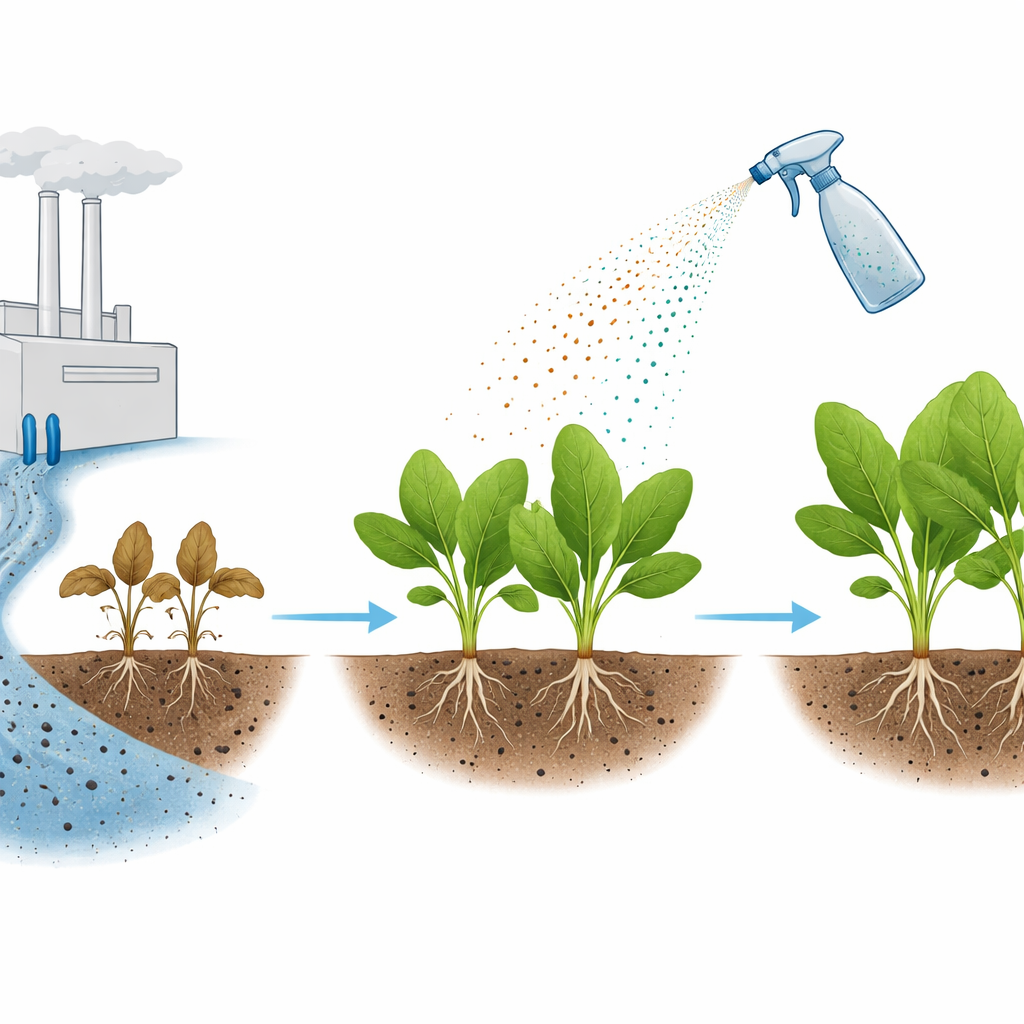
Spinach and other leafy vegetables are often grown near cities, where farms may tap into wastewater from nearby factories. In places with large leather-tanning industries, that water can carry high levels of chromium and other heavy metals that quietly build up in soils, crops and, eventually, our food. This study explores a surprising new line of defense: spraying spinach leaves with tiny particles of common mineral nutrients to help the plants withstand toxic tannery wastewater and keep less chromium inside their tissues.
How factories turn water into a hidden threat
Leather tanneries use chromium compounds to process animal hides. The leftover water from these plants often contains a particularly dangerous form called hexavalent chromium, along with other metals such as lead and cadmium. When this wastewater is used for irrigation, metals seep into the soil and are taken up by crops. Spinach is especially vulnerable because its soft tissues readily store contaminants. The result is stunted growth, pale leaves, damaged roots and chemical stress inside the plant. At the same time, the metals interfere with normal uptake of important nutrients like magnesium, iron and zinc, undermining plant health even further.
Tiny helpers sprayed on spinach leaves
The researchers tested whether extremely small particles of metal oxides—magnesium oxide, iron oxide and zinc oxide—could protect spinach from tannery wastewater. These particles, known as nanoparticles, are made from the same mineral elements plants already need, but shrunk to a scale that gives them a large surface area and high reactivity. Instead of mixing them into the soil, the team sprayed them directly onto the leaves at carefully chosen doses. Spinach plants were then watered with either clean water, a 50% mix of tannery wastewater, or full-strength wastewater, allowing the scientists to see how the leaf sprays performed under mild and severe contamination.
Bringing life back to stressed plants
Without any treatment, wastewater sharply reduced plant height, leaf number, leaf area and root growth, and slashed both fresh and dry weight of roots and leaves. It also stripped away green pigments and slowed photosynthesis, leading to weaker, less productive plants. After foliar sprays with the nanoparticles, however, the picture changed. All three types of particles improved growth, restored leaf color and boosted gas exchange. Plants sprayed with zinc oxide in particular were taller, had more and larger leaves, and showed stronger photosynthetic activity and better water-use efficiency, even under the harshest wastewater conditions. Magnesium and iron particles also helped, but zinc consistently gave the biggest lift to visible plant performance.
Fighting invisible stress inside the plant
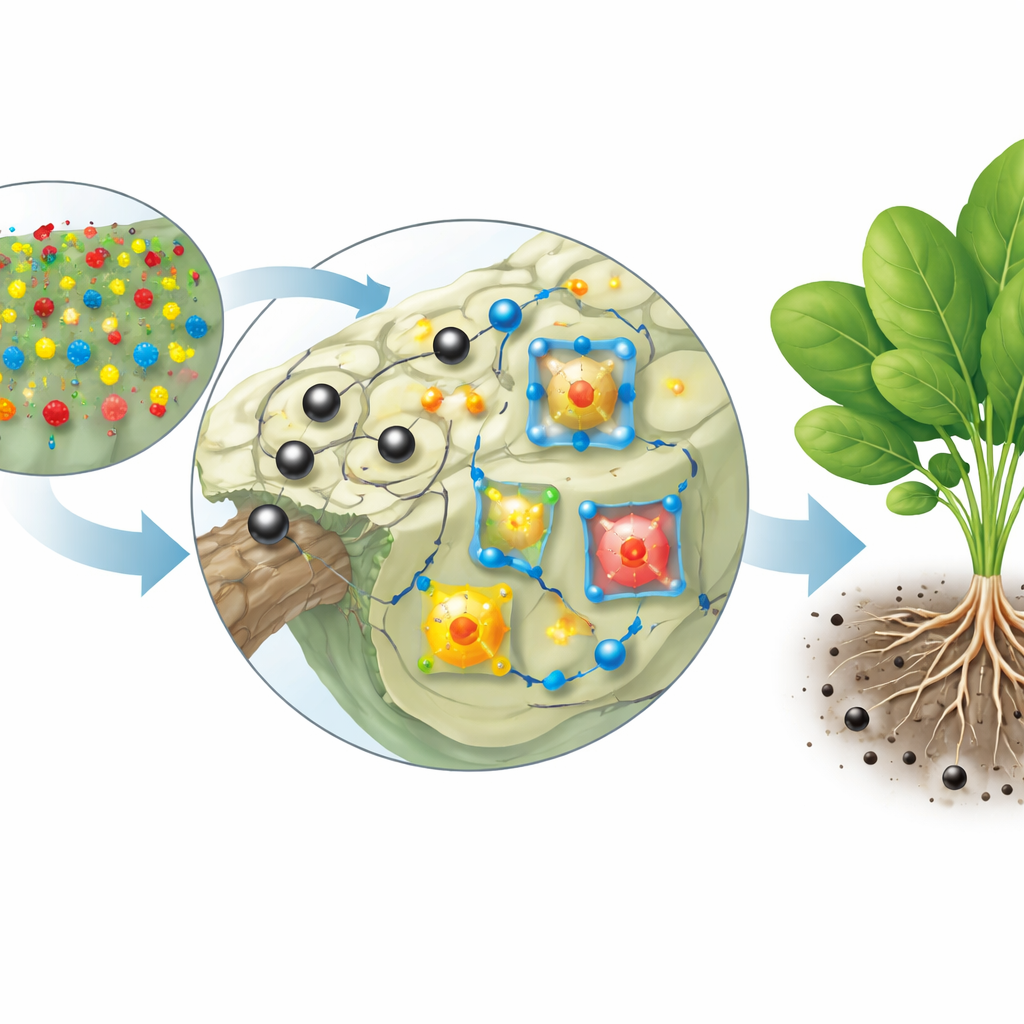
Deep inside the leaves and roots, chromium from the wastewater triggers the formation of reactive molecules that damage membranes, pigments and proteins. The study tracked these injuries by measuring markers of oxidative stress and the leakage of cell contents. Wastewater alone drove these damage indicators sharply upward, while also suppressing the plant’s own antioxidant enzymes—its built-in cleanup crew. Spraying nanoparticles flipped this pattern: levels of harmful molecules dropped, cell membranes became less leaky and key protective enzymes became more active. At the same time, chromium concentrations in both roots and shoots fell, especially with zinc oxide, and the plants regained their ability to absorb beneficial magnesium, iron and zinc from the soil.
What this means for safer food and cleaner farming
In simple terms, the study shows that fine sprays of nutrient-based nanoparticles can help spinach shrug off much of the damage caused by chromium-laden tannery wastewater. By strengthening the plant’s defenses, limiting how much chromium enters its tissues and restoring normal nutrient balance, these treatments allow spinach to grow bigger, greener and more resilient in polluted conditions. While they are not a substitute for cleaning industrial effluent at its source, such foliar sprays could become a practical tool for farmers working with compromised water supplies, helping protect both crop yields and the safety of the food on our plates.
Citation: Zaheer, I.E., Rehman, S.u., Liaquat, M. et al. Alleviation of tannery wastewater toxicity in Spinacia oleracea through application of metal oxide nanoparticles. Sci Rep 16, 9631 (2026). https://doi.org/10.1038/s41598-025-34464-8
Keywords: tannery wastewater, spinach, chromium toxicity, nanoparticles, plant stress tolerance