Clear Sky Science · en
LBPs NPs suppress breast cancer progression by inhibiting YAP1 expression to induce ferroptosis and alter energy metabolism
Berry Compounds Meet Breast Cancer
Many people know goji berries as a “superfood” in teas and snack mixes. This study looks far beyond the grocery shelf, asking whether key sugar chains from these berries can be turned into a precise, tiny medicine against breast cancer. By studying how these natural molecules behave when packaged inside nanoparticles and delivered to breast cells in the lab, the researchers uncover a new way to push cancer cells toward self-destruction while leaving normal cells less likely to turn malignant.
Turning a Growth Switch On and Off
At the heart of the work is a protein called YAP1, which acts like a growth switch inside cells. When YAP1 is overly active, normal breast cells begin to behave more like cancer: they multiply faster, resist dying, rearrange their internal skeleton, and become more able to invade surrounding tissue. The team forced normal breast cells to make extra YAP1 and saw all of these dangerous changes, along with a boost in their energy factories, the mitochondria. When the cells were treated with Lycium barbarum polysaccharides (LBPs), extracted from goji berries, these cancer-like behaviors were sharply reduced and YAP1 levels fell. In other words, the berry sugars could dial this growth switch back down.
Pushing Cancer Cells Toward a Special Kind of Death
The scientists then turned to aggressive breast cancer cells. Here, too, high YAP1 levels went hand-in-hand with rapid growth, strong resistance to cell death, and a powerful ability to invade. LBPs treatment slowed cell division, weakened the cells’ inner scaffolding, and reduced invasion. Importantly, the compounds nudged the cancer cells toward ferroptosis, a form of cell death fueled by iron and damage to fatty components of cell membranes. Markers that normally protect against this kind of death dropped, while signals that favor it rose and iron built up inside the cells. Lowering YAP1 with genetic tools produced similar effects, and combining those tools with LBPs made the impact even stronger, tying the berry compounds’ action closely to this single growth switch.
Building a Smarter Delivery Vehicle
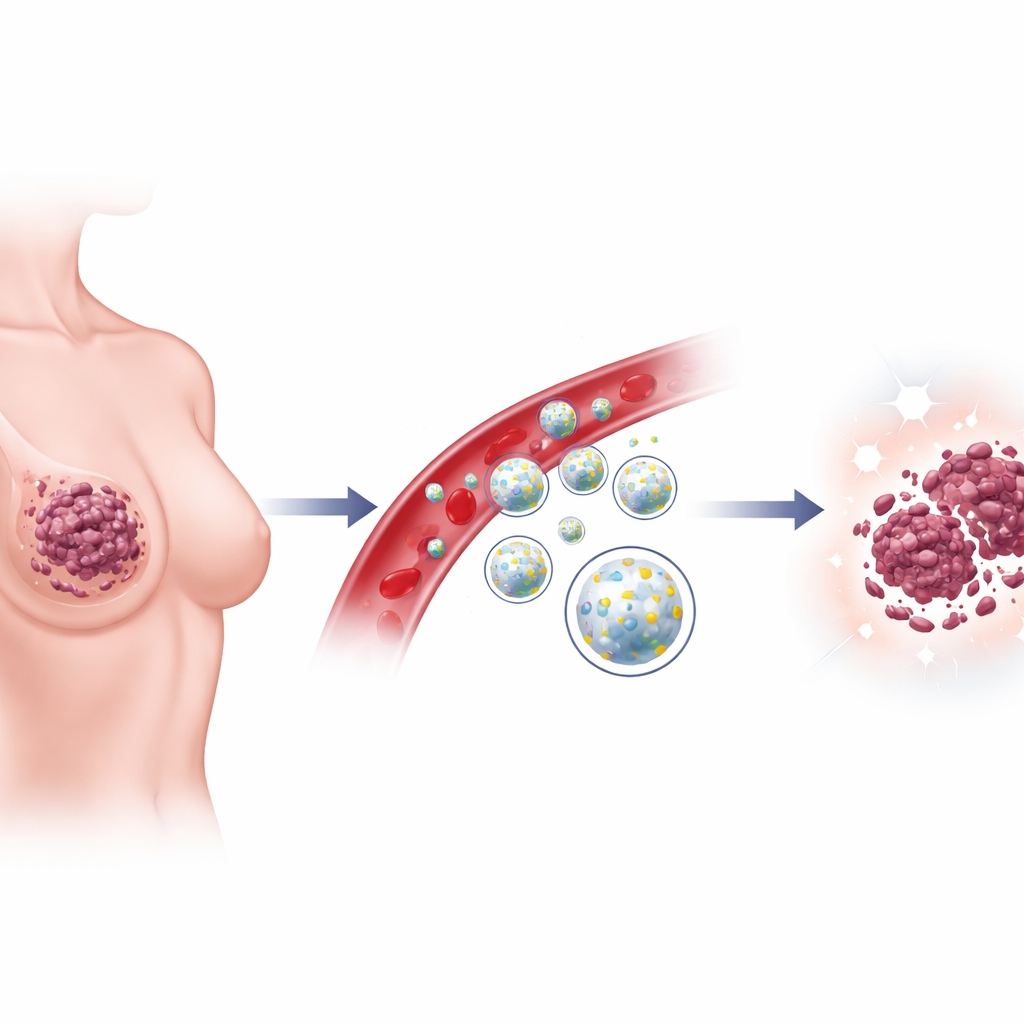
On their own, LBPs are not ideal drugs: they are large, water-loving molecules that break down easily and do not move through the body efficiently. To overcome this, the researchers wrapped them in tiny spheres made of a biodegradable plastic called PLGA, creating LBPs-loaded nanoparticles (LBPs NPs). These particles were uniform in size, stable in liquid, and taken up readily by breast cancer cells, where they accumulated inside the cell body. Compared with free LBPs, the nanoparticle form more strongly slowed cancer cell growth, disrupted their internal skeleton, reduced invasiveness, and increased the share of cells undergoing programmed death. The nanoparticles also did a better job of lowering YAP1 and its partner TAZ, while raising the “off” version of YAP1 that is tagged by phosphorylation.
Draining the Cell’s Power and Stirring Up Iron
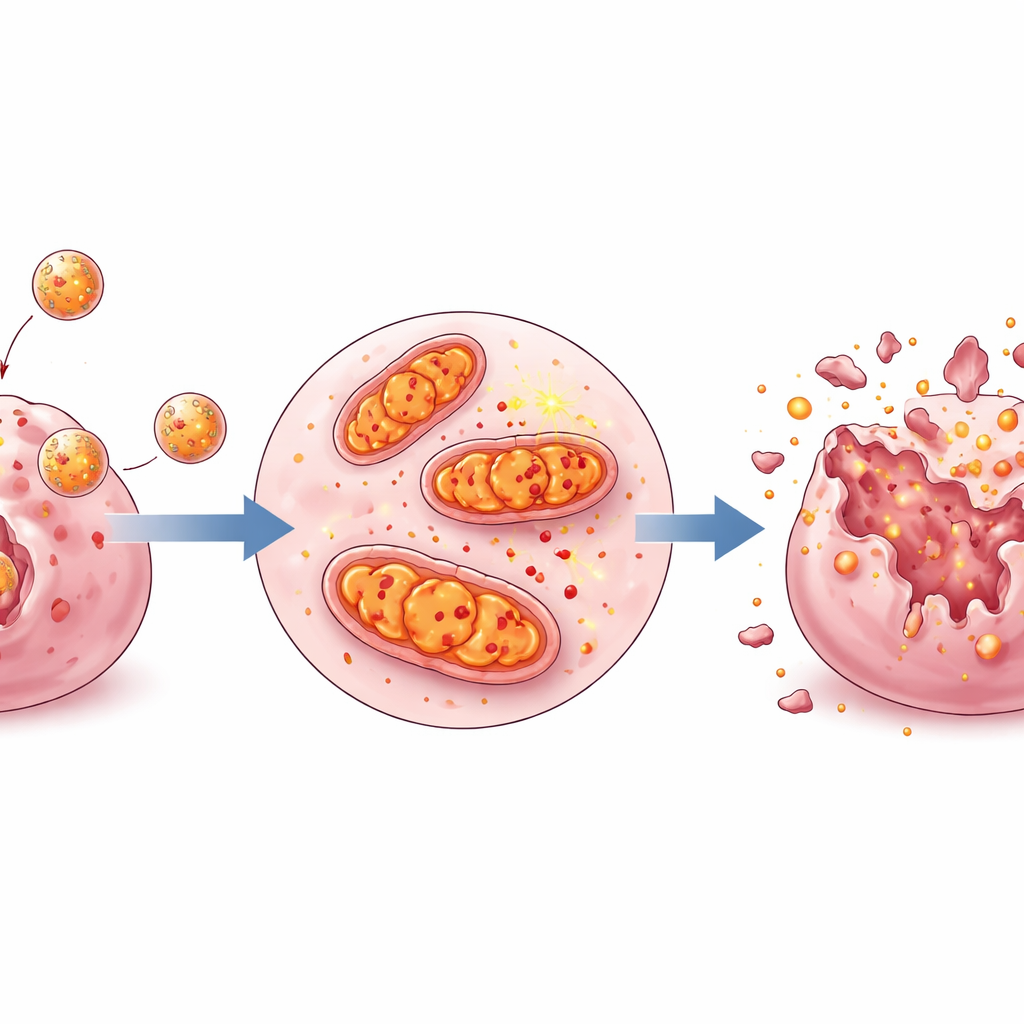
Looking inside the treated cancer cells, the team found that LBPs and especially LBPs NPs weakened mitochondrial function and energy production. The mitochondrial membrane potential, a key measure of how well these power stations work, dropped after treatment, and the cells produced less ATP, the basic energy currency. At the same time, iron-sensitive dyes and staining showed that more iron was building up, priming the cells for ferroptosis. Proteins that normally shield cells from this iron-driven damage decreased, while those that promote it increased. When the researchers added a known ferroptosis blocker, these changes were partially reversed, confirming that the nanoparticles were indeed driving this specific form of cell death.
What This Could Mean for Future Care
In plain terms, the study suggests that carefully engineered goji berry sugars, delivered by nanoparticles, can switch off a key growth driver in breast cells, sap cancer cells of energy, and push them toward a controlled iron-fueled collapse. The work was done in dishes of cells, not in animals or patients, so it is an early, proof-of-concept step rather than a ready-made treatment. Still, it points to a future in which natural compounds are paired with smart delivery systems to selectively disarm cancer’s growth machinery and activate built-in self-destruct programs.
Citation: Zhao, F., Yang, S., He, T. et al. LBPs NPs suppress breast cancer progression by inhibiting YAP1 expression to induce ferroptosis and alter energy metabolism. Sci Rep 16, 9257 (2026). https://doi.org/10.1038/s41598-025-34454-w
Keywords: breast cancer, nanoparticles, goji berry polysaccharides, ferroptosis, Hippo YAP1 pathway