Clear Sky Science · en
Sex and age specific hormonal patterns in healthy Chinese individuals: a cross-sectional study of reproductive hormones
Why our inner chemistry changes with time
As we age, many of us notice shifts in energy, sleep, fertility, and mood, but the invisible hormones that drive these changes are rarely measured with our specific background in mind. This study asked a simple but important question: what do "normal" levels of key reproductive hormones look like in healthy Chinese adults at different ages? By carefully measuring hormone levels in 500 volunteers, the researchers provide age- and sex-specific benchmarks that can help doctors distinguish ordinary aging from true hormonal disease.
Taking a snapshot of healthy adults
To build these benchmarks, the team recruited 250 men and 250 women aged 19 to 70 who were healthy blood donors at a hospital in Yangzhou, China. People with major chronic illnesses, hormonal treatments, heavy smoking or drinking, or extreme exercise habits were excluded to focus on a generally well group. Women were further grouped by life stage: before menopause, around the menopausal transition, and after menopause. Blood samples were collected in the morning after an overnight fast and a period of rest, to avoid short-term swings caused by food or stress.
Measuring hormones with sharper tools
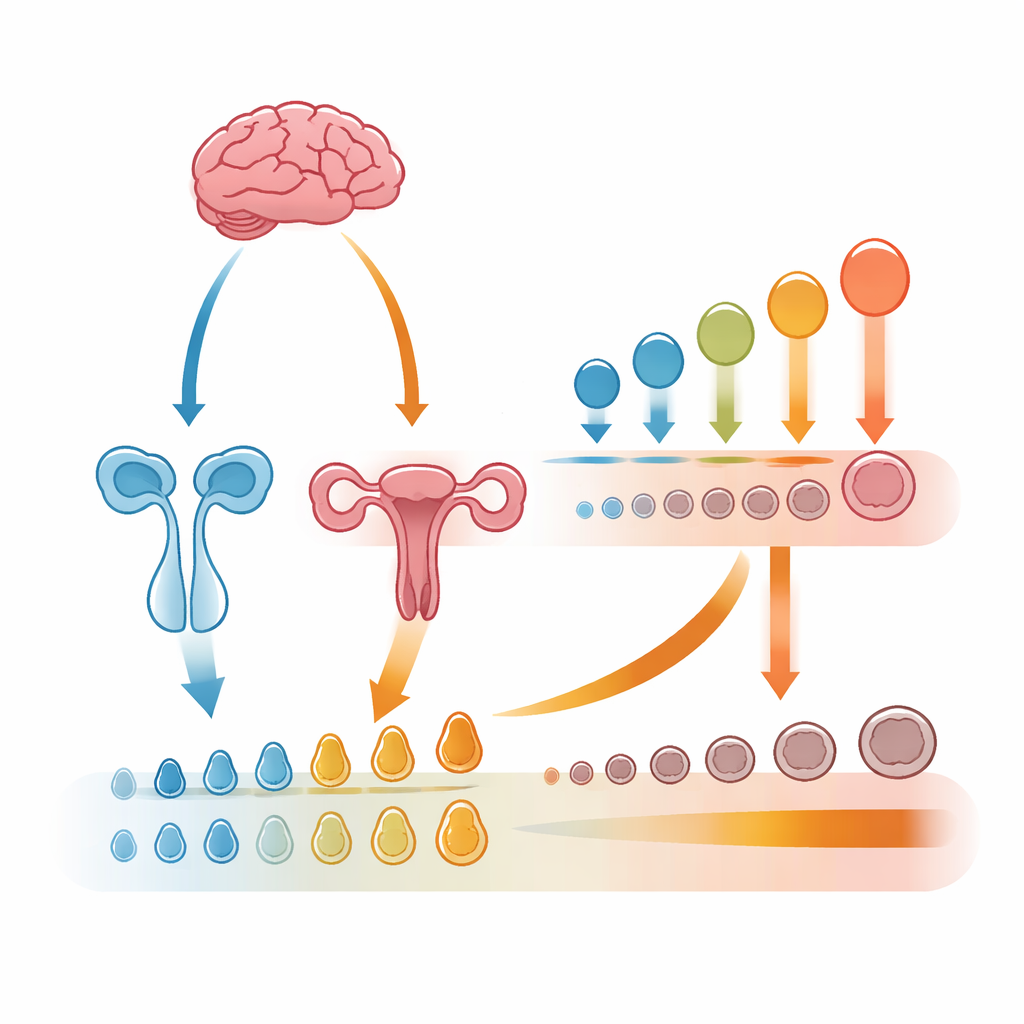
Not all hormone tests are equally accurate, especially at the low levels often seen in women and older adults. The researchers used a technique called liquid chromatography–tandem mass spectrometry to measure steroid hormones such as testosterone, estradiol, and progesterone. This method can separate similar molecules and greatly reduces misleading cross-reactions that sometimes affect common laboratory tests. Three protein hormones—luteinizing hormone (LH), follicle-stimulating hormone (FSH), and prolactin—were measured with a modern light-based immunoassay. Using these precise tools, the team calculated the typical range for each hormone by age and sex.
How men’s hormones shift with age
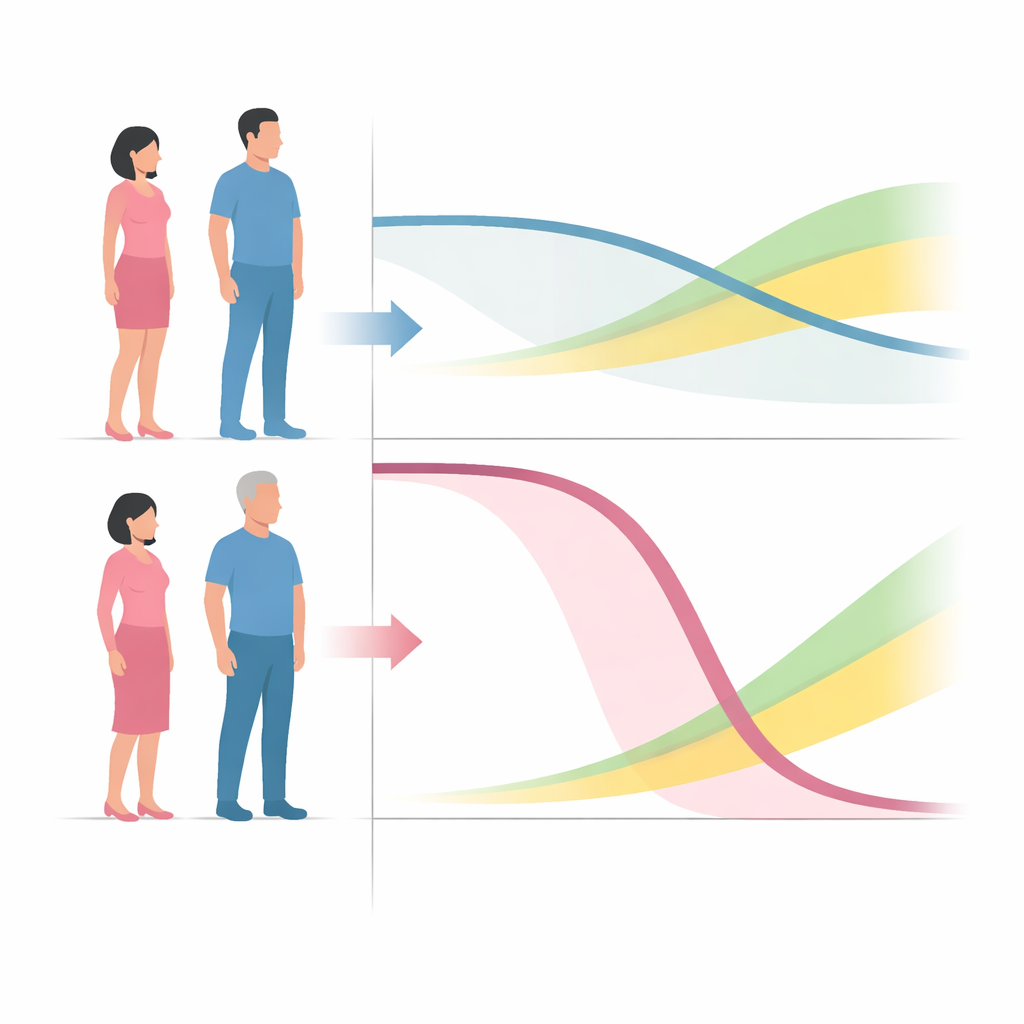
Among men, the classic pattern of hormonal aging emerged clearly. Total testosterone, the main male sex hormone linked to sexual function, muscle, and energy, was highest in men in their twenties and fell steadily into the sixties. Estradiol and progesterone, present at much lower levels in men than in women, also declined, although estradiol dropped more modestly. In contrast, LH and FSH, which are signals from the brain that drive the testes, rose with age—suggesting the body is trying harder to stimulate glands that respond less over time. Prolactin, another hormone made in the brain that can indicate disease when abnormal, stayed remarkably stable across all ages, reinforcing that major changes in this hormone are more likely to signal illness than normal aging.
Women’s hormones across the menopausal divide
For women, the most dramatic shifts clustered around menopause, the natural end of menstrual cycles. Before menopause, estradiol and progesterone were relatively high, reflecting active ovaries. During the transition years, these hormones began to swing and then fell sharply after menopause, reaching only a fraction of their earlier levels. At the same time, LH and FSH surged upward, as the brain increased its signals in response to quieter ovaries. Testosterone levels in women were consistently much lower than in men and gently declined with age. As in men, prolactin stayed nearly constant, again underscoring its role as a marker where major changes generally warrant closer medical attention.
Why these numbers matter for everyday care
By defining what is typical for different ages and for men versus women in a Chinese population, this work gives clinicians a more reliable map for interpreting hormone tests. A testosterone level that is perfectly reasonable for a healthy 65-year-old man could be worrisome in a 30-year-old; similarly, very high LH and FSH readings may be normal for a woman after menopause rather than a sign of disease. The study also highlights a gradual decline in progesterone in men, a pattern whose impact on health is not yet clear and merits further study. Overall, these age- and sex-specific hormone ranges, built with high-precision methods, offer a foundation for more accurate diagnoses and for avoiding unnecessary treatments when test results simply reflect the normal hormonal story of getting older.
Citation: Ahamed, Y., Ashraf, S.B., Dauty, R.T. et al. Sex and age specific hormonal patterns in healthy Chinese individuals: a cross-sectional study of reproductive hormones. Sci Rep 16, 8299 (2026). https://doi.org/10.1038/s41598-025-34399-0
Keywords: hormonal aging, reproductive hormones, menopause, testosterone levels, Chinese population