Clear Sky Science · en
Dosimetric comparison of DIBH and FB for left-sided breast cancer radiation therapy
Why Holding Your Breath Matters in Cancer Care
For many women with cancer in the left breast, radiation therapy is a key part of treatment after surgery. But because the heart and lungs sit just behind the left breast, they can unintentionally receive radiation too, raising the risk of later heart or lung problems. This study asks a simple, patient-centered question: if women briefly hold a deep breath during treatment instead of breathing normally, can we better protect their hearts and lungs without weakening the cancer treatment itself?
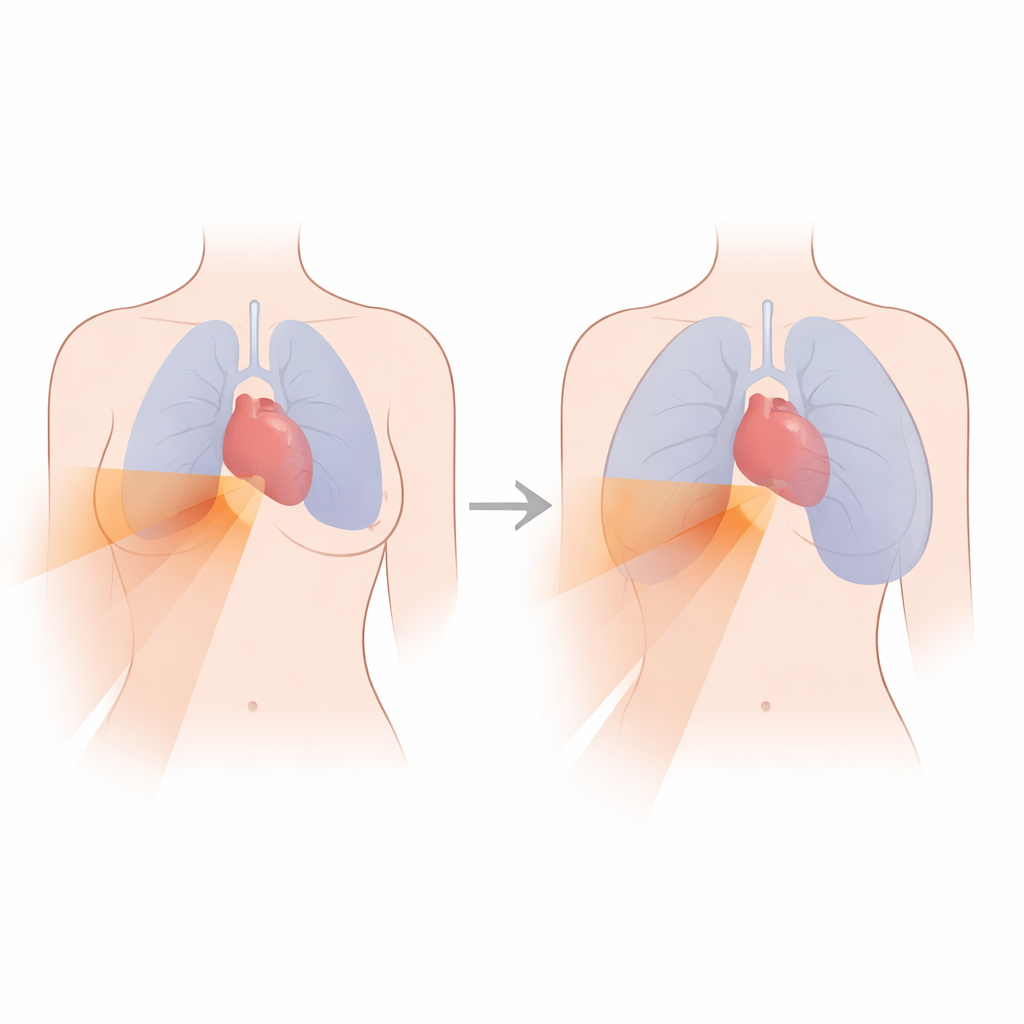
Two Ways to Breathe During Treatment
The researchers focused on two common ways of delivering radiation. In the usual approach, patients breathe freely while the machine delivers the dose. In the alternative method, called deep inspiration breath-hold, patients take a deep breath and hold it for about half a minute during each short burst of radiation. That deep breath expands the lungs and gently pulls the heart farther away from the chest wall and the treatment area. In this study, 94 women with cancer in the left breast were scanned and had treatment plans designed in both breathing modes so the two methods could be compared fairly for the very same person.
Checking If the Tumor Area Still Gets Enough Radiation
A major concern with any protective strategy is that it might accidentally shortchange the area where the tumor was removed. To address this, the team examined how evenly and how precisely the radiation covered the target region in each breathing style. They found that deep-breath holding made the high-dose region fit the intended target slightly better, meaning the radiation was more tightly shaped around the area of concern. At the same time, a few measures of how much of that region received the full planned dose were very slightly lower with breath-holding. However, the actual differences in dose were tiny, and overall the target still received what is considered an acceptable and effective amount of radiation.
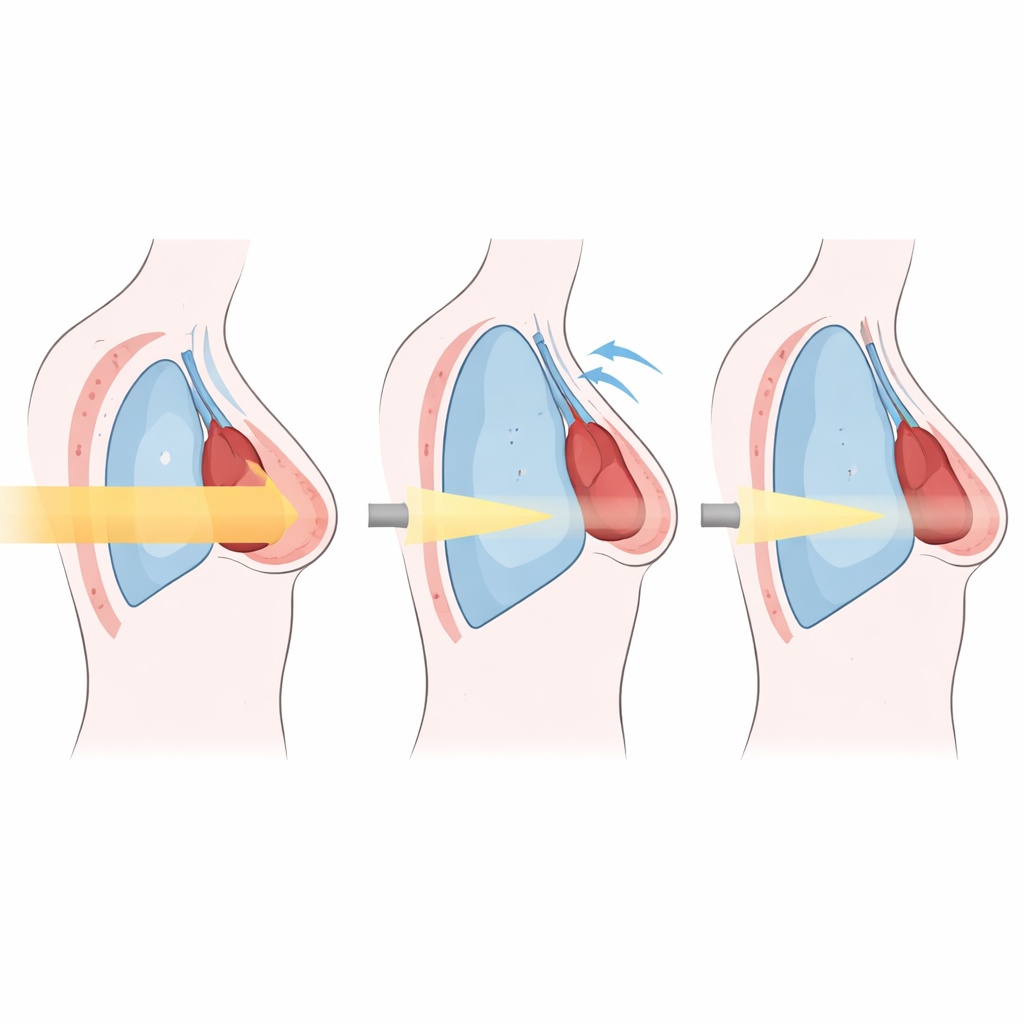
Big Gains for the Heart and Lungs
The clearest advantage of deep-breath holding showed up in the heart and lungs. On average, the heart received a meaningfully lower dose when women held a deep breath compared with breathing normally. The typical heart dose dropped by about 2.6 units on the scale used by radiation doctors, which earlier research links to roughly a one-fifth reduction in the risk of radiation-related heart problems years later. The highest doses to the heart were also sharply reduced. Both lungs, especially the left one closest to the breast, saw lower average and maximum doses as well. The esophagus and spinal cord, which lie nearby, were also better protected, though they already receive much less radiation than the heart and lungs.
Who Benefits Most From Breath-Holding?
Not every patient’s chest expands in exactly the same way when they take a deep breath, so the authors also asked whether anatomy matters. They found that women whose left lung volume increased more during deep-breath holding tended to see greater drops in heart and lung radiation. By analyzing these patterns, the team identified a threshold of lung expansion that predicted a particularly meaningful reduction in heart dose. While the relationship was not strong enough to be the only deciding factor, it suggests that measuring how much a patient’s lung can expand might help doctors choose who will benefit most from this technique.
What This Means for Patients
In plain terms, this study shows that asking women with cancer in the left breast to briefly hold a deep breath during radiation sessions can substantially shield the heart and lungs while still delivering reliable treatment to the breast area. The trade-off in target coverage is minimal, whereas the potential long-term protection for vital organs is considerable. As deep-breath holding becomes easier to teach and monitor in clinics, the authors argue that it should be used whenever suitable, particularly in patients who can comfortably expand their lungs and hold their breath for short periods. For many women, this simple act of controlled breathing could translate into better heart and lung health long after their cancer care is complete.
Citation: Wang, Y., Liu, C., Ge, R. et al. Dosimetric comparison of DIBH and FB for left-sided breast cancer radiation therapy. Sci Rep 16, 9625 (2026). https://doi.org/10.1038/s41598-025-34265-z
Keywords: breast cancer radiotherapy, deep inspiration breath-hold, heart dose reduction, lung protection, left-sided breast cancer