Clear Sky Science · en
Administration of N-acetylcysteine influence the expression of apoptotic genes in the granulosa cells of infertile women diagnosed with endometriosis
Why this research matters to women’s health
Endometriosis is a painful condition in which tissue similar to the uterine lining grows where it does not belong, and it is a major cause of infertility. Many women living with it hear that their eggs or ovaries are “poor quality,” but the biological reasons often remain vague. This study explores whether a common antioxidant supplement, N‑acetylcysteine (NAC), can help protect the cells that nurture developing eggs in women with endometriosis, potentially improving their chances of pregnancy.
Hidden damage from cellular “rust”
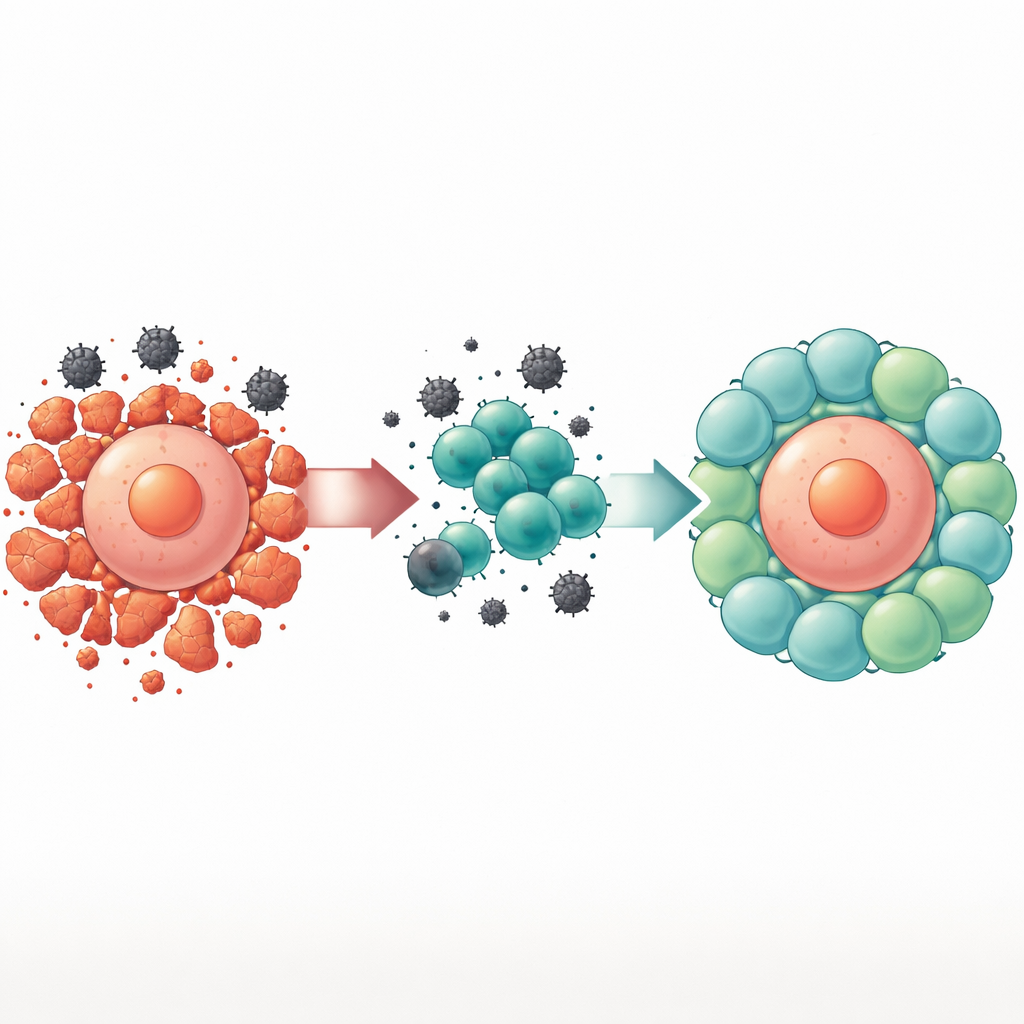
Scientists increasingly suspect that oxidative stress—essentially, an overload of harmful oxygen-based molecules that act like biological rust—plays a key role in endometriosis. These reactive molecules can damage many tissues, including the granulosa cells that surround and feed each egg in the ovary. When oxidative stress is high, these helper cells are more likely to undergo programmed cell death, a self-destruct process known as apoptosis. If too many granulosa cells die, the egg they support may fail to mature properly, lowering fertilization chances and embryo quality.
A closer look at an antioxidant helper
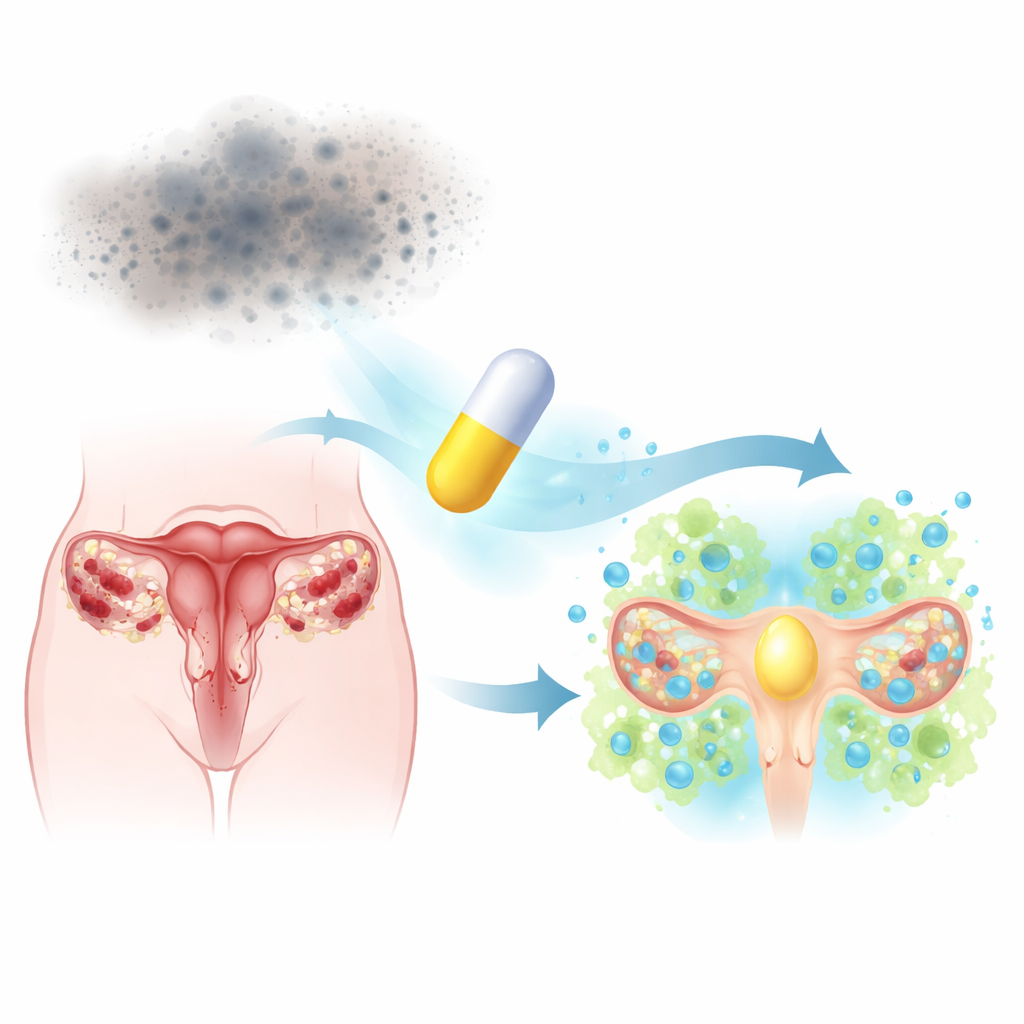
N‑acetylcysteine is an inexpensive medication long used for other conditions, and it also acts as a strong antioxidant by directly neutralizing reactive molecules and boosting the body’s own defenses. To see whether NAC could shield ovarian cells in women with endometriosis-related infertility, the researchers carried out a randomized, double-blind, placebo-controlled clinical trial. Infertile women diagnosed with moderate to severe endometriosis received either NAC tablets (1200 milligrams per day) or identical-looking placebo tablets for six weeks during their fertility treatment cycle. Blood samples and ovarian follicle samples were collected before and after this period, allowing the team to test both overall antioxidant capacity in the blood and gene activity inside granulosa cells.
What changed inside blood and ovarian cells
In the bloodstream, women who took NAC showed a clear rise in total antioxidant capacity, a summary measure of how well the blood can counteract oxidative stress. Levels of a key antioxidant enzyme, superoxide dismutase, also tended to increase, although this particular change was not statistically strong. Inside granulosa cells, the researchers measured the activity of genes that either promote or prevent cell suicide. After NAC treatment, the anti-death gene Bcl‑2 was more active, while two pro-death genes, Bax and Caspase‑3, were less active than in the placebo group, suggesting a shift toward cell survival, even though the small number of participants meant these differences did not reach conventional statistical significance.
Egg and embryo quality in the fertility clinic
The team also examined what these molecular shifts might mean in practical fertility terms. The total number of eggs collected during assisted reproduction cycles was similar in both groups, but fewer eggs in the NAC group appeared clearly abnormal or failing. Embryos created from these eggs were graded using a standard scoring system, and those from NAC-treated women tended to receive slightly better quality ratings. A few pregnancies and one live birth occurred in the NAC group during the ongoing trial. None of these outcome differences were large enough to be conclusive, but together they pointed in a hopeful direction.
What this could mean for future treatment
Overall, the study suggests that NAC may make the environment around developing eggs less hostile in women with endometriosis by boosting antioxidant defenses and tilting key cell-death switches toward survival. This could help preserve the granulosa cells that nourish eggs, potentially improving egg and embryo quality and, eventually, pregnancy chances. Because the study included relatively few participants and many results fell short of strict statistical thresholds, NAC cannot yet be recommended as a stand-alone solution. However, these early findings are promising enough that larger trials are warranted to test whether a simple, widely available supplement can become a useful add-on in fertility treatment for women with endometriosis.
Citation: Heshmati, Z.S., Amiri-Yekta, A., Khosravifar, M. et al. Administration of N-acetylcysteine influence the expression of apoptotic genes in the granulosa cells of infertile women diagnosed with endometriosis. Sci Rep 16, 7961 (2026). https://doi.org/10.1038/s41598-025-34202-0
Keywords: endometriosis, infertility, antioxidants, granulosa cells, N-acetylcysteine