Clear Sky Science · en
Inhibition mechanisms of gas desorption and pressure inversion in water-bearing coal under stepwise decompression via volume expansion
Why trapped gas in wet coal matters
Deep underground, coal seams often contain not just solid carbon but also natural gas and water. That gas can fuel power plants—or trigger deadly explosions if it suddenly rushes into mine tunnels. Measuring the true gas pressure inside coal is therefore central to both energy production and mine safety. Yet when coal is damp, the water changes how gas is stored and released, confusing traditional measurement methods. This study explores, from the pore scale up to full lab devices, how moisture in coal slows down gas escape and how that effect can actually be turned into a tool for more accurate pressure estimates.
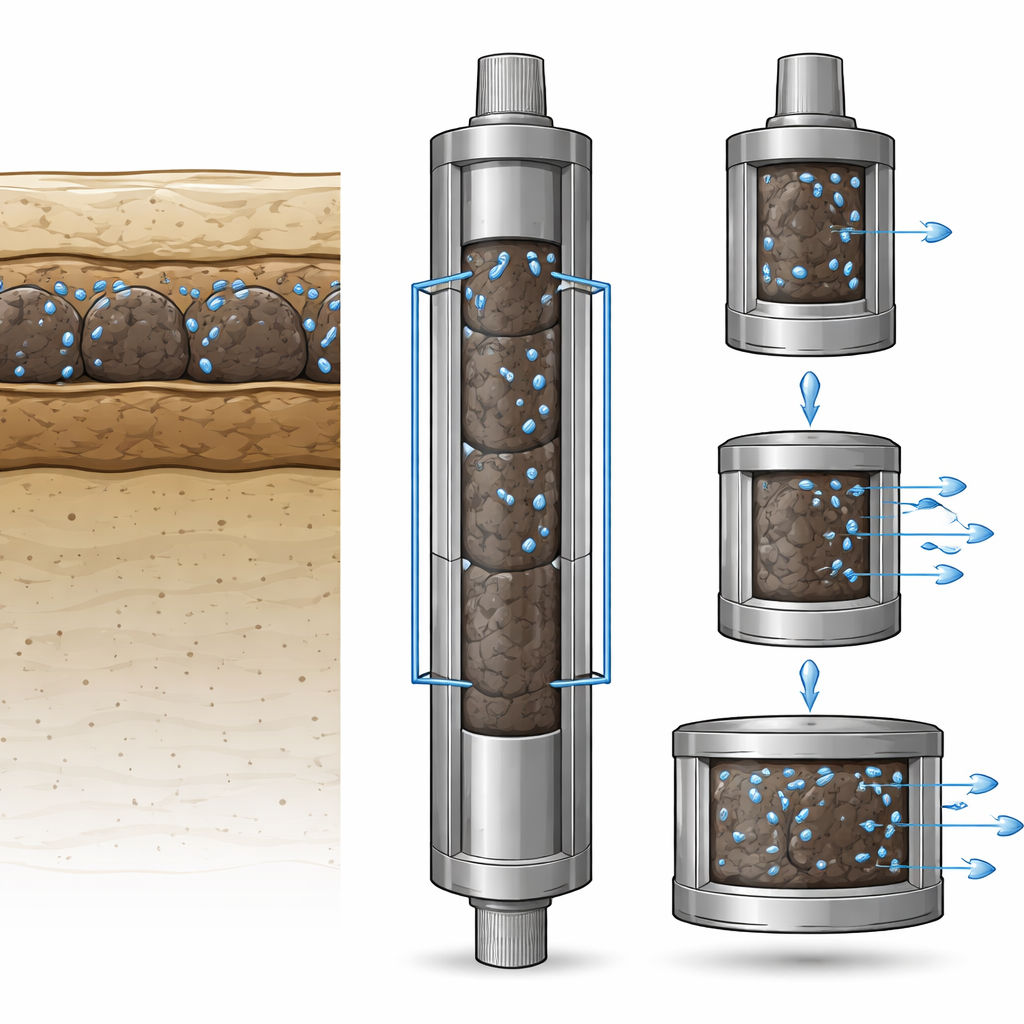
Hidden maze inside a lump of coal
Coal is far from solid on the inside. Using microscopes and a suite of pore‑mapping tools, the authors show that the coal in this study is built like a three‑level maze. Large cracks and fractures form the main highways, medium‑sized cavities hold most of the gas, and extremely narrow necks—called \
Citation: Cheng, X., Wang, Z., Song, J. et al. Inhibition mechanisms of gas desorption and pressure inversion in water-bearing coal under stepwise decompression via volume expansion. Sci Rep 16, 9636 (2026). https://doi.org/10.1038/s41598-025-34121-0
Keywords: coal seam gas, mine safety, gas desorption, pore structure, moisture effects