Clear Sky Science · en
“One Health” perspective on the prevalence of Listeria monocytogenes and its antibiotic resistance profiles in South Africa: a comprehensive systematic review and meta-analysis
Why a Foodborne Germ Matters to Everyone
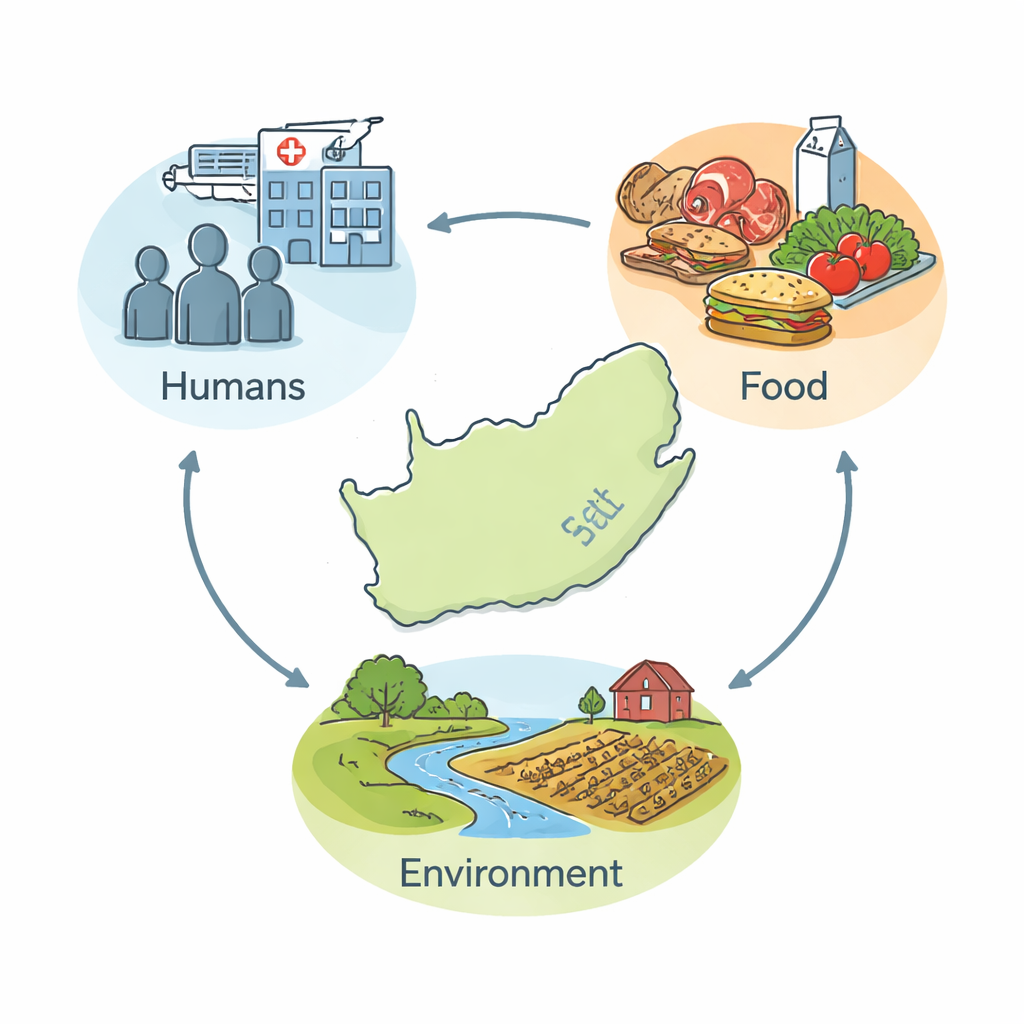
Listeria monocytogenes is a microscopic germ that can turn everyday foods into a serious health threat, especially for pregnant women, older adults, and people with weak immune systems. South Africa experienced the world’s largest recorded listeriosis outbreak in 2017–2018, raising urgent questions: where is this germ hiding, how common is it, and are our antibiotics still effective against it? This study pulls together more than three decades of South African research to answer those questions from a “One Health” angle, looking at people, food, and the environment as one connected system.
Looking Across People, Food, and the Environment
The authors systematically searched major scientific databases for studies published between 1990 and early 2024 that reported Listeria monocytogenes in South Africa. After screening thousands of papers, they combined data from 32 rigorous studies, covering 2,931 confirmed Listeria monocytogenes isolates. These came from human patients, a wide range of foods, and environmental sources such as river and irrigation water and soil. Using statistical methods designed for combining results from many different studies, they calculated pooled prevalence estimates—essentially, an average rate of how often the bacterium was found in each type of sample.
Where the Germ Shows Up Most Often
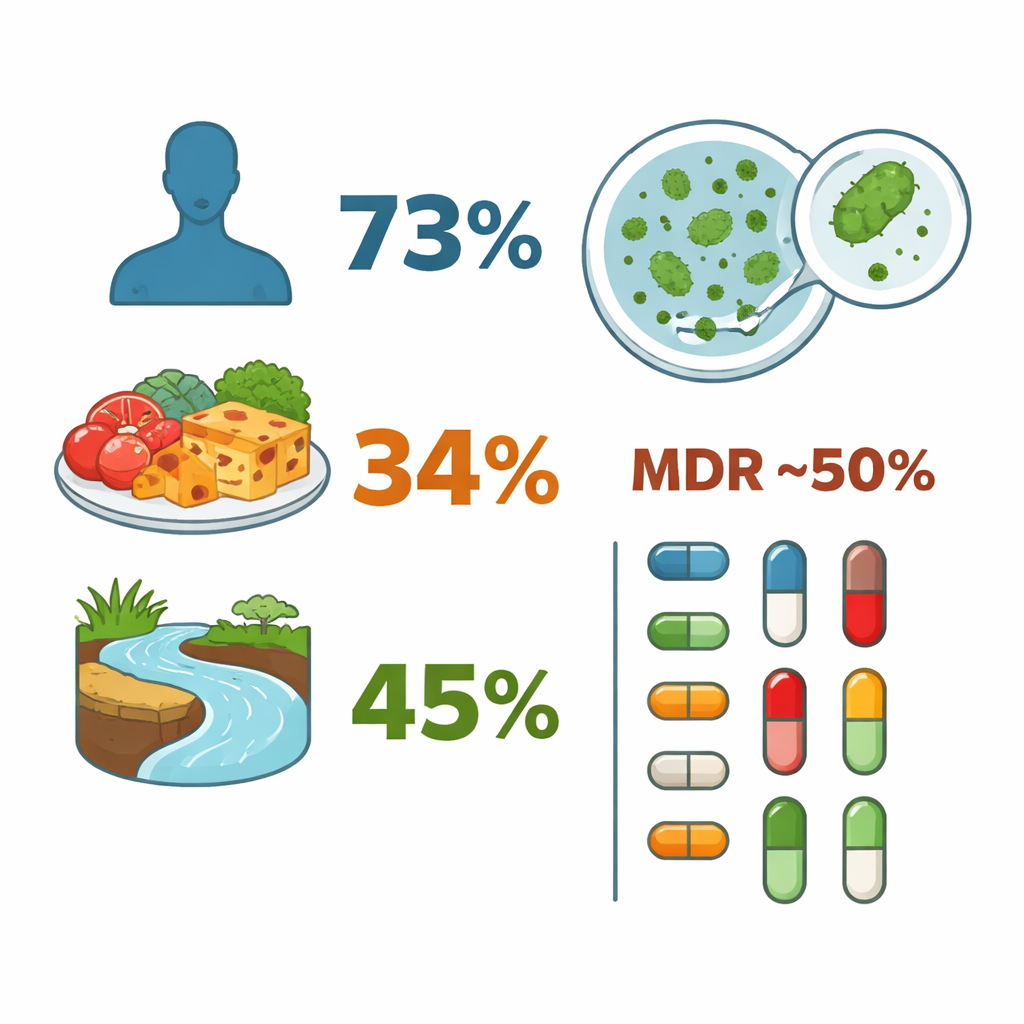
The analysis revealed alarmingly high levels of Listeria monocytogenes, particularly in clinical cases. Among human samples, the pooled prevalence was about 73%, and the germ was commonly found in blood, a sign of severe, body-wide infection. Food samples, including ready-to-eat meats, salads, dairy products, and fresh produce, showed a pooled prevalence of roughly one in three (33.5%), far higher than reported from many countries in Asia and Europe. Environmental samples such as water and soil had a pooled prevalence of 44.5%, indicating that the germ is established in natural and farming settings. Certain regions, like the Eastern Cape for food and Gauteng for human cases, stood out with especially high detection rates, reflecting both local risk and where research has been concentrated.
Hidden Weapons: Virulence and Drug Resistance
Beyond simply asking “Is Listeria there?”, the study looked at the genetic tools this bacterium carries to invade the body and withstand treatment. Many isolates contained virulence genes—molecular “keys” that help the germ attach to human cells, cross the gut wall, and spread to the brain or unborn baby. Two of these, known as inlJ and inlB, were found in over four out of five isolates tested, suggesting that many strains circulating in South Africa are well equipped to cause serious disease. At the same time, the researchers found worrying levels of resistance to several commonly used antibiotics, including drugs that are mainstays of listeriosis treatment. About half of the tested isolates qualified as multidrug resistant, meaning they could withstand more than two different antibiotics. Resistance genes tied to sulfonamides and tetracyclines—drug families widely used in both human medicine and livestock—were particularly common.
A Connected Problem Demanding a Connected Response
Because Listeria monocytogenes turns up in people, foods, and the environment, the authors frame it as a classic “One Health” problem: what happens on the farm or in a river can eventually affect what shows up on a hospital ward. The high prevalence in food suggests steady exposure through everyday meals. The presence of robust virulence and resistance genes means that when infections occur, they may be severe and harder to treat. The study concludes that South Africa needs coordinated action across human health care, veterinary services, agriculture, food processing, and environmental management. Better surveillance, stricter hygiene standards, and more prudent antibiotic use—especially in livestock—are all part of reducing the risk that this hardy germ continues to circulate and evolve. Put simply, keeping Listeria in check will require protecting our plates, our patients, and our planet at the same time.
Citation: Ramatla, T., Khasapane, G., Achilonu, C.C. et al. “One Health” perspective on the prevalence of Listeria monocytogenes and its antibiotic resistance profiles in South Africa: a comprehensive systematic review and meta-analysis. Sci Rep 16, 7680 (2026). https://doi.org/10.1038/s41598-025-34005-3
Keywords: listeriosis, foodborne infection, antibiotic resistance, One Health, South Africa