Clear Sky Science · en
A Robust Lemuria Framework for efficient crop prediction
Why smarter harvest forecasts matter
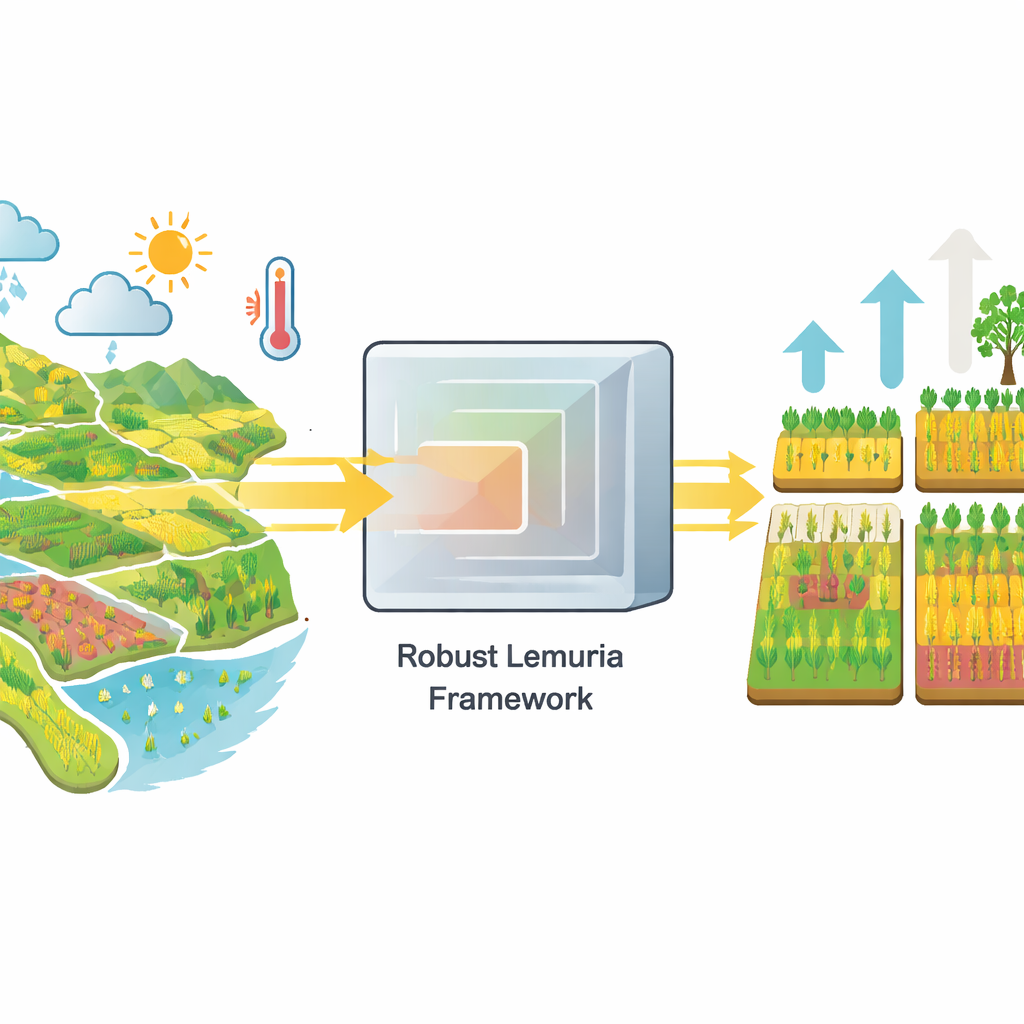
Feeding a growing population in a warming world means farmers and governments must know, well before harvest, how much food the land is likely to produce. In India, where millions of livelihoods depend on farming and the weather is increasingly unpredictable, guessing from past experience is no longer enough. This study presents a new data-driven system, the Robust Lemuria Framework, designed to turn vast records of weather, soil and crop performance into highly accurate predictions of future harvests, giving farmers, traders and policymakers a clearer view of what lies ahead.
From messy farm records to useful signals
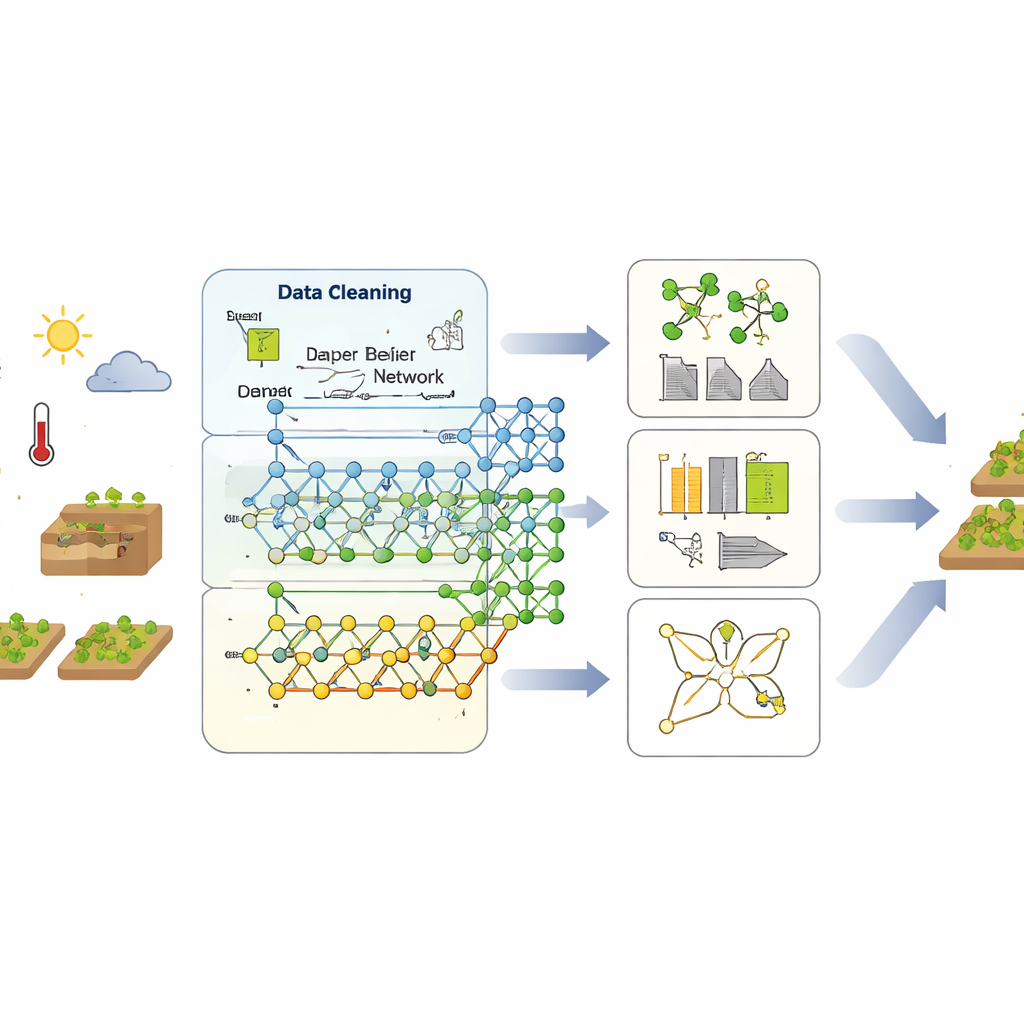
Modern agriculture generates a flood of information: rainfall logs, temperature records, soil measurements, crop areas and yields from many states and seasons. However, these records are often incomplete, noisy or inconsistent, which can easily mislead prediction tools. The Robust Lemuria Framework tackles this by cleaning and organizing a decade of Indian agricultural data, covering 2010–2020 and multiple climate zones, crops and seasons. It carefully reconstructs missing entries, removes obvious outliers and puts different measurements on comparable scales so that the computer sees a coherent picture instead of a jumble of numbers.
A layered digital analyst for the farm
At the heart of the framework is a type of deep learning model that works like a many-layered filter. Rather than treating each raw input separately, it learns combinations of weather and soil conditions that tend to move together and matter for harvests. This layered network steadily transforms the original data into a compact set of patterns that capture key relationships—such as how certain rainfall and temperature ranges interact with particular soils and crop types. By stripping away noise and redundancy, the system makes it easier for later stages to focus on the most informative signals.
Many decision-makers working as a team
Once the data have been distilled into these meaningful patterns, the framework passes them to a team of simpler models that each make their own judgment about expected yields. One model builds many decision trees and averages their outcomes, another relies on fast probability rules, and a third produces clear if–then style rules. Each of these has different strengths: some are better at avoiding overconfident mistakes, others handle scarce or noisy data gracefully, and others are easier to interpret. By pooling their opinions, the Robust Lemuria Framework reaches a stable consensus that is more reliable than any individual model working alone.
How well does it see the future?
The researchers tested their system on roughly 12,000 records spanning crops such as rice, wheat, maize, sugarcane and coconut, across India’s varied regions and both main growing seasons. They compared its performance with a wide range of existing prediction methods, from classic techniques like support vector machines and k-nearest neighbours to more recent hybrids. The new framework consistently came out ahead: it correctly classified almost all cases, matched actual yields within a few percent on average, and explained more than 99% of the variation in real harvest outcomes. It also produced steady results across different crops, seasons and states, suggesting that it can cope with India’s shifting monsoon patterns and diverse farming practices.
What this means for farmers and planners
In everyday terms, the Robust Lemuria Framework offers a highly accurate early warning system for crop performance. With timely forecasts, farmers can choose more suitable crops, adjust planting dates, and fine-tune their use of water, fertilizer and other inputs, reducing waste and the risk of painful losses. Governments and agencies can use the same information to plan storage, transport, imports, subsidies and insurance more rationally, easing price swings and improving food security. Although the study focuses on Indian data, the authors argue that the same approach could be retrained for other countries wherever reliable weather, soil and crop records exist, making it a flexible tool for building a more resilient global food system.
Citation: Tamilselvi, M., Vishnupriya, S., Ushanandhini, K. et al. A Robust Lemuria Framework for efficient crop prediction. Sci Rep 16, 9615 (2026). https://doi.org/10.1038/s41598-025-33811-z
Keywords: crop yield prediction, precision agriculture, deep learning, ensemble models, Indian agriculture