Clear Sky Science · en
Comparative gut microbiome analysis of Rohu fish from Halda River and Kaptai Lake using 16S rRNA sequencing
Hidden Partners Inside a Popular Fish
Rohu, a carp that helps feed millions of people in Bangladesh and South Asia, carries an invisible community of microbes in its gut that quietly shapes its health and growth. This study asks a simple but powerful question: how do those tiny partners differ when the same fish grows in a wild breeding river versus a large man‑made lake? The answer matters not only for understanding nature, but also for designing cleaner, more sustainable fish farming that relies less on drugs and more on helpful microbes.
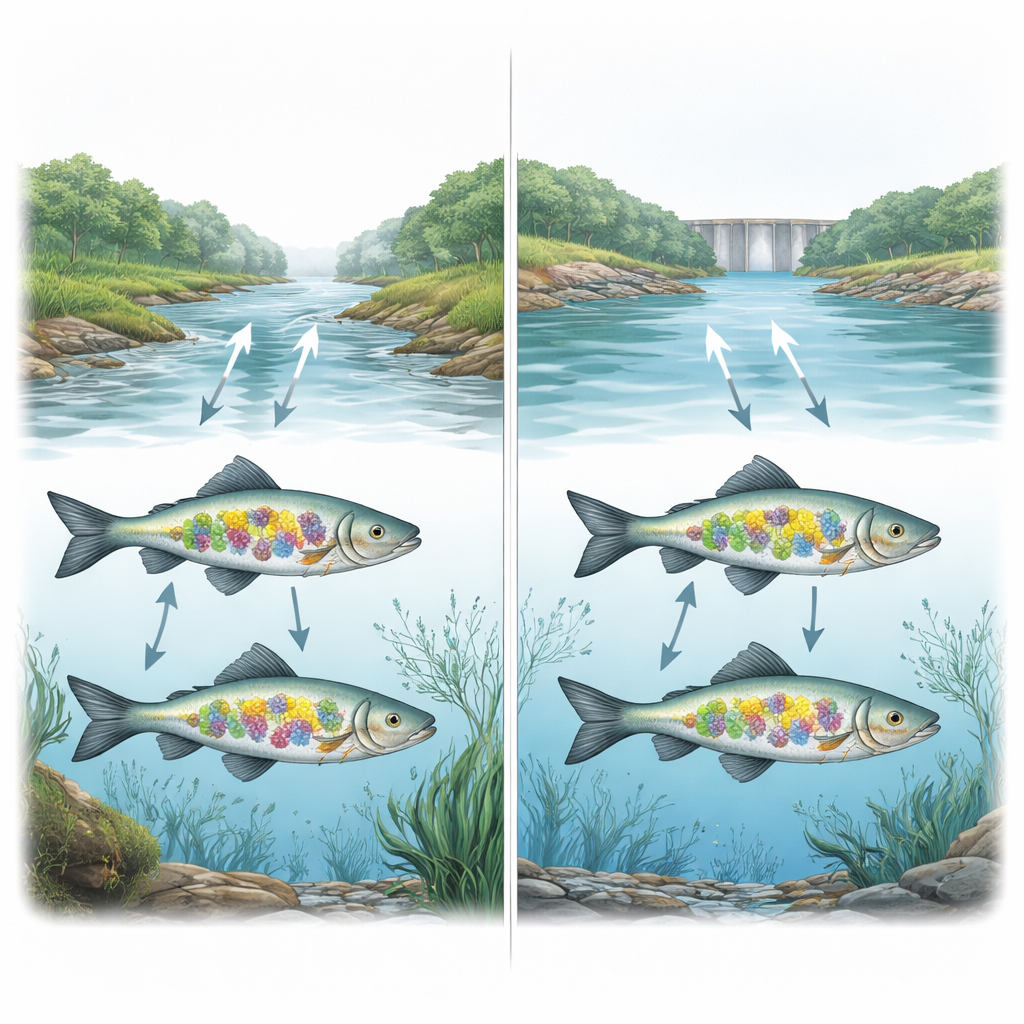
Two Waters, Two Ways of Living
The researchers focused on Rohu living in two very different freshwater bodies in Bangladesh. The Halda River is the country’s only natural spawning ground for major carps, a flowing system rich in nutrients but increasingly stressed by human activity. Kaptai Lake, by contrast, is a vast reservoir created by damming a river; it supports many fish, but carps there depend on hatcheries and stocking rather than natural breeding. These contrasting environments—fast, variable river versus calmer, managed lake—provide a natural experiment for seeing how surroundings shape the microscopic life inside fish.
Reading Microbial Fingerprints
To explore these hidden worlds, the team collected eight Rohu and matching water samples from each site. They extracted DNA and used long‑read 16S rRNA sequencing, a technique that acts like a barcode scanner for bacteria, to identify which species were present. With statistical tools, they compared both the richness of microbes within each sample and how distinct the communities were between river and lake, and between fish guts and surrounding water. The patterns were striking: all four groups—Halda fish, Halda water, Kaptai fish, and Kaptai water—had clearly different microbial “fingerprints,” showing that the gut communities are not just copies of whatever floats in the water.
Diverse River Guts and Probiotic Lake Guts
Rohu from the Halda River carried a richly mixed gut microbiome, with many different types of bacteria, including groups linked to breaking down complex organic matter and cycling key nutrients like nitrogen and sulfur. Their guts hosted environmentally hardy species that cope well with changing and sometimes polluted conditions. In contrast, Rohu from Kaptai Lake had gut communities heavily dominated by lactic acid bacteria—microbes often used as probiotics in food and aquaculture. These bacteria are known for helping digestion, shaping the immune system, and crowding out disease‑causing germs. In short, Halda fish carried a broad ecological toolkit, while Kaptai fish carried a concentrated dose of classic “good bacteria.”
What the Water Reveals About Human Impact
The water itself told another part of the story. Halda River water was rich in bacteria that tolerate environmental stress, hinting at fluctuating conditions and possible contamination. Kaptai Lake water, meanwhile, was dominated by Acinetobacter and related taxa commonly associated with wastewater and human‑driven pollution, and by microbes known for degrading industrial chemicals. Yet the microbes living in each fish’s gut were clearly distinct from those in the surrounding water, confirming that the gut communities are shaped by the host and its diet rather than being simple passengers from the environment.
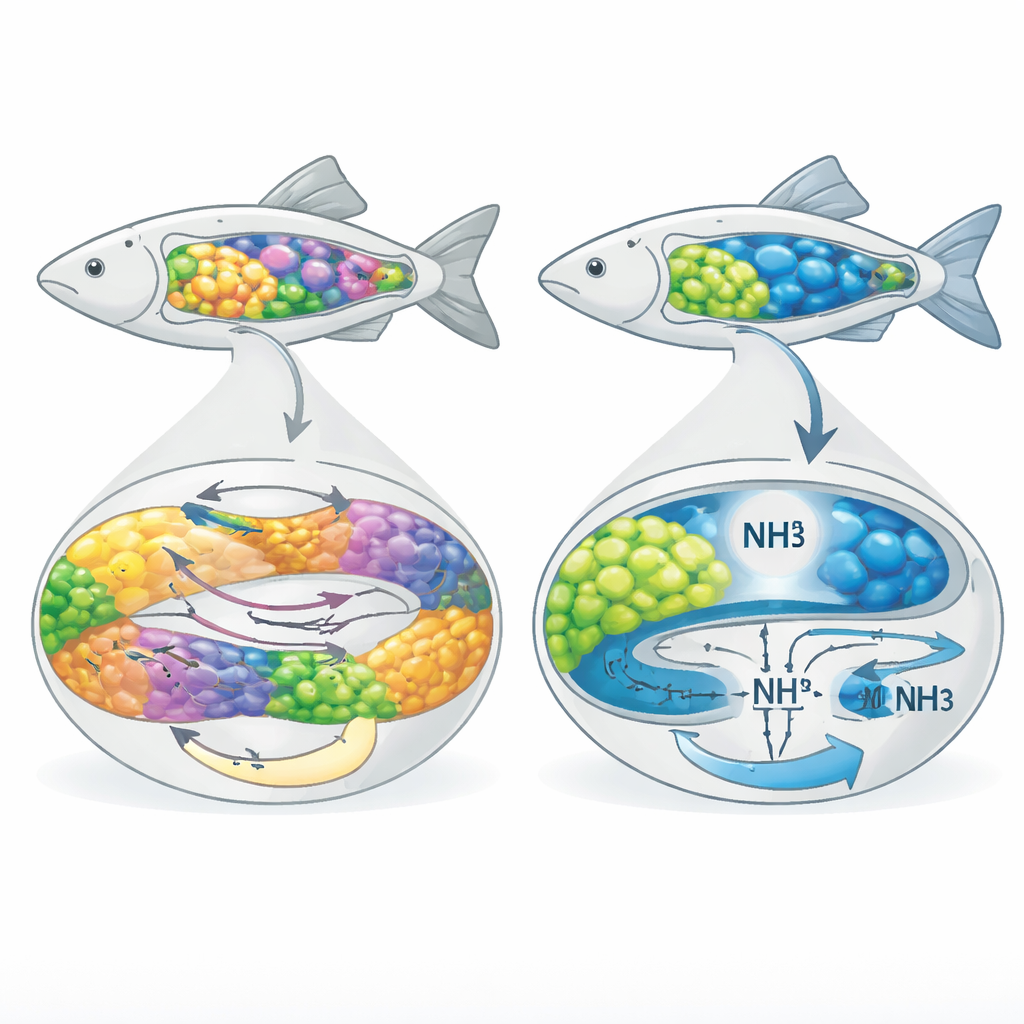
Microbial Services: From Waste Removal to Protection
By linking bacterial groups to their known jobs, the authors sketched out what these communities might be doing. Halda River Rohu hosted microbes involved in a wide spread of tasks: detoxifying chemical pollutants, transforming nitrogen and sulfur compounds, and possibly producing natural antibiotic‑like molecules. This broad set of functions could help fish cope with a river that changes quickly and carries a mix of natural and human‑made substances. Kaptai Lake Rohu, on the other hand, showed especially strong capacity for removing ammonia—a waste product that can build up in farmed systems—as well as breaking down pollutants, but with less variety in other processes.
What This Means for Fish and Farmers
For non‑specialists, the takeaway is that the same fish species can host very different inner ecosystems depending on where it lives. River Rohu seem to partner with a wide array of bacteria that help them ride out environmental ups and downs, while lake Rohu rely more heavily on classic probiotic allies that boost digestion and defense. These insights suggest that future aquaculture could be guided not only by feed and water quality, but also by deliberately shaping gut microbes—borrowing the resilience of river microbiomes or the probiotic richness of lake microbiomes. In doing so, fish farmers might grow healthier fish, reduce pollution, and cut back on antibiotics, using the power of microbes already tuned by nature to Bangladesh’s diverse waters.
Citation: Uddin, M.S., Chamonara, K., Nayem, M.R. et al. Comparative gut microbiome analysis of Rohu fish from Halda River and Kaptai Lake using 16S rRNA sequencing. Sci Rep 16, 8811 (2026). https://doi.org/10.1038/s41598-025-33754-5
Keywords: fish gut microbiome, Rohu carp, freshwater ecosystems, probiotic bacteria, sustainable aquaculture