Clear Sky Science · en
Intelligent cloud-based RAS management: integration of DDPG reinforcement learning with AWS IoT for optimized aquaculture production
Smarter Fish Tanks for a Hungry World
As the world looks for more sustainable sources of protein, fish farms are under pressure to grow more seafood while using less water, energy, and chemicals. Recirculating aquaculture systems—indoor fish tanks where water is continuously cleaned and reused—offer one promising path, but they are tricky to run. Small changes in oxygen, acidity, or temperature can quickly stress or even kill fish. This paper explores how a new generation of cloud‑connected, artificial‑intelligence‑driven control systems can keep these high‑tech farms running smoothly, reliably, and at commercial scale.
From Lab Experiments to Working Fish Farms
In earlier work, the research team showed that a kind of decision‑making software, known as reinforcement learning, could learn how to adjust feeding schedules and water treatment in trial tanks, keeping conditions stable while cutting energy use. The catch was that these successes happened mostly in controlled lab settings with powerful computers and reliable internet. Commercial fish farms, by contrast, are busy industrial sites with many tanks, patchy connectivity, and limited on‑site computing power. This study asks a practical question: how do you take an AI controller that works in the lab and make it robust, affordable, and safe for real farms with dozens or even hundreds of tanks?
Building a Four-Layer Digital Nerve System
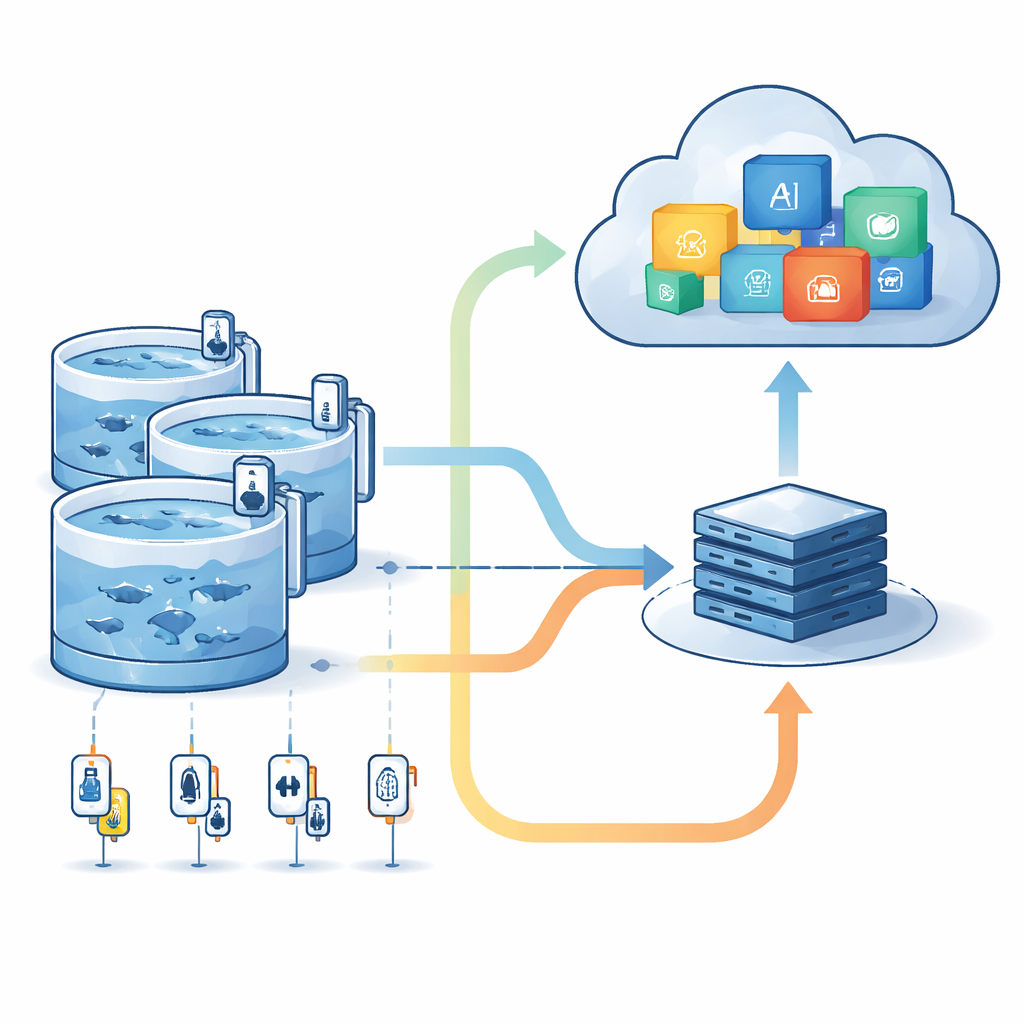
To tackle this, the authors designed a four‑layer architecture that acts like a digital nerve system for a fish farm. At the base are the tanks, pumps, and filters where fish live. Above them sits a dense network of industrial sensors that continuously measure oxygen, pH, temperature, and key nitrogen compounds. These sensors feed data to small on‑site computers—"edge" devices—that run a trimmed‑down version of the AI controller. At the top, cloud services coordinate many edge devices at once, store months of data, retrain models when needed, and provide dashboards for farmers. Tasks that must happen in fractions of a second, such as boosting aeration when oxygen drops, are handled locally; slower, heavier computations are pushed to the cloud.
Teaching Powerful Software to Run on Modest Hardware
A central challenge was squeezing a complex decision‑making model into small, energy‑efficient machines without losing its good judgment. The team used techniques borrowed from smartphone AI, such as using fewer bits to represent numbers and pruning away rarely used connections in the neural network. These steps shrank the model from 32 megabytes to just 8.3 megabytes—a 74 percent reduction—while keeping its decisions within about 1.5 percent of the full version. Tested against 15.5 million real farm data points collected over six months, the streamlined model still matched the original controller’s choices more than 94 percent of the time, and could respond in roughly 50 thousandths of a second, fast enough for real‑time control.
Staying Safe When the Network Misbehaves
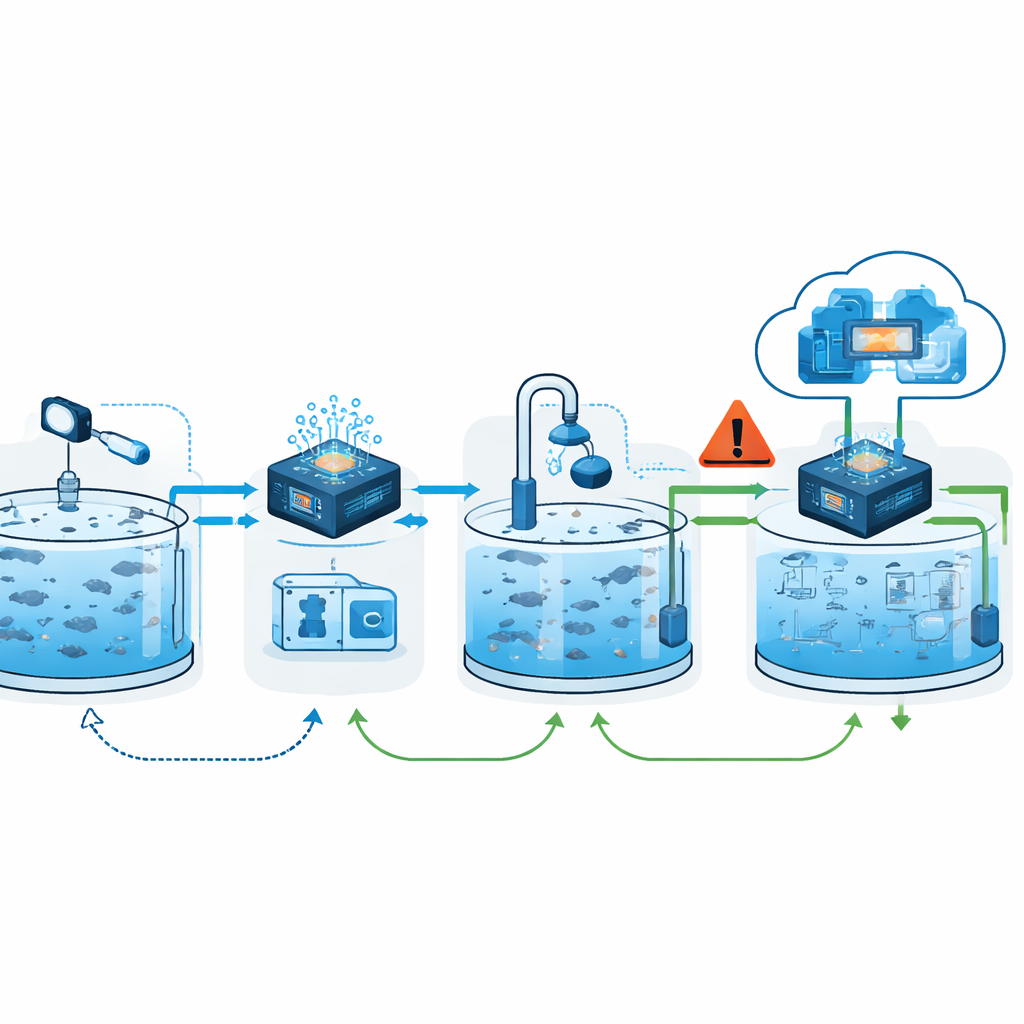
Because fish cannot wait for a wireless link to recover, the system was built with aggressive safety features. Each edge device can continue running the AI locally if the internet connection fails, watching oxygen, pH, and temperature and switching through levels of response: normal operation, gentle corrections as parameters drift, and emergency actions if thresholds are crossed. The researchers deliberately created delays, dropped messages, and even full disconnections lasting up to 72 hours. During these tests, the system preserved nearly all its control performance during minor network hiccups and maintained safe water quality even during long outages, with detailed logs showing how quickly it detected problems and recovered when the connection returned.
Proving It Works at Commercial Scale
To see whether this design holds up outside of carefully managed trials, the team deployed it in a working recirculating aquaculture facility with 108 tanks and more than three million liters of water. The same architecture was applied across small, medium, and large tank clusters, with only modest tuning. Over 180 days of operation, data from thousands of sensors flowed through the system at about 15,000 measurements per minute, yet the AI still made decisions within around 47 milliseconds on average. Comparing lab and farm, the researchers found that accuracy, reliability, and response times remained high, while the cost per unit of water controlled dropped sharply as the system scaled up, outperforming traditional industrial controllers and existing internet‑of‑things platforms on speed, reliability, and energy use.
What This Means for Future Fish Farming
For readers outside the field, the takeaway is that the authors are not just proposing a clever algorithm; they have assembled and tested a full blueprint for how AI can run real fish farms safely and economically. By combining rugged sensors, local smart boxes, and cloud coordination, they show that advanced control software can survive unreliable networks, hardware glitches, and the daily messiness of production. The result is a system that keeps fish within healthy conditions most of the time, reacts quickly when things go wrong, and lowers operating costs. If widely adopted, similar intelligent, cloud‑edge systems could help aquaculture deliver more sustainable protein to a growing population without demanding more water, land, or energy.
Citation: Elmessery, W.M., Shams, M.Y., El-Hafeez, T.A. et al. Intelligent cloud-based RAS management: integration of DDPG reinforcement learning with AWS IoT for optimized aquaculture production. Sci Rep 16, 9617 (2026). https://doi.org/10.1038/s41598-025-33736-7
Keywords: aquaculture, recirculating fish farms, cloud-edge AI control, IoT sensor systems, sustainable seafood